[Ellie]
1. Alarmy
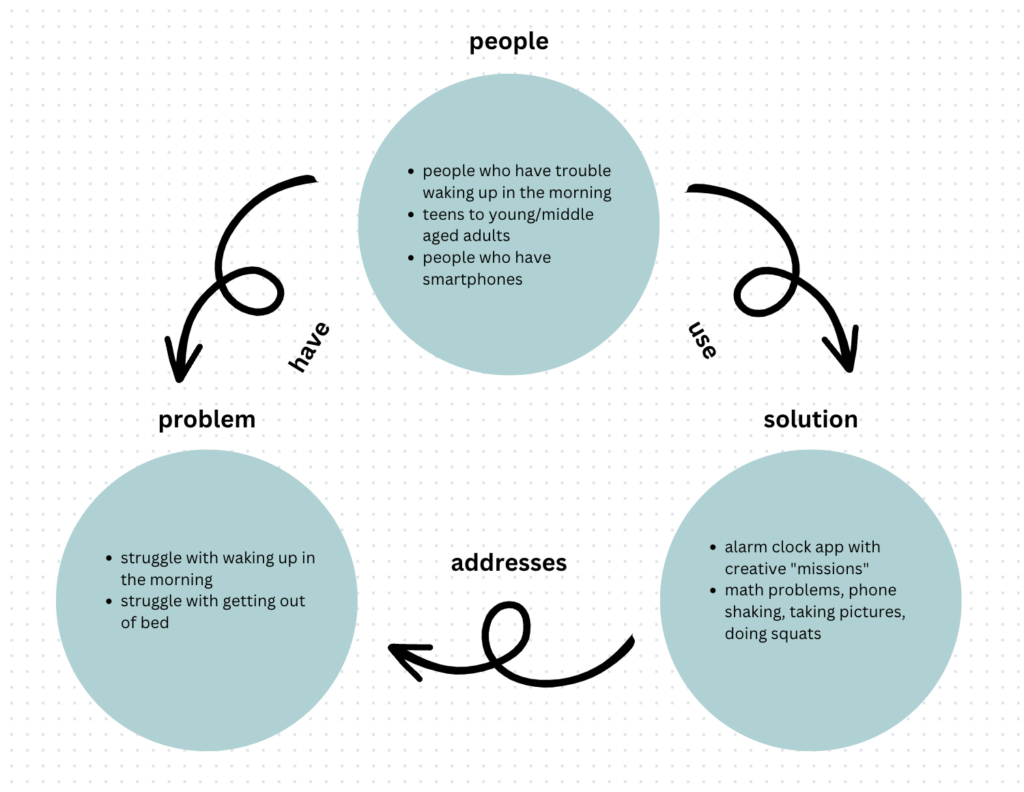
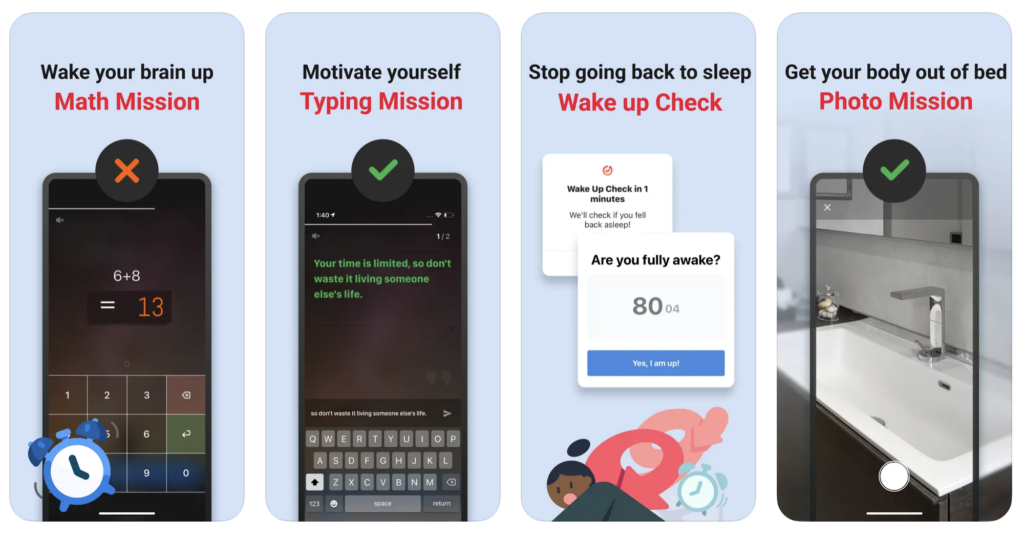
Description: Alarmy is an alarm clock app that introduces creative “missions” to help people wake up in the morning successfully. Some examples of missions include completing math problems, shaking the phone, typing a phrase, taking a photo of a set location, playing a memory game, and doing squats.
Target Audience: People who have trouble waking up in the morning; most likely in the age range of teenagers to younger/middle aged adults (30s-40s) because they have their own phones and would be more likely to know about the existence of such an app.
What makes the competitor unique? What market need is it fulfilling that others failed to?
Alarmy is unique because it puts a creative spin on getting up in the morning. Some of its actions incorporate physical actions into a mobile app, which makes sense given that the end goal is a physical action (getting up). Others might have failed to incorporate such a large range of innovative activities that encourage users to physically get up.
Strengths:
- Creative range of missions
- Personalizeable; users can choose the missions they do and how many
Weaknesses:
- What if the user goes back to sleep/stays in bed after doing the mission?
- Limited to existing missions
- Users may get very good at the mission they choose over time, which might not be as stimulating (long-term)
- Sleep features seem a bit disconnected from the main purpose of the app
How we will seek to improve the experience that Alarmy lacks:
We will aim to create a solution that does not just create a disruption in people’s mornings and then allow them to go back to what they were doing before; we should incorporate ways to motivate people to actually change their behavior instead of simple “obstacles” that they can just check off.
2. Headspace: Mindful Meditation
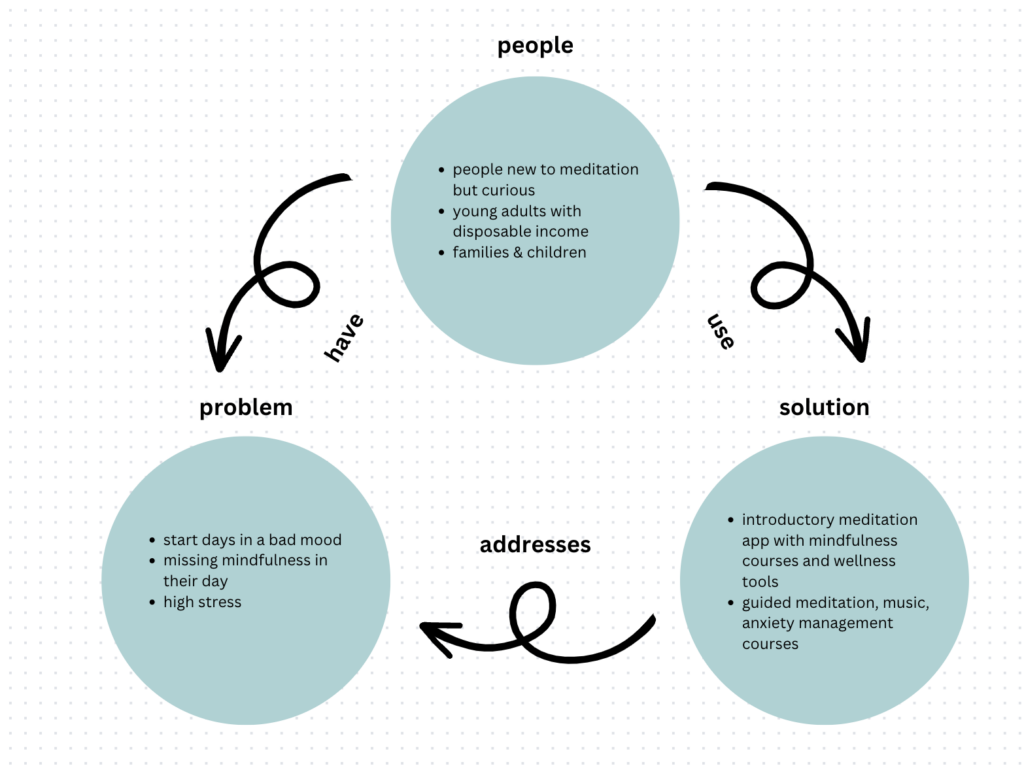
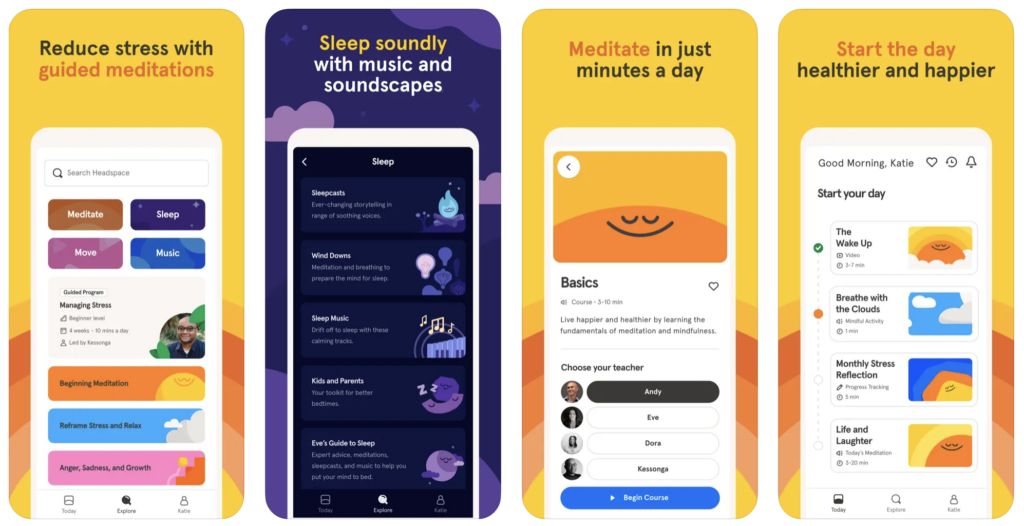
Description: Headspace is an introductory meditation app that aims to reduce stress, improve sleep quality, and increase happiness. It offers mindfulness courses and wellness tools through guided meditations, music for sleeping, anxiety management courses, and suggestions to start each day on a happy note.
Target Audience: People who are new to meditating and want to incorporate mindfulness and meditation into their days. The target audience would most likely include young adults because they have access to mobile devices and might be more likely to try the app after hearing of its existence, especially if they have disposable income to go towards personal wellbeing. The target audience might also include families and children, especially with “Headspace for Kids” content.
What makes the competitor unique? What market need is it fulfilling that others failed to?
Headspace has performed well among other similar apps, as it is reported to be the most frequently downloaded mindfulness app in the world. Headspace targets beginners and people who are curious about meditation and guides them through the process of practicing mindfulness. It brings in experts and offers a wide range of resources for users to explore.
Strengths:
- Beginner-friendly
- Many different types of resources
- Free 10 day introductory program
Weaknesses:
- Cost; subscription-based for additional resources
- User must be self-motivated to explore resources
- Does not allow skipping content (for more experienced users)
- The wide variety of resources may be overwhelming for some users
How we will seek to improve the experience that the competitor lacks:
We will aim to provide a free solution that allows more freedom for users to choose content that is most applicable to their needs, while also balancing the amount of information shown to them. We will try to find ways to motivate users to start their days on a good note without requiring them to remember to open the app every morning.
[Julie]
3. Offtime
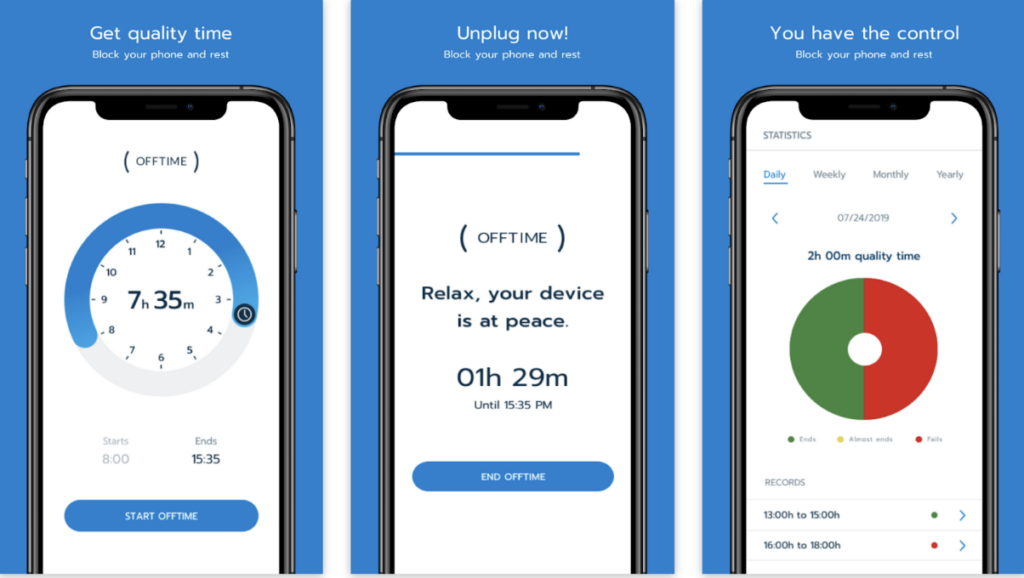
Description: Offtime is an app that helps users to disconnect from their phone and increase the time they have for more important things. It aims to help people separate work from life, increase productivity, and partake in activities that do not require their phones. Users can block out “offtimes” where the phone enters peace mode and view their usage frequency and digital well-being. Pro features include setting a daily usage limit and scheduling.
Target Audience: The target audience are people who often works overtime and have trouble disconnecting from their phones because of emails and notifications, people who get distracted by phones from studying, and those who would like to spend more time with family and friends. It seems to be used more by younger audiences who want to increase their attention span.
What makes the competitor unique? What market need is it fulfilling that others failed to?
Offtime is unique in that you can schedule your disconnections and block out time in advance so that users cannot spuriously use their phones during times where they want to focus or do other activities. The app not only points out your bad habits, like most apps do, but also helps you break them. A novel feature is that it helps you filter nonurgent notifications and emails and keep them in the background until your phone downtime ends.
Strengths:
- Simple, clean UI
- Straightforward, only one main functionality (“schedule daily offtime”)
- Uses calming and motivating images and quotes to nudge user
- Blocks selected apps and notifications
Weaknesses:
- Core features require in-app purchases
- Not free for iPhone users and it seems like the app is not available anymore on the app store
- Blocking out times everyday can be tedious; Clock UI approach is too traditional and boring
- Users can also just use phones during times that aren’t blocked out
- Doesn’t count the frequency where the users touch or simply turn on their phone
How we will seek to improve the experience that the competitor lacks:
We will create a solution that will have more creative and fun ways of managing down time, encouraging users to check their phone less through an unconventional and customizable way.
4. Routinery
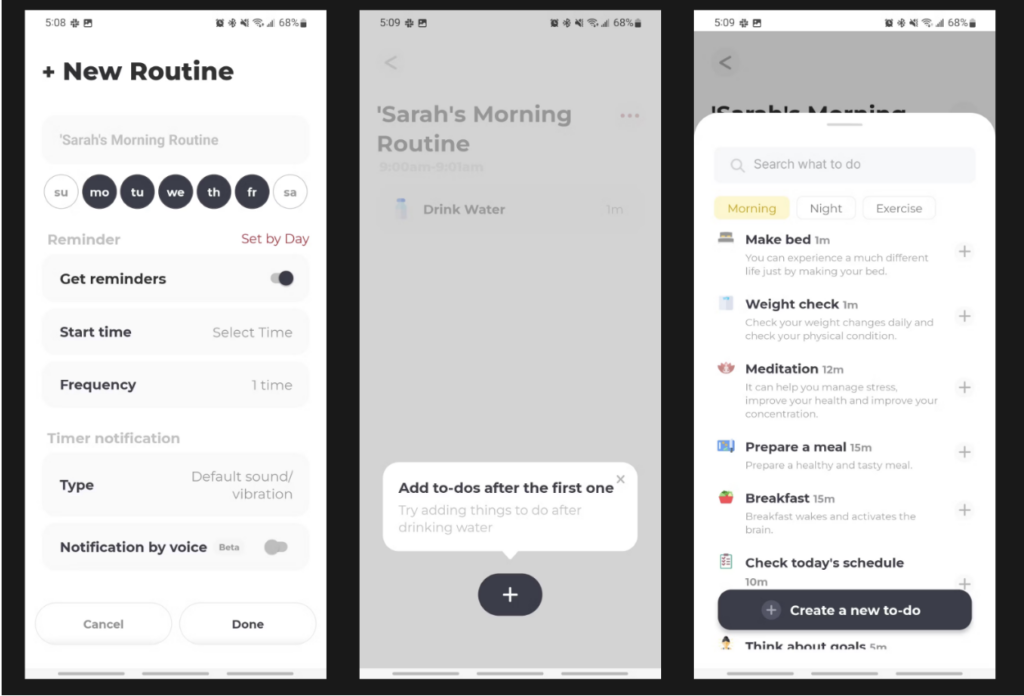
Description: Routinery is an app that allows users to add their morning routine in a checklist format. It uses a Notion-like UI and supports many functionalities, like viewing and adopting celebrities’ routines, view friends’ routines, and get routine to-do suggestions. The app also provides productivity-related tools like pomodoro timer, selfcare routines, and pet care routines.
Target Audience: The app definitely appeals to younger users because of its feature to view friends’ activities and, more importantly, its myriad features makes navigating the app complex.
What makes the competitor unique? What market need is it fulfilling that others failed to?
The app is unique in that it makes routines highly customizable and inspires users with suggestions of tasks that may benefit their well-being. Other health and well-being apps are much focused on only one thing or one aspect of health; however, this app can be used in different ways by different users and users can accomplish a more rich routine.
Strengths:
- Highly customizable
- Inspires user with ability to view friends’ and celebrities’ routines
- All-encompassing routine app
Weaknesses:
- Too cluttered with features and suggestions
- Can be distracting and overwhelming
- Lacks focus in its design
- Feature of viewing friends’ routine seems like an afterthought and disjoint with the rest of the app
- High learning curve
- The app says it’s grounded in behavior psychology, but this seems like a tacked on phrase than anything substantial
How we will seek to improve the experience that the competitor lacks:
Our solution will be simpler and more effective, with less clutter and more focus. Our technology will allow the same amount of customization while also ensuring that it is not adding to the screen time of users.
[Hillary]
5. Channel
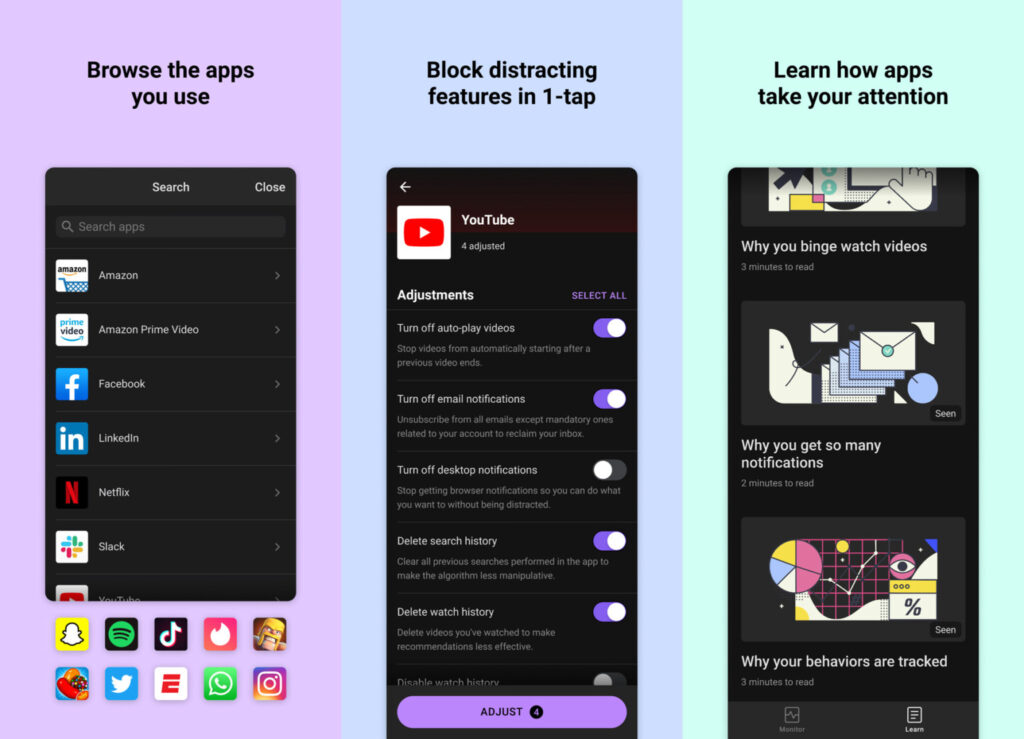
Description: Channel is an all-in-one platform that allows users to keep track of and mitigate phone distractions by adjusting notification (in-app and/or email), promo, and ads (stop getting personalized ones) settings of your existing apps.
Target Audience: Anyone who spends a lot of time on their phone / wants to make an effort to reduce their phone usage
What makes the competitor unique? What market need is it fulfilling that others failed to?
This competitor is unique because it makes the user aware of why they are getting distracted by their phone apps and helps facilitate the process of taking actionable steps (i.e. turning off distractions). It really taps into the cognitive reasoning behind our behaviors, which is the root of why we are “addicted” to our phones in the first place. Other competitors often fail to highlight this (they usually try to do the opposite and take advantage of this!).
Strengths:
- can support a range of apps including popular social media (e.g. Instagram, Twitter, Tik Tok), streaming (e.g. Netflix, Spotify, YouTube), and games
- can stop getting promotional materials in the mail (physical)
- can turn off distracting auto-play videos
- informational section to learn why you are getting distracted in the first place
Weaknesses:
- UI is a bit boring → difficult to get people to use the app
- simply pulls up the “settings” from your apps
- user still needs to click through to turn off certain parts of settings
How we will seek to improve the experience that the competitor lacks:
While it is beneficial to limit notifications, turning them off completely may not be the best solution to reduce phone usage in the morning as it is essentially taking a cold turkey approach. We can probably advise users to turn off all notifications as an ultimatum/last resort option but help them find alternative ways to use (or not) use their phones much to achieve whatever they want to in the morning.
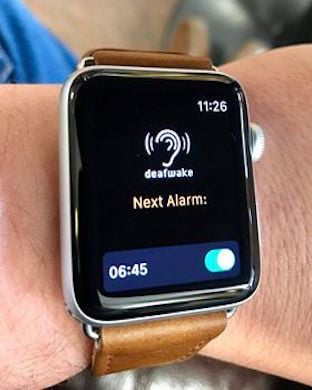
6. Smart Watch Vibrating Alarm
Description: Either a downloadable or pre-set app on any smart watch / wearable device that is a “silent” alarm; it instead prompts the end of a set time by vibrating
Target Audience: People who generally more active / busy (need various modes of tech for personal and/or work life) / comfortable financially
What makes the competitor unique? What market need is it fulfilling that others failed to?
This competitor takes advantage of existing sensory functions that most humans can utilize for their benefit. Not only is the sound of an alarm usually disturbing, it also hinges on the assumption that we can hear! Even for those who don’t have any hearing impairments, we may sometimes forget to turn on the sound or have it low, making it difficult for us to hear the alarm sound. By using a vibration, haptic-based alarm on a wearable, this better ensures we literally feel ready to wake up.
Strengths:
- always have the wearable on you
- having a device with a specified type of function (in this case, vibration to signal an alarm going off)
- eliminates annoyingly loud and blaring traditional alarm sound
- also reduces screen time (on phone) → phone is not the first thing you pick up and see when you wake up, so you’re less likely to use it
Weaknesses:
- not the most accessible (for those with certain mental/physical impairments)
- also not the most financially accessible
- always need to have the wearable on you (may be inconvenient / uncomfortable)
- if your smart watch is too smart (e.g. Apple watch), you can still see notifications of connected phone apps lol
How we will seek to improve the experience that the competitor lacks:
Since most people have smartphones nowadays, we can try to find some way to mimic the vibrating-alarm type experience. Beyond just not having sound, the entire experience could include “locking” your phone for some period of time in the morning so that the only thing you can do is turn on/off your alarm.
[Sonya]
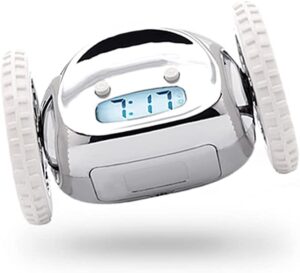
7. Clocky
Description: Clocky is an alarm clock on wheels! You set an alarm and when the time comes, the clock rolls away, forcing the user out of bed.
Target Audience: This alarm clock is aimed at people who struggle to get out of bed in the mornings and haven’t found traditional alarms effective. This is great for people who do not have a partner and sleep alone. It is also good for heavy sleepers who inevitably fall back asleep after waking up to their alarms.
What makes the competitor unique? What market need is it fulfilling that others failed to?
This is the only alarm clock on wheels! There are no other similar alarms out there. It is funny and unique while still getting it’s core job done: waking up its owner.
Strengths:
- Because it is a physical alarm clock, not a phone, users are less tempted by notifications when they go to turn it off.
Weaknesses:
- Confusing interface. Does anyone know how to program an alarm clock anymore?
- You can only set one alarm time, whereas a mobile phone lets you easily set multiple times (and turn these on/off with the flip of a switch)
- Battery powered, which means the battery could die and you’d be out of luck without an alarm in the morning. Phones have this problem too, but you have many, many reasons and triggers to keep your phone charged.
- It is self-described “obnoxious.” It is not a pleasant wake-up experience – both due to the sounds it makes and the rolling around. When a person is awake and reflecting on their morning routine, they will be unlikely to pull the trigger and buy such a clock. It essentially requires them to decide that their morning wake up will not be enjoyable for the foreseeable future.
How we will seek to improve the experience that the competitor lacks:
We want a more pleasant user experience. Right now, people need to have a serious problem when it comes to waking up in order to commit to this alarm clock. We want to create a product for people who want to improve their morning routine, without resorting to drastic consequences. This device requires a high degree of discipline and pre-commitment, which discourages people from using it and reaping the rewards. Our intervention will require a lower degree of commitment, even if it might not be as drastically beneficial.
8. Hatch Lamp
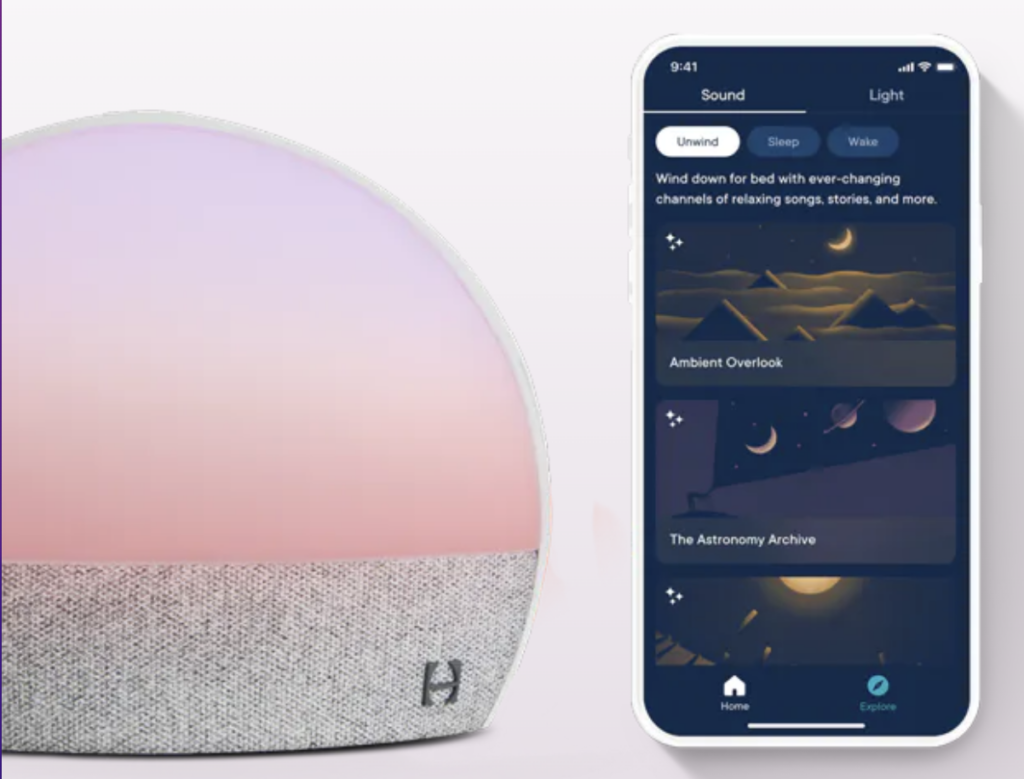
Description: The Hatch Lamp is combines features of a sound machine, smart light, and alarm to give you optimal control over your sleep/awake environment. Allows for adjustment of sounds, light, and overall ambience to best fit your needs.
Target Audience: This seems geared towards health-conscious and tech-savvy people. Given the $129 price tag, the target audience is likely upper middle class and values spending their disposable income on high products that improve their health (Apple Watch, gym membership, yoga classes)
What makes the competitor unique? What market need is it fulfilling that others failed to?
It gives an end-to-end solution for waking up that integrates a physical object and a digital app. It uses both light and sound to increase the quality and quantity of sleep. The app has curated content that helps users fall asleep in the evening. It provides white noise that helps you stay in a deep sleep. And then assists the user with a gradual wake-up in the morning using sunrise, bird sounds, and instrumental music.
Strengths:
- Beautiful, appealing design
- Wide content library for falling asleep
- A variety of settings that let you play around with different white noise (for staying asleep) and morning wake up sounds
- Proven results
Weaknesses:
- Expensive
- Large footprint (the alarm clock has a large built-in speaker)
How we will seek to improve the experience that the competitor lacks:
In many ways, this device is the gold standard when it comes to waking up. But it does not address the issue of phone scrolling in the early mornings. We believe that one of the reasons people scroll on their phones is because they don’t feel sufficiently rested when they wake up. While this device addresses that aspect of scrolling, it doesn’t address any other triggers.