Solution Ideation
After synthesizing the findings from our intervention study, we came together to brainstorm solution ideas. First, we started by taking five minutes to generate as many ideas as possible. Our aim was to find quality through quantity. Here, there was no such thing as a bad idea, as any idea could be the seed for something incredible. Here are the ideas we generated:

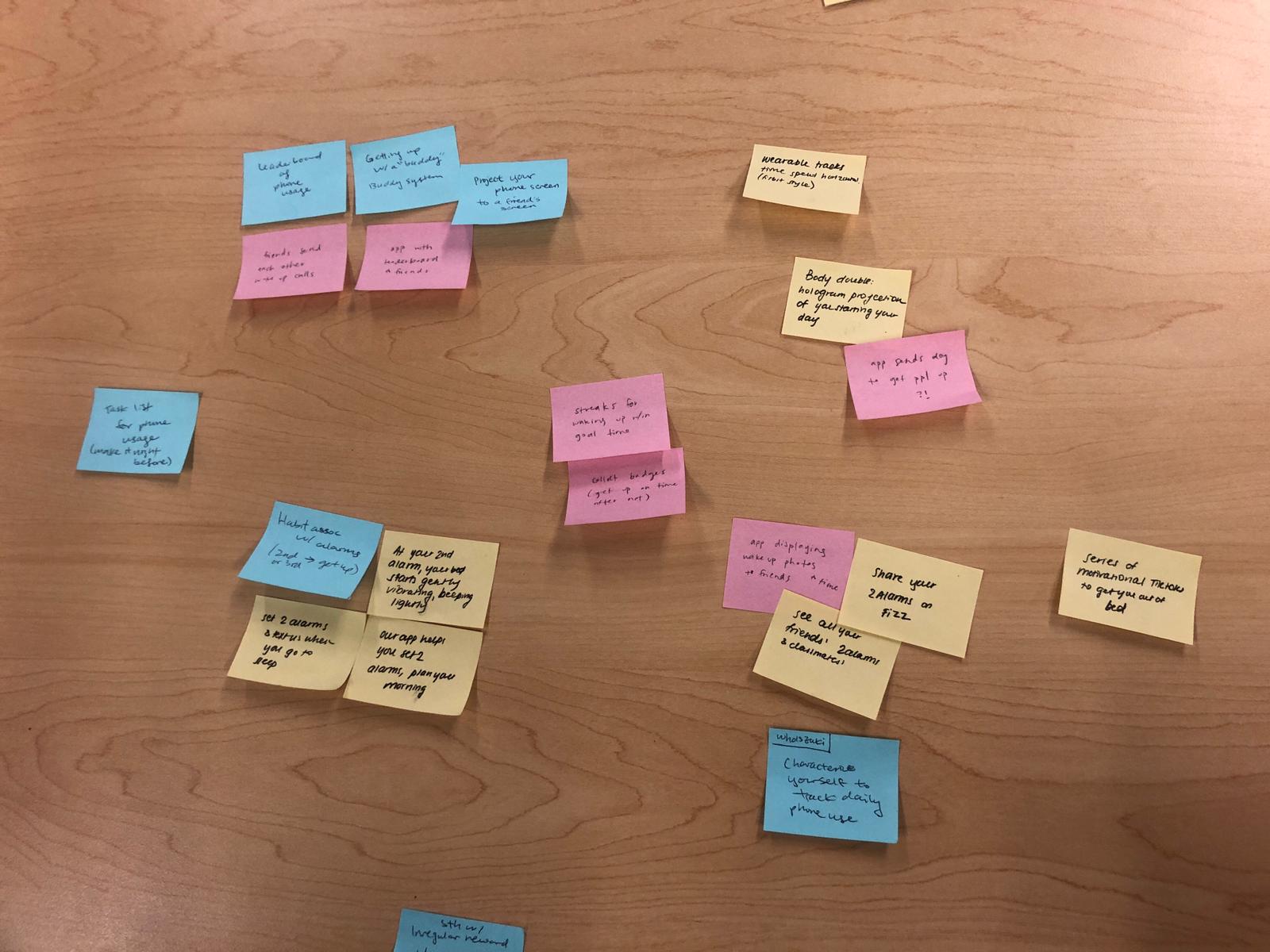
Next, we came back to review each others’ ideas and cluster similar and repeat ideas together. we noted a few key patterns in the solutions we had independently generated:
- Precommitments to how you will spend your time in the morning – from setting several alarms, to making a “to-do” list of apps you are happy to check
- Encouraging commitment to a routine via social features, such as a wake-up buddy
- Sharing aspects of the wake-up process (alarms, images of the morning routine) with friends
Next, we each sketched out a different idea independently. However, we found that all of our ideas had many of the same themes listed above.
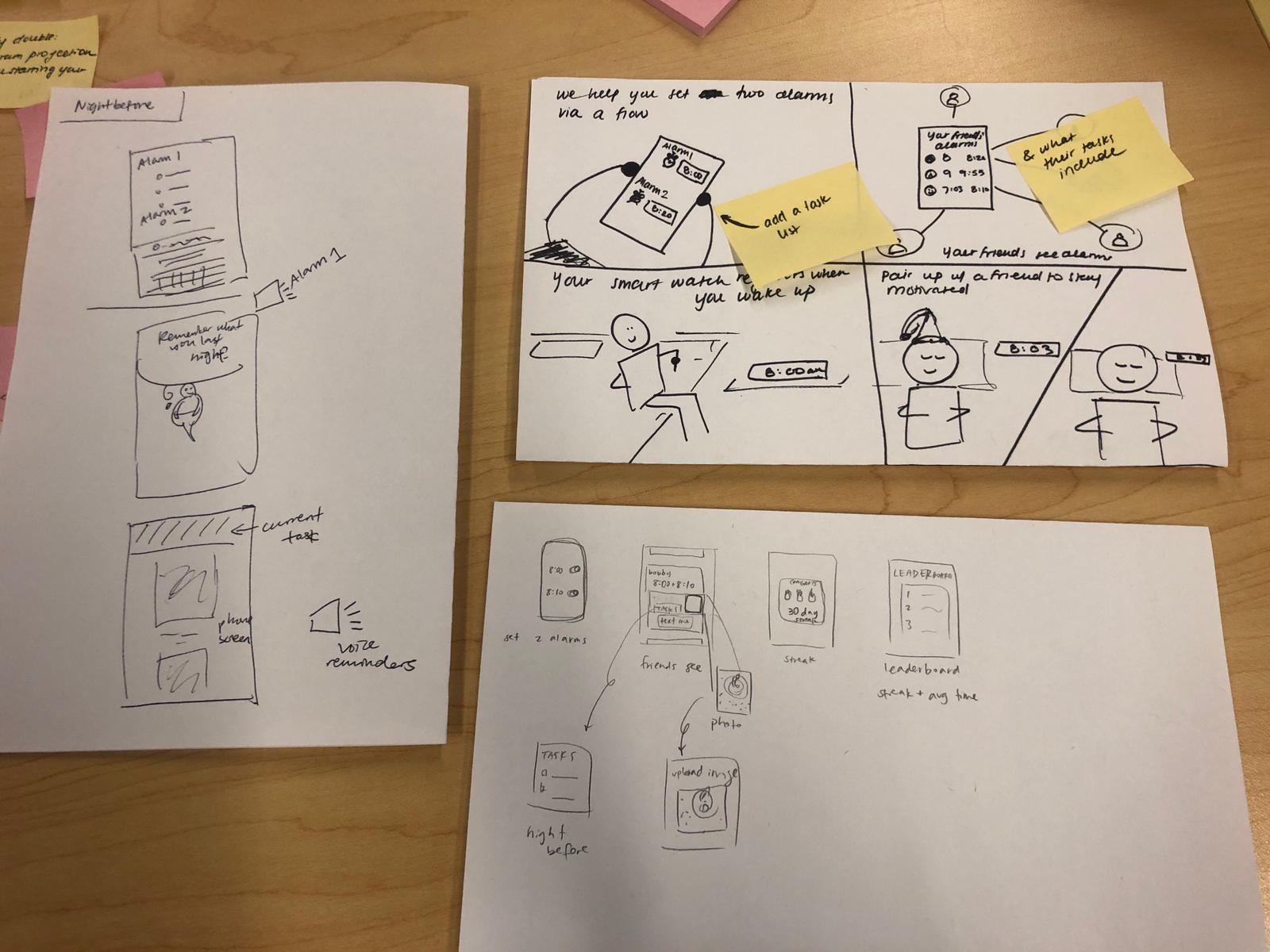
We then explored the best ideas on half sheets of paper, first individually, then shared out as a group. During this round, we found that it is important to define how we will track when the user gets out of bed. Moving forward, we need to consider solutions that do not only rely on user self-reporting, as this is the common method employed by most competitor applications. We envision that some type of commodity sensing or phone screen monitoring is needed to generate accurate streaks.
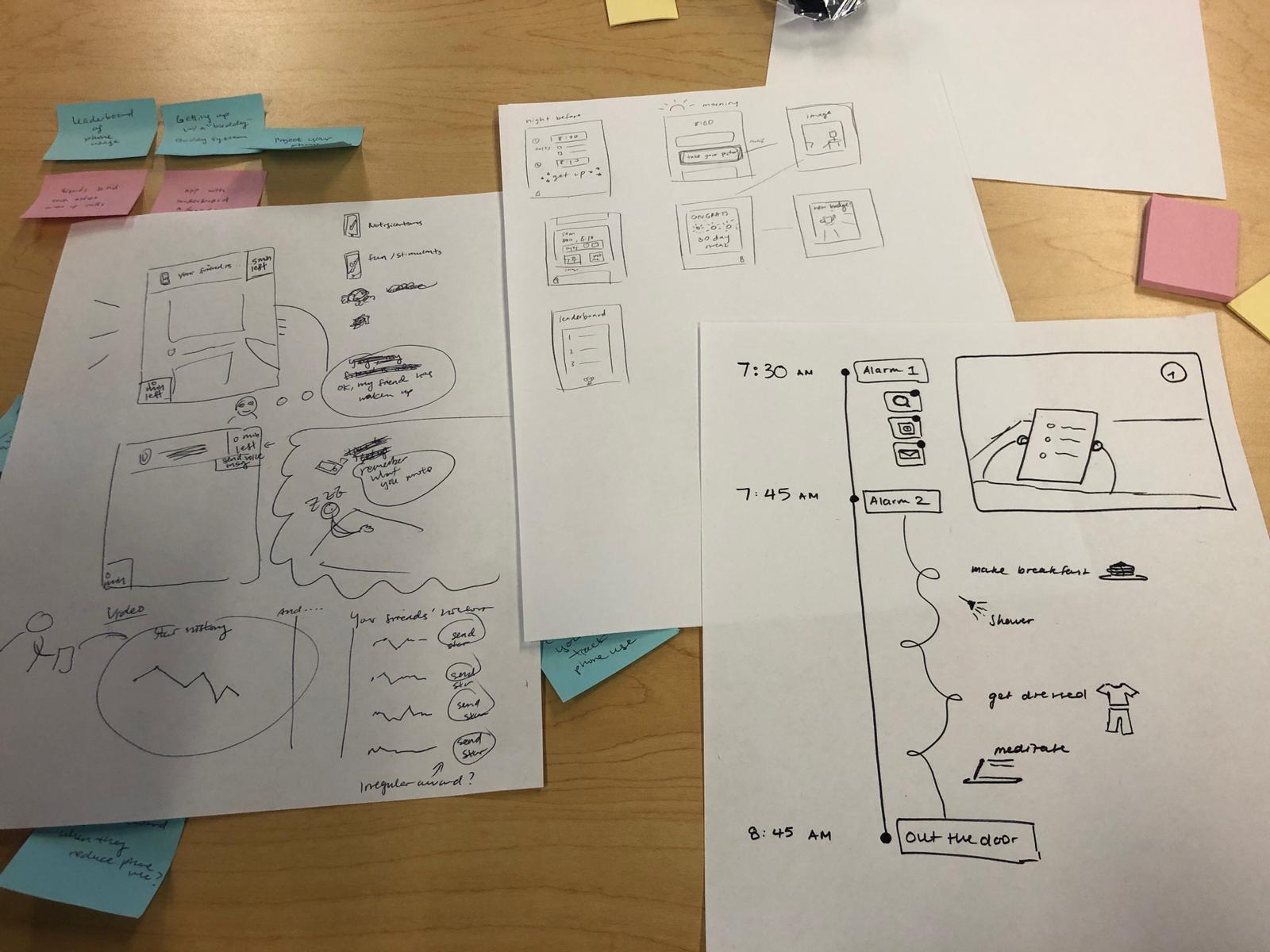
Lastly, we further flushed out the ideas we were most interested in and shared out our storyboards and drawings with the team. We found that the common ideas across all drawings were task-based alarm setting the night before and having some sort of data visualization to track how the user is doing that week – either through personal streaks or leaderboard.
After this process, it became clear that we should include most of these features in our final solution. We ended up generalizing the best ideas – the task list, streaks, and social aspect – into a seamless mobile app solution:
- Users set two alarms in the evening. One is for “waking up” and the second is for “getting up.” Our users then earmark this time between alarms for any phone activities like texting, email, and scrolling on social media.
- App sends reminders (via either text notification or automatic voice message) based on the alarm times
- App detects when users get out of bed by monitoring phone inactivity (Question for feedback: What are some easy ways to detect that a user has gotten up?)
- The app keeps track of streaks and displays a leaderboard ranked by streak lengths. Streaks are generated by shutting off both alarms on a given day (TBD way to verify the user got up)
- Users can share their two alarms with their friends. The app suggests friends with similar wake up times to be “accountability buddies” for one another.
- (Optional) Users can select a limited number of apps to browse during their in-between time (ex. only looking at social media, no work apps). The app shares these with friends on the app so you can see what your friends’ “morning” apps are.
- (Optional) Friends have the opportunity to “nudge” friends who are falling behind their streaks
Assumption Mapping & Test Cards


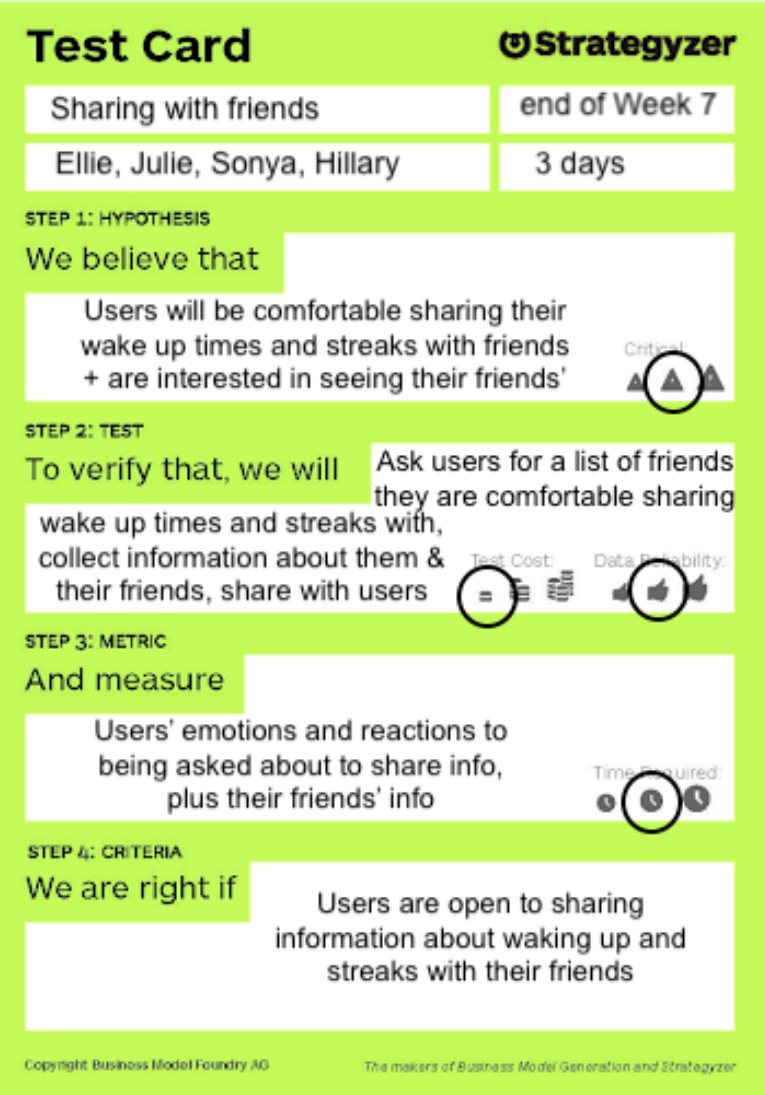
First assumption: Users are comfortable sharing their wake up time and streak with friends & are interested in seeing their friends’ information
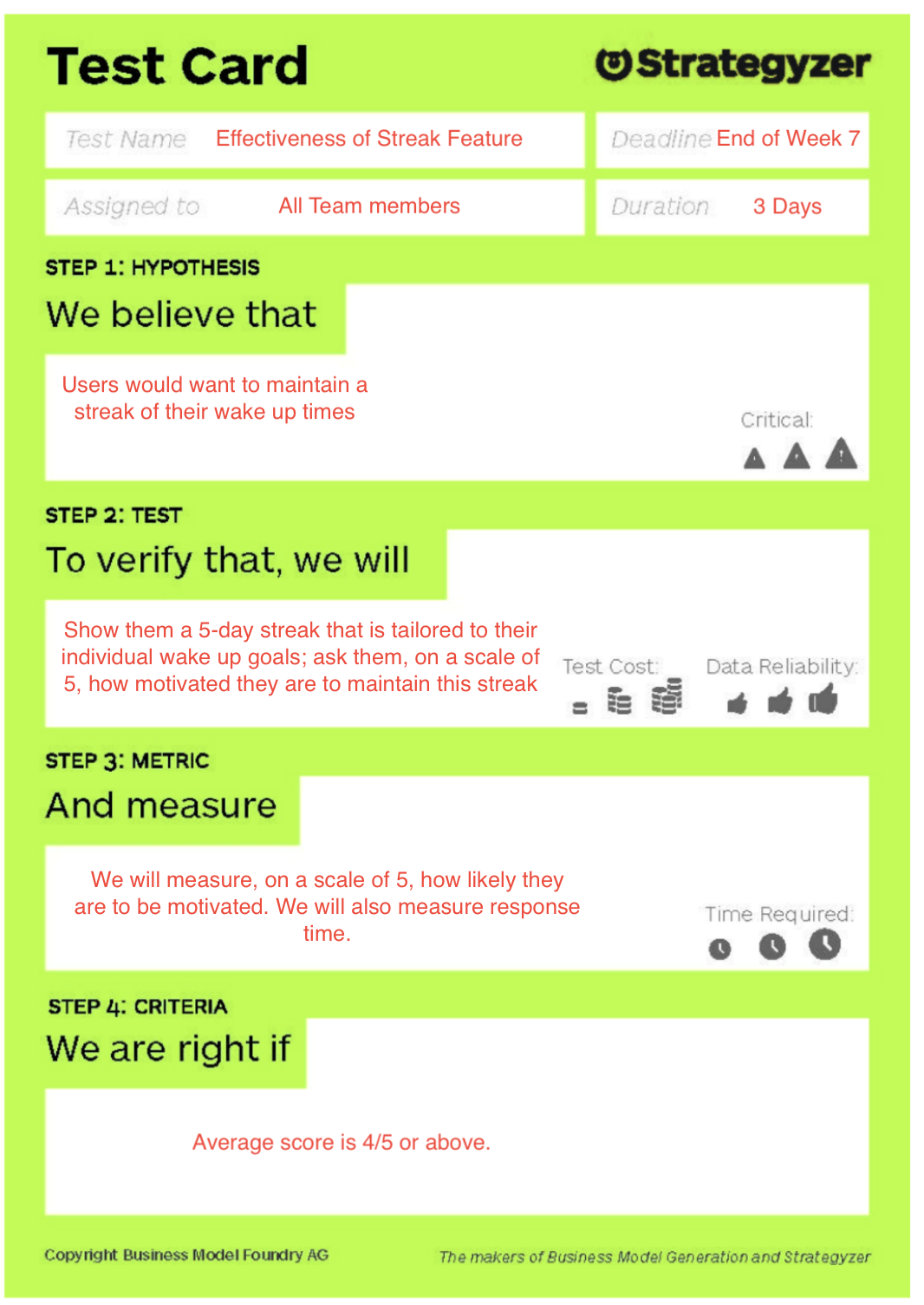
Second assumption: Users care to maintain a streak of wake up times