

2×2 Map
We decided to create our map with the axes of effort and focus. With respect to effort, does it require low effort or high effort from the user to engage in its task? We felt this was an important axes since many of our diary study participants excelled in engaging in the habit when it required low effort from them; however, almost always did not stretch if it required high effort from them. With respect to focus, how niche is the competitor? Is it’s sole focus on the task it’s intended for, or does it have additional features/incentives related to it’s task? We felt this was another important axes since we are interested in helping users form a stretching habit, which requires a more robust program. Additionally, we noticed that competitors that are frequently listed as “best apps for stretching” assume that their users already possess a stretching habit, which honestly may account for their poor retention.
Emmanuel’s Comparative Research
StretchLab
App Description
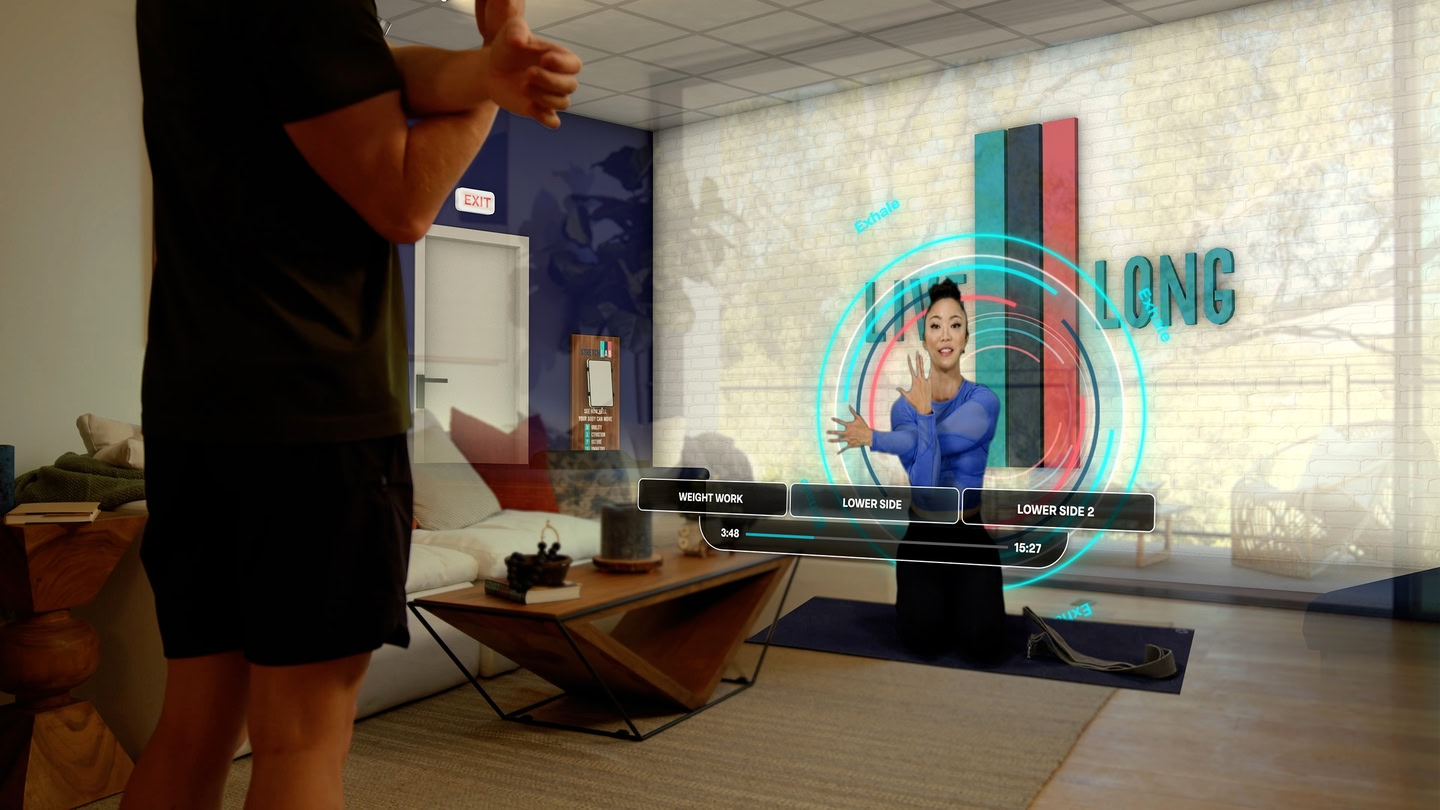
StretchLab VR is a virtual reality application designed to enhance your flexibility and overall well-being through guided stretching routines. The app offers a variety of sessions tailored to different fitness levels and goals, allowing users to improve their range of motion, reduce muscle tension, and promote relaxation. With immersive environments and professional instruction, StretchLab VR provides a convenient and effective way to incorporate stretching into your daily routine.
Target Audience
- Busy professionals, fitness enthusiasts, or individuals simply looking to relieve tension
Unique Features
- Immersive VR Experience
- Always visible trainer no matter what position you are in
- Personalized flexibility plans
Market Need Fulfilled
Comments showcase incredible satisfaction with the fact that no matter the position or angle a person is looking at they can always see the trainer without having to stop their flow to make adjustments or confirm a pose. Additionally, immersive medium is more interactive and motivating
Image
Strengths
- Unique engaging medium for stretching
- Enhanced stretching flow with guided expert instructions
- Virtual environment sets a focused and intentional setting
- Sessions are quick generally under 10 minutes
- Controller or Hand tracking based interactions
Weaknesses
- Requires a VR headset
- App costs $15
- Instructor is 2D
Recharge: Mindful Moves XR
App Description
ReCharge: Mindful Moves XR is a virtual reality wellness app designed to help users relieve stress, improve posture, and recover faster through mindful body-mind exercises. In just 10 minutes, this app serves as a virtual energy recharge station, leaving you feeling revitalized. It’s an excellent choice for those seeking a VR yoga experience, offering well-designed trainers, locations, and movements that work seamlessly within the VR environment.
Target Audience
Individuals suffering from stress, age related pains, bad posture, or even bad sleep
Unique Features
- Optionality for different full immersive virtual reality environments
- 3D Animated Trainer for high levels of presence and immersion
- Mixed Reality functionality for real world environment integration
- Guided breathing exercises
Market Need Fulfilled
Stretching or meditation app users often find that apps just aren’t engaging enough. There’s little motivation to engage a tool in the first place and often the tool adds too little value. Recharge adds layers of interaction and stands out as genuinely relaxing and enjoyable to use thanks to the uniquely tailored environments and guided exercises both breathing and movements based.
Image

Strengths
- Mixed reality support
- Controller or hand tracking based interactions
- Realistic trainer
Weaknesses
- App costs $20
- Requires a VR headset
Jennifer’s Comparative Research
BeReal
Brief Description
“Be Authentic. Be You. Be Real.”
Once a day, BeReal sends all users a randomly timed notification to take a photo using the front and back cameras of their phone. All users in the same time zone will receive this notification at the same time, and will have a two-minute window to post a photo of whatever they’re doing at that given moment.
Target Audience
Young social media users under the age of 25. The app has invested money into promoting their platform on college campuses through an ambassador and referral-based system, resulting in almost 80% of its users being Gen Z in some markets. BeReal is best suited for those ready to snap a photo to share with their friends at any time of day.
Unique Features
- User is limited to a two-minute window to capture their double-sided photo
- User cannot view their friends’ BeReal photos until they’ve posted their own photo for the day
- No filters or photo editing features
- Once a BeReal notification is sent out, the previous day’s photo is deleted
- Indicates if a photo was retaken or how late it was posted (if applicable)
Market Need They Fulfill
BeReal’s focus on off-guard authenticity sets it apart from other social media platforms–its features are designed to promote spontaneity and transparency in the way that users share their lives, removing the pressure to have a perfectly curated feed. The “anti-influencer” nature of the app, with its noticeable absence of in-your-face monetization or ads places emphasis on genuine connections amongst close friends.
Image/Analysis

The “Time Sensitive” label and warning sign emojis create a strong sense of urgency, while a strict two-minute deadline forces users to engage immediately, which encourages habitual use and real-time participation. By highlighting the opportunity to see what friends are up to, BeReal leverages “FOMO”, or the fear of missing out, to incentivise user engagement. The action-driven language prompts an immediate response.
Strengths
- Encourages real, unedited moments without pressure to appear perfect
- Daily random notification creates sense of urgency and helps build habit for consistent engagement
- Calling out late posts and requiring users to participate before viewing their friends’ posts creates accountability
- App is straightforward to use, once a day posting makes it feel low-stakes and low-pressure
- Ad-free experience feels more personal, building user trust
Weaknesses
- Two-minute window can be inconvenient for users who are busy or in uninteresting situations
- Lacks flexibility in when/what users post
- Mundanity of photos posted could result in boredom
- Scope is too broad as a platform to build our goal habit
How Will We Address Gaps / Improve the User Experience?
By narrowing the scope to make posts stretching-themed, we’ll be able to specifically build the habit of daily stretching in our users. We can add streaks or badges for regular participation and set up creative challenges or themes for daily posts (sunset stretch, nature pose, classroom break). We can also personalize timing of notifications based on user behavior (stress levels, sedentary activity, etc) and offer more flexibility in timing by giving users some influence over it or extending the two-minute capture window as a reward (think Duolingo streak freezes).
Randonautica
Brief Description
Randonautica is an adventure app that generates random coordinates based on user intentions, encouraging exploration of unfamiliar locations. It blends technology with elements of mysticism, curiosity, and serendipity, offering users a unique, unpredictable experience.
Target Audience
Its target audience includes adventurers and urban explorers, paranormal and mystery enthusiasts, individuals seeking spontaneous activities, social media content creators, and those interested in spirituality or manifestation.
Unique Features
- Uses quantum random number generation (QRNG) to determine coordinates
- “Intention setting” feature, where users focus on a theme before receiving coordinates
- Various location types (Anomalies, Attractors, Voids) based on statistical probabilities
- Community-driven experiences with user-shared stories and encounters
- Integration with mapping services for easy navigation
Market Need They Fulfill
Randonautica encourages users to go outside and encounter unexpected discoveries. The novelty of being presented with a randomly generated location to visit (with some ability to control constraints, like “intentions” or distance), motivates users to break daily routines by exploring new surroundings and engaging with their curiosity.
Image/Analysis
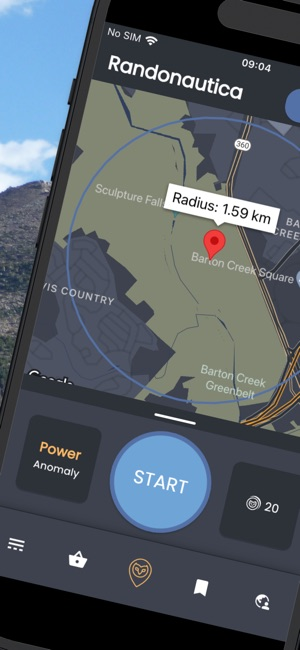
App displays a randomized location on a map–users can customize this location by setting up a radius. The large “Start” button makes course of action clear and intuitive. Dark UI with subtle adventure/mystery elements enhances the sense of discovery. The “Power Anomaly” indicator gamification mechanics, implying some locations may be more “special” than others. While the app is simple, immersive, and customizable, the lack of immediate context about what a “Power Anomaly” is may confuse new users and the inability to see what others have discovered or shared points to a gap for in-app community/social incentive.
Strengths
- Highly unique concept, no mainstream competitors with a similar exploration experience
- Many viral videos/community shared stories that foster organic growth
- Encourages real-world exploration (in contrast to traditional entertainment apps)
Weaknesses
- Safety concerns with dangerous or unsettling experiences visiting new locations
- Inconsistent results in terms of location’s relevance to user intentions
- Retention may drop once novelty wears off
How Will We Address Gaps / Improve the User Experience?
Borrowing Randonautica’s principles of randomness, habit-building, or exploration to encourage users to stretch regularly in a fun and engaging way. Users would receive a randomized location (within reasonable distance) or perhaps pre-select a number of preferred options to be randomly assigned to visit, encouraging them to explore, move, and build an otherwise mundane habit in a fun way. Users can accept or shuffle (limited number of times, can be given more shuffles as a reward for consistent use) their assigned location if inconvenient. Users can set intentions (loosen back, boost energy, improve flexibility) like Randonautica’s intention-based location discovery. The app can learn user behavior and suggest locations based on preference (i.e. sending users to a garden because they like stretching in parks). Users can submit cool stretching spots or see past users’ photos at the same spot to build a sense of community.
Kelly’s Comparative Research
Pliability
Brief Description
Pliability is an app that offers guided stretching routines to increase your mobility.
Target Audience
“We’re designed for anyone – weekend warrior to podium athlete.” Whether you don’t exercise at all or you eat, breathe, and sleep exercise, pliability claims to be for you.
Unique Features
- High-tech mobility test
- Pliability utilizes your smartphone’s camera to give you a personalized mobility score and provide suggestions based on what you need to work on the most.
- Personalized mobility score is also represented visually in a graph, allowing you to track your progress.
- Pliability adds at least one new, full 20+ minute routine everyday alongside a quick version of the routine.
Market Need They Fulfill
Provides personalized mobility training and insights straight from your device.
Image/Analysis
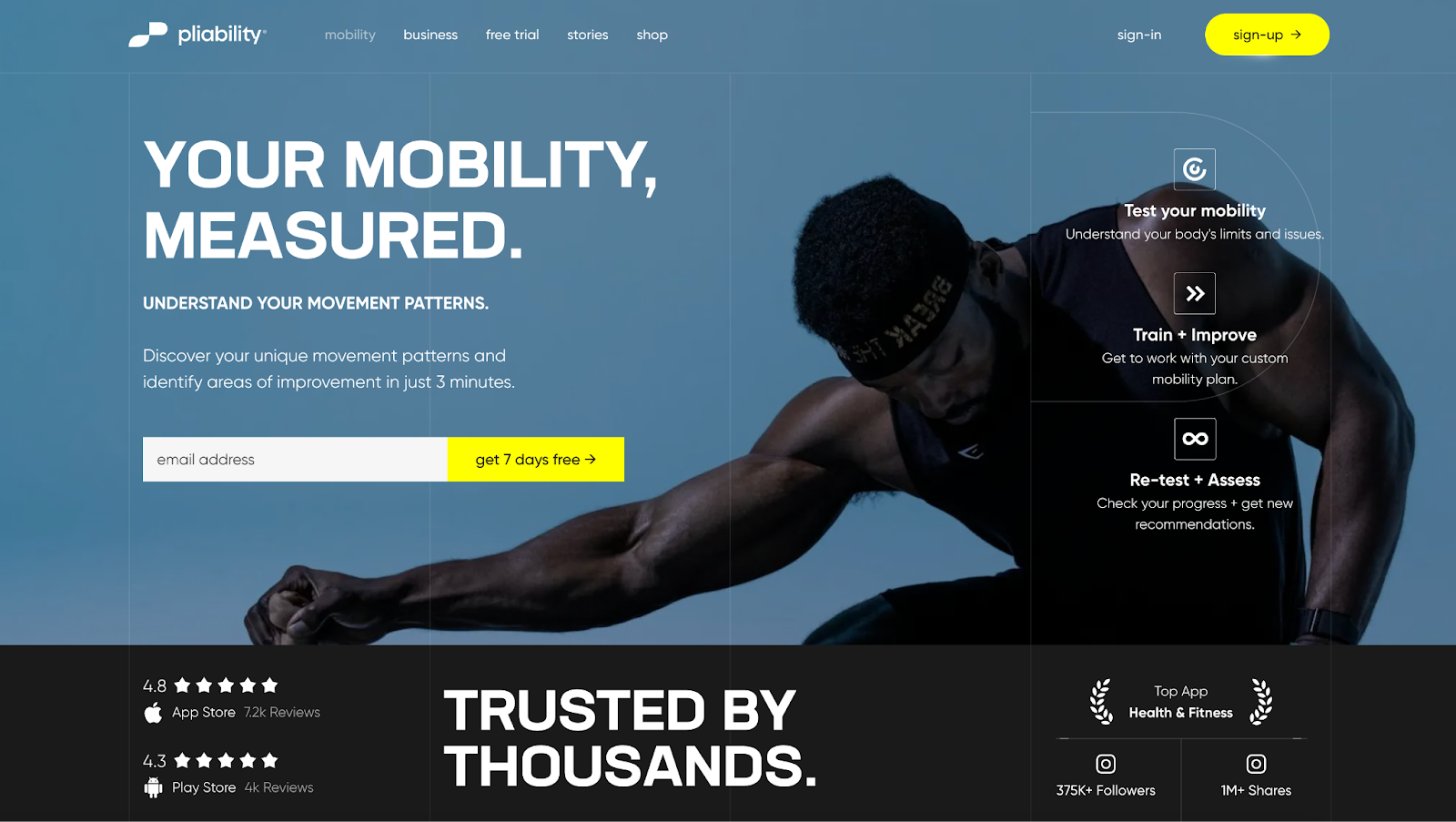
Pliability’s use of color across its app and site is noteworthy. For instance, the blue seems to evoke a sense of calmness for those seeking a nice, relaxing stretch. In contrast, the neon yellow emits high energy, letting high-intensity athletes/exercisers know that this is an app for them as well. The overall black background with white sans serif font is “clean”, minimal, and simple, as it promises to “fuse mindfulness” into its solution. Finally, the logo (if you squint really hard) is meant to resemble a twisted letter P, highlighting the mobility and flexibility pliability aims to help you achieve.
Strengths
- Various “paths” (exercise plans) and suggestions
- Great navigation and filtering system by time frame, target areas, movements you’d like to prepare/recover from, etc.
- Each session tells you exactly what you will need, what areas are being targeted, and exactly which movements you will be doing
- Each session has great instruction, talking you through each movement, alternatives, and breathing patterns
- Sessions have “quick routine” versions
Weaknesses
- The mobility test is limited in and does not go in depth on other movement patterns
- Customization is minimal
- Most stretches are passive, which is relaxing, but may have less functional transferability to everyday life and sport (i.e. you may not see as good results)
- Not a habit builder; here for you if this is a behavior you already practice
How Will We Address Gaps / Improve the User Experience?
While pliability attempts to motivate its users by providing a graph of the user’s mobility progress and providing personalized feedback, we hope to improve this attempt with greater encouragement and positive reinforcement. This may look like celebrating/congratulating the user when they make progress via visual achievements such as progress badges or animated confetti. When the user is stagnating or regressing, personalized messages that acknowledge the user’s consistency and effort could re-ignite the user’s motivation despite not “seeing” results. Also, we will aim to inform our users that while results may look different for everyone, they are meaningful for everyone! Results may encompass more than the user’s increased mobility, such as the user’s mental health, well-being, sense of relaxation, etc., and we hope to incorporate these as further motivators for our users.
Contemplative Programs – Yoga
Brief Description
Weekly opportunities to engage with others in the Stanford community for meditation and yoga.
Target Audience
Stanford affiliates interested in personal growth, mindfulness, and emotional/physical well-being. There is also a focus on students considering their “student-led” sessions.
Unique Features
- Offered alongside meditation programs, promoting holistic wellness.
- Sessions led by highly-experienced yoga scholars and professionals who have dedicated their studies and careers to yoga.
Market Need They Fulfill
Provides mental health and emotional/physical well-being solutions on Stanford’s campus.
Image/Analysis
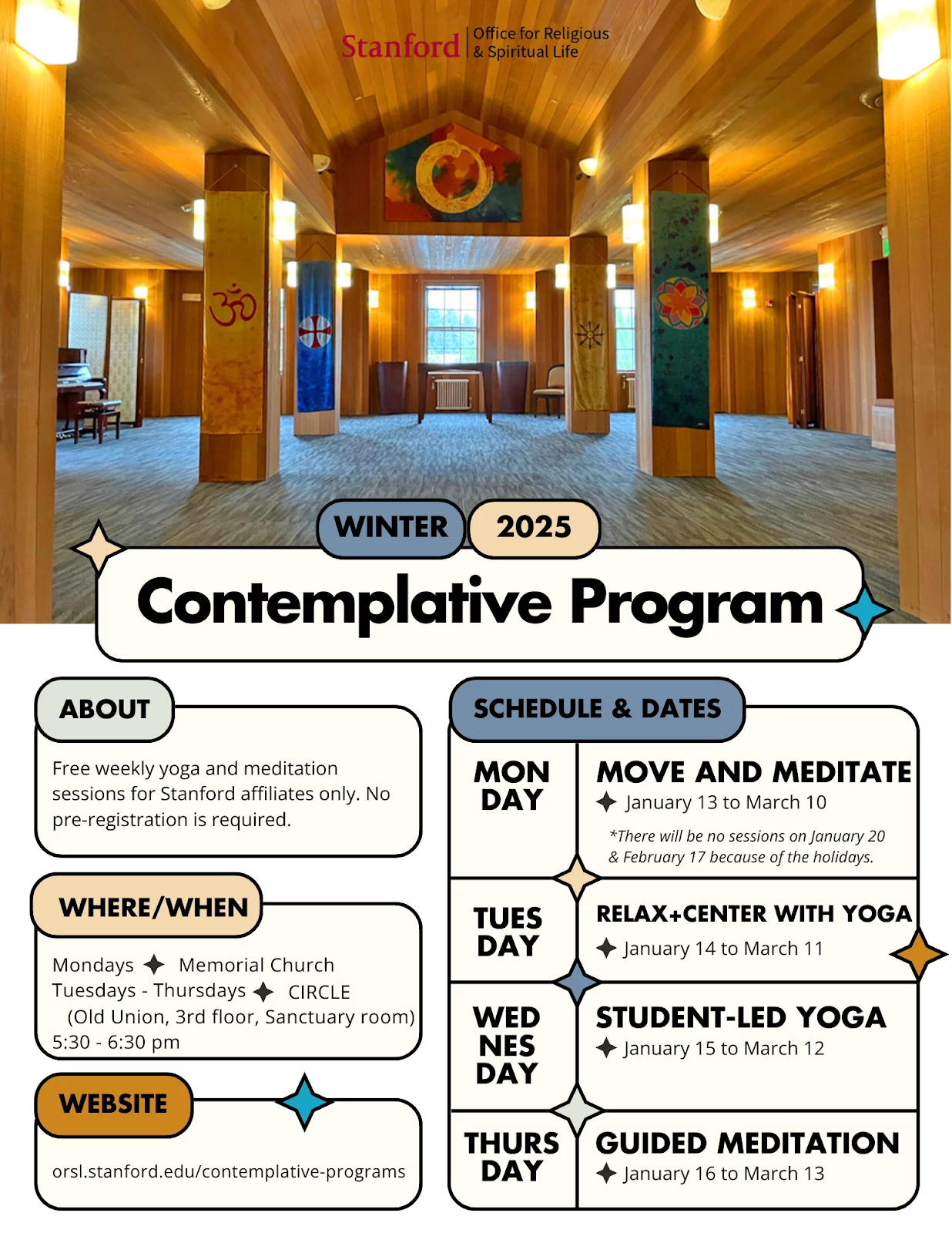
The Contemplative Program’s flyer’s use of soft/pastel-like colors is meant to evoke a sense of tranquility and mindfulness. The sparkle graphics also lean into spirituality, symbolizing the connection between mind and body. It is also aesthetically clean/”put together”, almost implying that you can be as put together by attending the program’s sessions.
Strengths
- Community-oriented, you participate in a session with other Stanford affiliates with whom you share Stanford in common with
- Can be integrated into your schedule
- Instructor-led, you will be continuously guided and are able to follow along; no prior knowledge/experience necessary
Weaknesses
- In-person with potentially strangers may be intimidating
- Can entirely conflict with your schedule
- Its branding may not appeal to different types of people who are interested in stretching
How Will We Address Gaps / Improve the User Experience?
We admire the Contemplative Program’s approach to community, and we hope to improve this experience, especially for user’s who may feel intimidated to attend a contemplative program session, by creating social opportunities for users with people they already know. This may look like the ability to add friends that can join you in building a stretching habit. Users can track their progress alongside their friends, potentially setting shared goals or even engaging in stretching sessions together.
Yarency’s Comparative Research
STRETCHIT
Brief Description
An app that offers stretching classes aimed at improving flexibility, mobility, and overall health. Users range from beginners to advanced individuals seeking to enhance their stretching routines.
Target Audience
- People aiming to improve flexibility and mobility
- People seeking guided stretching routines suitable for various fitness levels
Unique Features
- Regularly updated content keeps routines fresh and engaging
- Tailored programs to meet individual flexibility goals.
- Allows users to monitor their improvements over time (use of photos etc)
Market Need Fulfilled
Helps users create a structured stretch routine and provides guided stretching routines that can be easily integrated into daily life
Image

Strengths
- Regularly updated content keeps users engaged
- Personalized plans cater to individual needs and fitness levels
- Helps break down goals into smaller ones (ex: short 6 minute stretches)
Weaknesses
- Subscription-based models may deter some users, not very accessible
WeStretch
Brief Description
An application that provides personalized stretching routines powered by artificial intelligence 😟. Goal is to help users improve flexibility, reduce pain, and help make habits more natural + fit into users lifestyle.
Target Audience
- Individuals seeking personalized stretching routines.
- Users looking to alleviate pain through guided stretching.
Unique Features
- Creates routines tailored to individual needs and fitness levels, its AI so easily customizable
- Offers routines focused on pain relief, sports performance, etc
- Motivates users through badges and rewards for consistency, user friendly
Market Need Fulfilled
Caters to users desiring customized stretching routines that adapt to their specific requirements, providing a more personalized approach to flexibility and pain management, and more accessible to users of all backgrounds
Image

Strengths
- AI-driven routines offer high personalization
- Specialized programs address specific user needs
- Reward system enhances user motivation
Weaknesses
- Not much of a habit tracker, more of a guide for the kinds of stretches to do
- Subjective: Some users may prefer human-led instructions over AI-generated ones, or just want an app to track their habits (more straightforward)



