
Baseline Synthesis
Study Overview
Our baseline study aimed to assess our participants’ relationship with social media usage. Because recent generations have a reputation and tendency to overindulge in online media consumption, our app and solution initiative was to examine how we could assist our users to participate in a sustainable relationship with social media and their responsibilities, whether it was job-related items, chores, or other desired tasks.
Key research questions:
- Does social media usage inherently lead to a negative experience?
- How do people in their early careers interact with social media?
- Is social media usage intrusive enough for our initial planned demographic that it necessitates intervention?
Study Methodology
Our study was conducted over the course of five days. On the first day, we conducted pre-study interviews with our participants, where we briefed our selected participants on the infrastructure of our study and provided more context. The main portion of our study took place over days 2-5. Each morning, we collected survey responses from participants regarding what tasks they would realistically like to accomplish over that day. Then, throughout the day, we sent pings every two hours. Each ping consisted of a text message notification and a link to a google form survey, which examined whether or not the participant had used social media in the two hour window (between each ping), and if they did, we additionally examined the duration of usage, their reason for usage, and their consequent feelings/reactions towards the usage. The type of data was both qualitative and quantitative as we gathered data on the frequency of usage and the resulting nuances of emotions and mood changes from it.
Participant Recruitment
We recruited participants who were young adults in their early career stage, particularly because we wanted to assess the issue of social media overconsumption in younger demographics and how it impacted them. Our selection criteria filtered for younger participants in their 20’s with typically white-collar jobs. Considering the current economic sphere, we also included participants who were currently unemployed but had worked the relevant category of employment in the past. We also selected participants considering their past relationship with social media; that is to say, we wanted to get a range of users with self-identified both ‘good’ and ‘bad’ relationships with social media usage. Our recruitment process involved a brief initial assessment with the team member who contacted them, a screener questionnaire where we evaluated the potential participant for relevance to our study, and then an in-depth pre-study interview where we learned about the participants’ backgrounds as well as more specific details regarding requirements for our study.
Raw Data —> Grounded Theory
Part 1
Raw Data
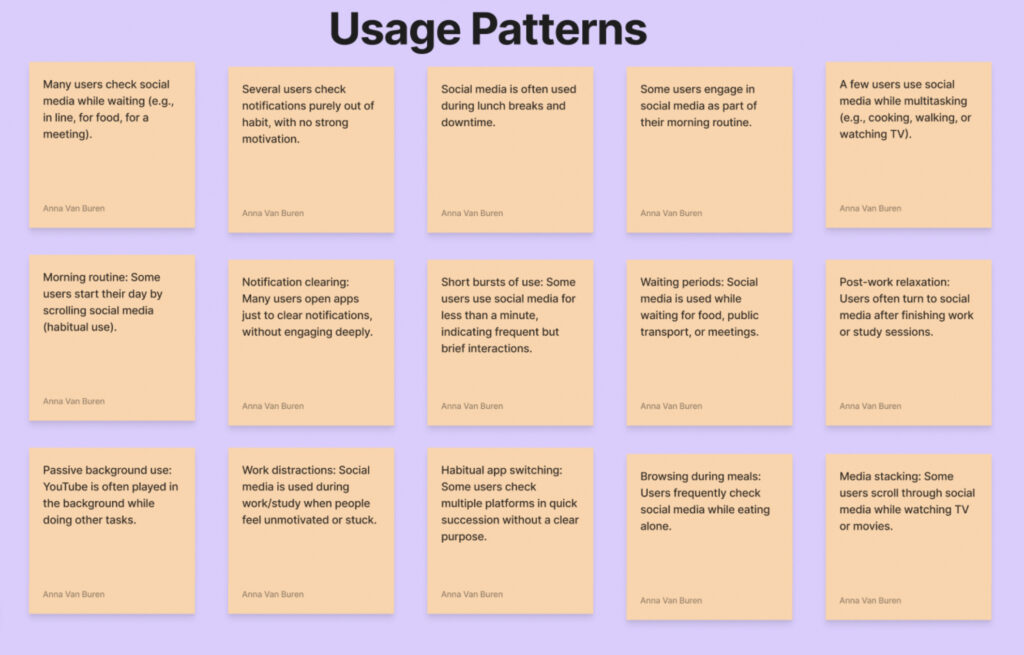
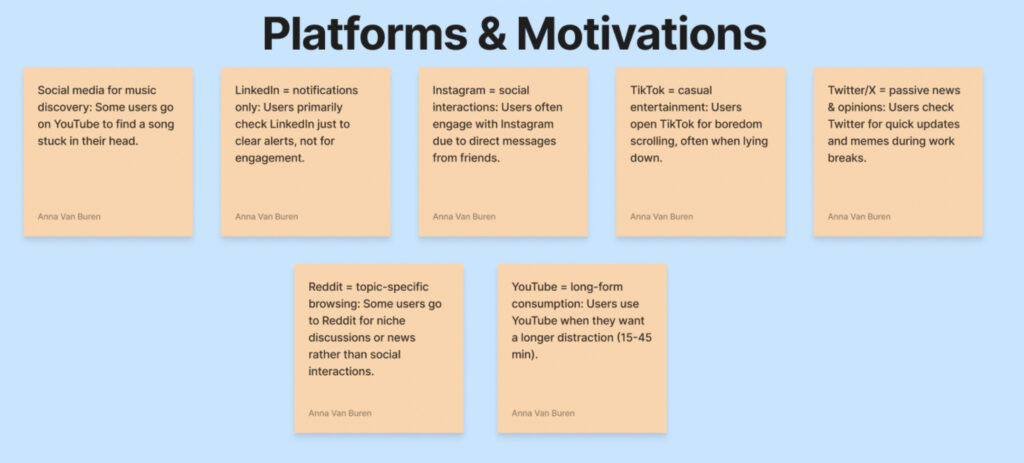

Grounded Theory
Grounded Theory 1: Social media usage is driven by habit and convenience rather than meaningful engagement, creating a tension between utility and purposefulness
- Subtheory: Users engage with social media primarily during transitional or “dead” moments, suggesting it serves as a time-filler rather than intentional activity
- This is evident in the frequent mention of checking social media while waiting in lines, during meals alone, or in between tasks
- The pattern of “short bursts of use” and “habitual app switching” suggests users aren’t seeking meaningful engagement but rather automatic, reflexive interaction
- Question: How does this habitual, low-engagement usage pattern affect users’ overall satisfaction with social media?
- Subtheory: Platform-specific behaviors reveal a disconnect between intended use and actual engagement patterns
- LinkedIn usage is particularly noteworthy – users primarily check it to clear notifications rather than engage with content or network
- Similarly, users report browsing multiple platforms in succession without clear purpose, suggesting compulsive rather than intentional use
- Question: What drives users to maintain presence on platforms they don’t meaningfully engage with?
Grounded Theory 2: There’s a fundamental tension between social media’s perceived social benefits and its role as a productivity disruptor
- Subtheory: Users recognize social media’s ability to alleviate loneliness while simultaneously feeling guilty about its use
- The data shows social media helps users “feel less lonely, especially when chatting with friends,” yet many report feeling guilty after usage
- This creates a complex relationship where the tool for social connection is also viewed as a form of procrastination
- Question: How might we design social media experiences that facilitate meaningful connection without triggering productivity guilt?
- Subtheory: Work and focused activities create natural boundaries for social media use, suggesting an implicit hierarchy of priorities
- Users report avoiding social media during meetings or deep work, and feeling more productive when not using it
- However, they turn to it when “unmotivated or stuck,” indicating it serves as a psychological escape mechanism
- Question: Could social media be redesigned to support rather than hinder productivity?
Grounded Theory 3: Users experience a disconnect between their motivations for using social media and their emotional outcomes
- Subtheory: The prevalence of “neutral throughout” responses suggests social media often fails to deliver on its promise of entertainment or connection
- Users who open social media out of boredom often remain bored during use
- The pattern of checking notifications without engaging deeply indicates a mechanical rather than meaningful interaction
- Question: What would make social media engagement more emotionally rewarding?
- Subtheory: Active offline engagement reduces perceived need for social media, suggesting it serves as a substitute for real-world interaction
- Users report forgetting about social media when genuinely busy or engaged offline
- Social engagement reduces FOMO, indicating social media might be compensating for perceived social deficits
- Question: How might social media better complement rather than replace real-world social interactions?
Part 2
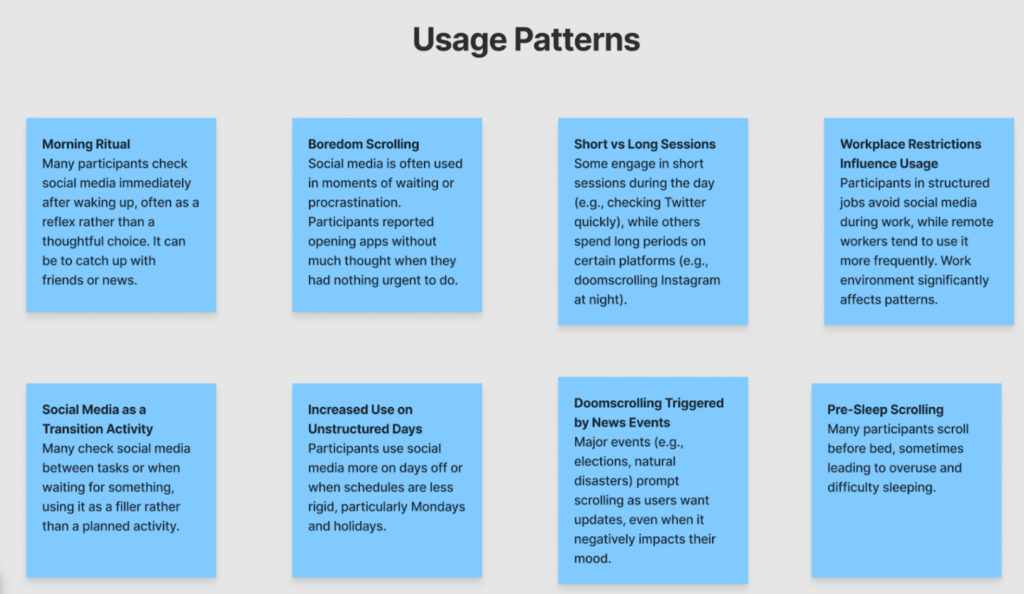
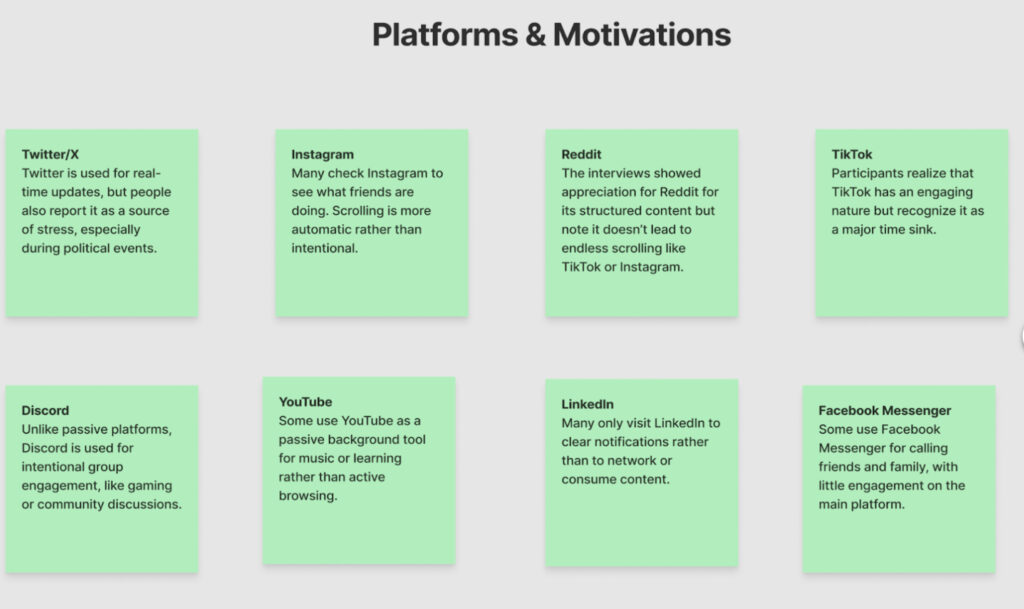
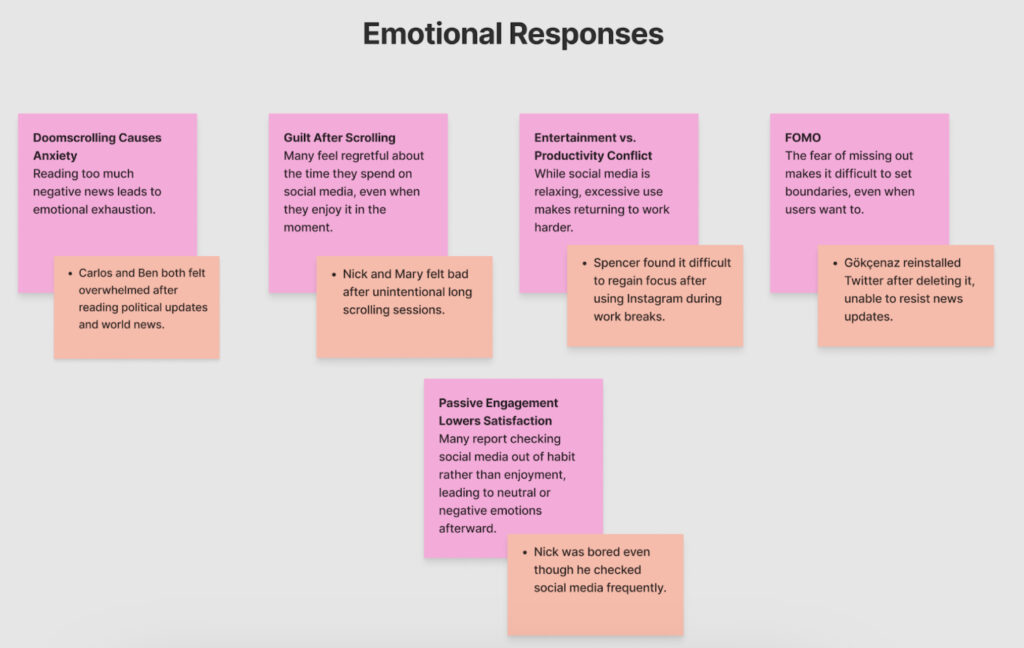
Grounded Theory 1: The Role of Social Media in Work-Life Balance
Social media serves as both a tool for relaxation and a source of distraction, influencing work efficiency and personal downtime.
- Subtheory 1: Social Media as a Decompression Tool
- Many participants use social media to unwind after work or between tasks, often in an unstructured manner.
– Participants frequently scroll through Instagram, Reddit, or Twitter during breaks or after work to relax, though they acknowledge that this relaxation sometimes extends longer than intended.
– Some participants feel that social media allows them to stay connected with friends and current events, reducing feelings of isolation from remote work or demanding jobs.
– While social media provides a short-term break from mental thinking, some participants admitted feeling more drained or dissatisfied after long use.
– Question: How might structured decompression activities (such as scheduled social media breaks or alternative relaxation methods) impact productivity and overall well-being compared to unstructured social media use?
- Subtheory 2: Work-Induced Doom Scrolling
- Participants engage in doom scrolling as a reaction to workplace stress, deadlines, or demanding work environments, exacerbating stress levels rather than alleviating them.
– Doomscrolling often occurs as a coping mechanism when participants feel overwhelmed by deadlines, high expectations, or uncertainty in their careers.
– Participants mentioned that news consumption—particularly related to political events or crises keeps them engaged but also contributes to a cycle of stress.
– Attempts to curb doom scrolling, such as app deletion or limiting notifications, were often unsuccessful due to fear of missing out (FOMO) or the habit of reflexively checking updates.
– Question: Could interventions such as app restrictions or personalized notifications prevent work-related doom scrolling without making users feel disconnected?
Grounded Theory 2: Social Media Use as a Function of Emotional States
Social media habits are significantly influenced by users’ emotional states, such as boredom, anxiety, and loneliness.
- Subtheory 1: Boredom as a Trigger for Social Media Use
- Participants reported turning to social media when they lacked engaging tasks, even when they had other available activities.
– Many participants use social media as a default activity when they experience unstructured time, even if they have other hobbies or tasks they could engage in.
– Social media’s low-effort accessibility makes it more appealing than more cognitively demanding activities like reading or exercising.
– Some participants rationalize their social media use by saying it fills gaps in their schedule, but they later reflect that they could use their time more productively.
– Question: How does the availability of low-energy alternatives (e.g., passive podcasts, light reading) compare to social media in satisfying the need for stimulation during boredom?
- Subtheory 2: Social Media as a Coping Mechanism for Stress and Anxiety
- Some participants described their social media usage as a response to stressors, particularly related to current events or personal anxieties.
– Participants who reported higher anxiety levels often turned to social media as a form of distraction, especially during stressful work periods or uncertain career transitions.
– The habit of checking updates on global crises or political issues was frequently tied to feelings of helplessness and anxiety.
– Some participants acknowledged that their social media use, while initially intended as a coping mechanism, often left them feeling worse rather than better.
– Question: Would individuals benefit from using mindfulness or self-regulation techniques before engaging in social media to manage stress more effectively?
Grounded Theory 3: Self-Regulation and Habit Formation in Social Media Use
Participants demonstrated varied levels of self-regulation, with some implementing control mechanisms (e.g., app deletion, timers) while others struggled to enforce restrictions.
- Subtheory 1: The Effectiveness of External Controls
- Some participants successfully used timers or app deletion strategies, though others found them easy to override.
– Several participants attempted to regulate their social media use through app timers or removal from their devices but admitted that these measures were often ineffective in the long run.
– Those who successfully reduced their screen time attributed their success to additional lifestyle changes, such as replacing social media with another habit like reading or exercising.
– Participants who struggled with external controls often found ways to bypass them or ignored notifications reminding them to stop scrolling.
– Question: What psychological factors determine whether external controls (timers, app blockers) are effective in modifying social media habits?
- Subtheory 2: Internal Motivation vs. External Intervention
- Those who were intrinsically motivated to reduce social media use reported higher success rates compared to those relying on external tools.
– Participants who had personal goals (e.g., focusing on work, spending time with family, or improving mental health) found it easier to reduce their social media use than those relying on external restrictions.
– Many participants who tried app timers or social media detoxes reverted to their previous habits when their motivation was externally imposed rather than internally driven.
– Self-reflection practices, such as journaling about social media habits, helped some participants recognize patterns and make more conscious decisions about when and why they engage with social media.
– Question: How can self-reflection techniques (such as journaling or mindful tracking) be leveraged to reinforce intrinsic motivation for healthier social media habits?
System Models
FigJam link to affinity map, frequency map, fishbone diagram, and connected circle located here: https://www.figma.com/board/RmGT28mOu2VNFgCeuD4CpB/System-Diagrams-and-Models?node-id=0-1&t=jEBwdWBWQEQgDhUZ-1
Affinity Grouping Map Preview
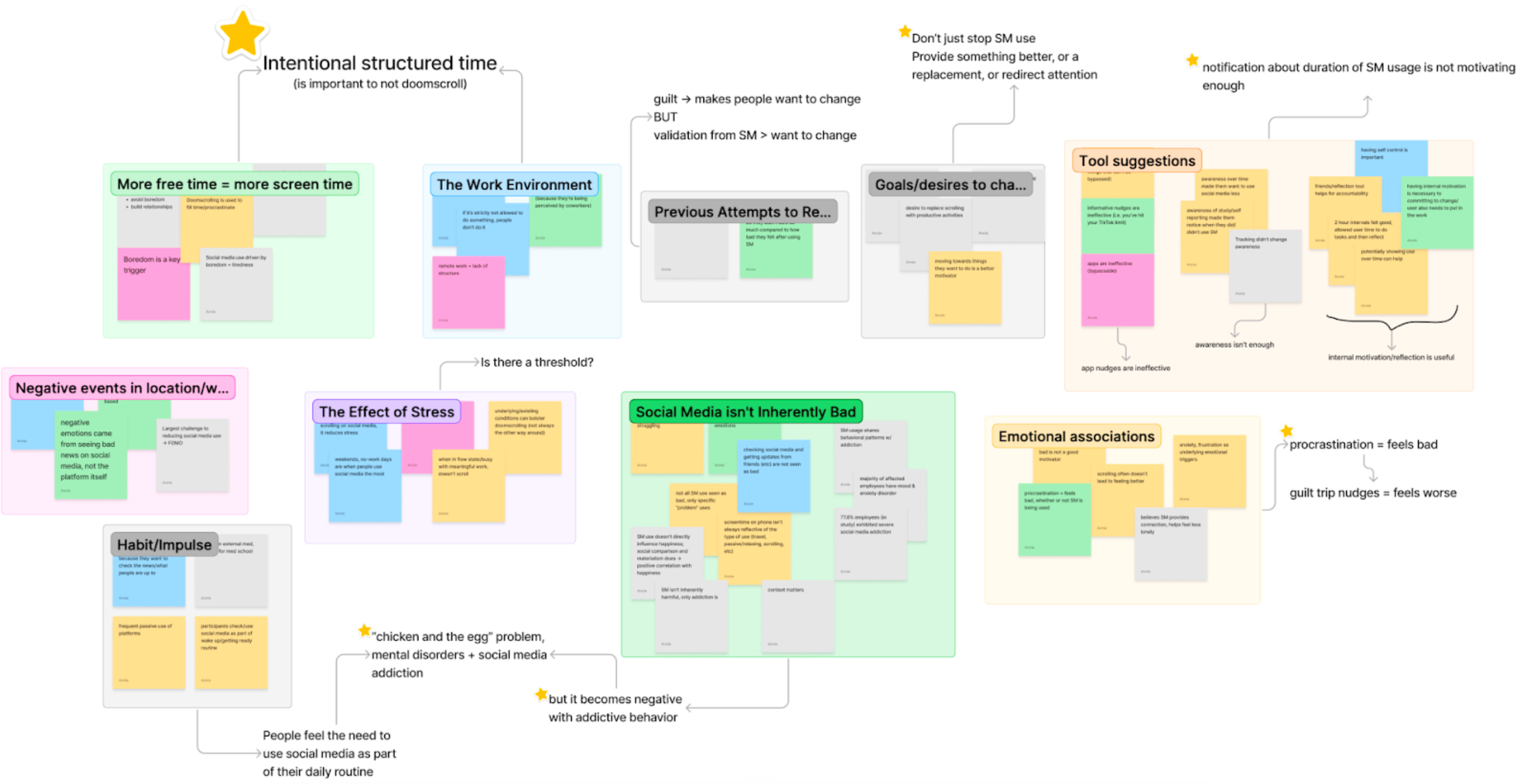
This map shows the underlying themes that came from our larger takeaways from the participants. In particular, the groupings revealed particular insights from the participants’ experiences. The most notable insight was that intentional, structured time was important to avoid doomscrolling/excessive social media use.
Frequency Map Preview

This re-mapping of our findings was to analyze participant actions, feelings, and thoughts from morning till evening to understand how going through the workday might shape their use of social media. This in particular highlighted how workplace norms played into the emotional underpinnings of social media use at work, and how using social media was not as negative when it did not compete with work tasks/priorities.
Fishbone Diagram Preview
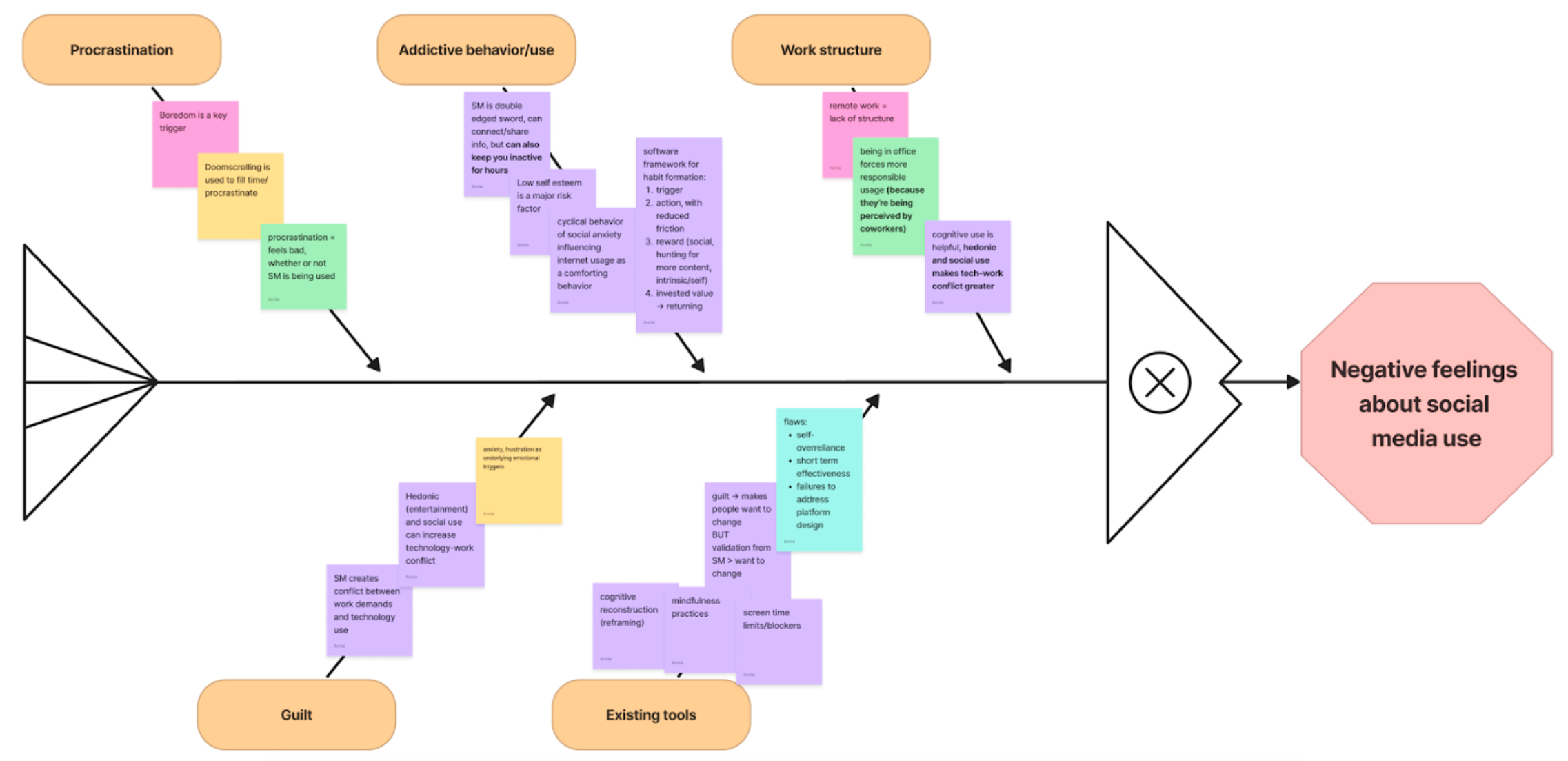
This diagram funnels the various factors that fuel negative feelings resulting from social media use, a major part of our problem area. What we find is that guilt is a core emotion that leads to the negative (over)use of social media, and that the addictive cycle of social media design causes tensions with work/life responsibilities. We can learn from what existing tools are trying to apply as well as their current weaknesses, which don’t do enough to address the negative feelings that result. This diagram was supplemented with research findings from our literature review.
Connection Circle Preview
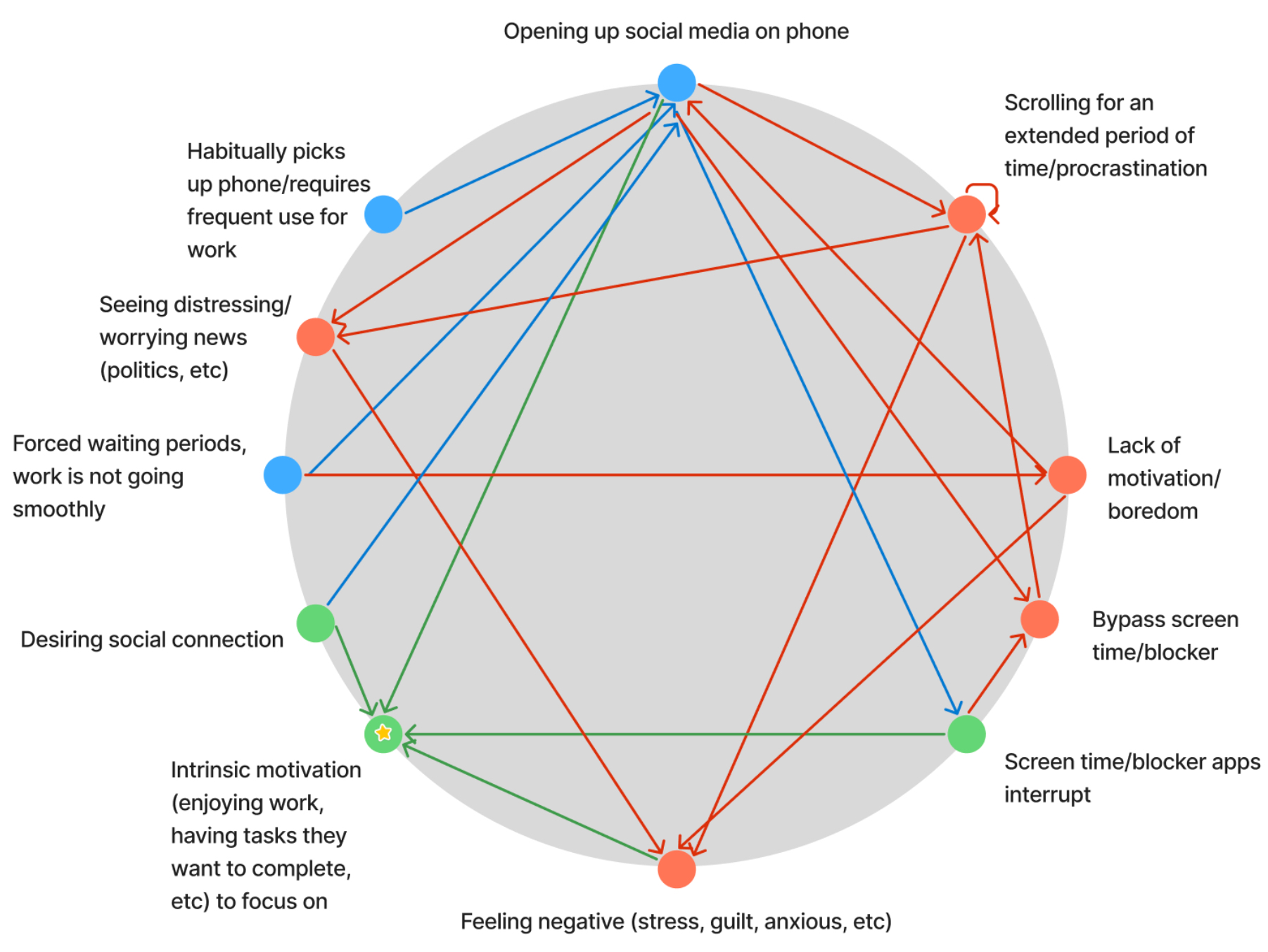
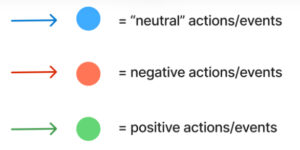
The primary takeaway from this is that opening up social media is not inherently a negative/detrimental action. Rather, it is the factors after the initial opening of the platform that leads to negative feelings. The key factor that helps people break away is having some intrinsic motivation for them to engage with rather than using social media. This is reflected in different ways from participants (spending time with friends, having a task that is interesting, etc), but they indicate a need to find an intentional thing to engage with instead of social media.
Secondary Research
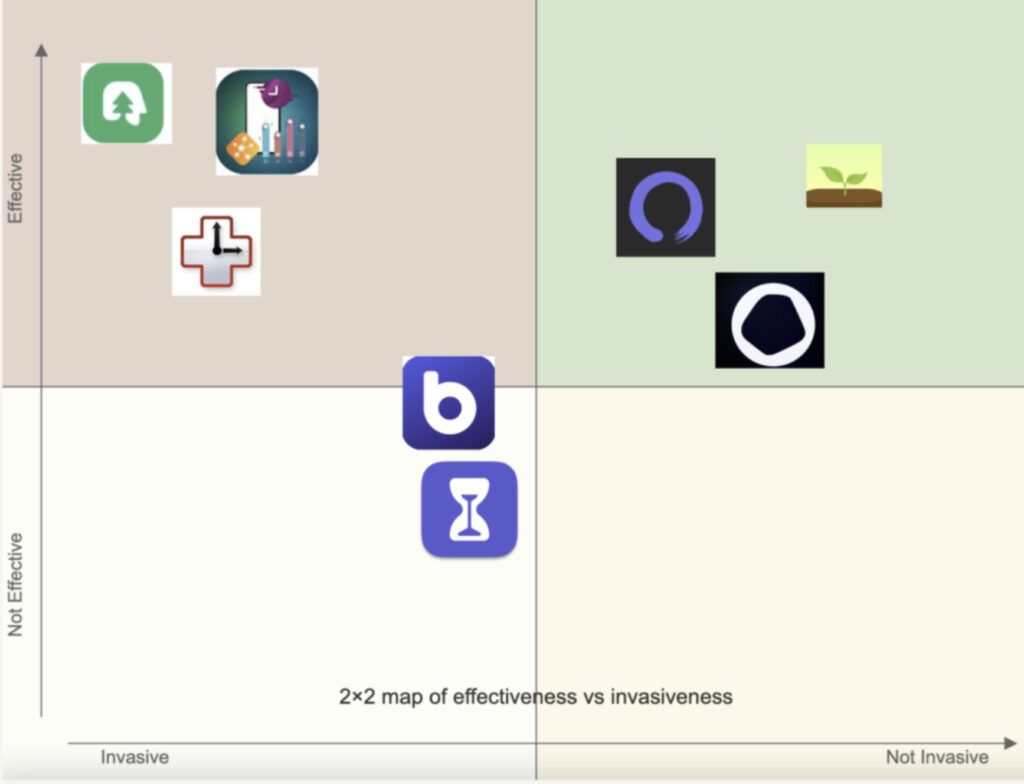
For our research, we looked at the following list of studies:
- Exploring the influence of excessive social media use at work: A three-dimension usage perspective”
- Social media addiction: Its impact, mediation, and intervention
- “The impact of social media usage on lifestyle behaviors and health
- Using Self-Management Procedures to Decrease Social Media Usage in Adults
- Internet addiction and phone dependence: measurements, influencing factors, and effects
- Designing for Digital Detox: Making Social media Less Addictive with Digital Nudges
- Procrastination on social media: predictors of types, triggers and acceptance of countermeasures
- Assessment of the impact of social media addiction on psychosocial behaviour like depression, stress, and anxiety in working professionals
- How Social Media Shapes Our Happiness: Exploring the Mediating Effects of Social Comparison and Materialism
- Assessment of the impact of social media addiction on psychosocial behaviour like depression, stress, and anxiety in working professionals
KEY INSIGHTS FROM LITERATURE REVIEW AND COMPARATOR ANALYSIS
- Some of our studies focused on the workplace and the impact of social media on productivity whereas others focused on the overall impact of social media
- Social Media has a significant impact on mental health and it is often negative
- Most of the studies we examined show a line between social media use and stress, anxiety, depression, etc.
- In one of our studies, they found that excessive social media use (> 3 hours usage daily) is linked with eating less than the recommended amount of vegetables and fruits.
- Most of the studies we examined show a line between social media use and stress, anxiety, depression, etc.
- Social Media is designed to be addictive and its excessive use at work negatively impacts job performance
- In study, they found “77.6% of employees showed severe social media addiction.
Strong statistical correlations were found between SMA and depression, anxiety, and stress (p=0.001 for all three)”
- Social media usage is detrimental to job performance because it creates conflict between work demands and technology use
- Social media usage is linked with low productivity at work which consequently leads to poor job performance.
- Low self-esteem is a major risk factor for social media addiction
- Additionally, social media use can contribute to lower self-esteem which in turn worsens the mental health of many users
- This was supported in a study where they surveyed 232 college students about their experience online
- Additionally, social media use can contribute to lower self-esteem which in turn worsens the mental health of many users
- Social Media is a double-edged sword
- Benefits of social media usage: connections, collaboration, information sharing
- Harms of social media usage
- Addictive
- Decreased productivity
- Negative impact on mental health
- Interventions are needed to address the negative impacts of social media usage
- Current interventions:
- Cognitive reconstruction (reframing how we think of social media)
- Mindfulness practices
- Setting screen time limits
- Current flaws:
- Self-overreliance
- Short-term effectiveness
- Failure to address platform design
- Current interventions:
- Different types of social media can have different effects on technology-work conflict
- Cognitive use: the use of social media to learn and seek new information, mostly beneficial for work.
- Hedonic use: the use of social media for entertainment and relaxation. This use is beneficial for the short term but can be harmful in the long term.
- Social use: the use of social media to connect with others. This use is beneficial for strengthening bonds but can also contribute to social comparison and FOMO.
- Excessive use of social media is linked to increased social comparison and materialism
- Users are constantly exposed to content that portrays unrealistic standards, leading them to compare their own lives to these polished images.
- In one study, researchers found a “Strong positive relationship between social media use and materialism (b = 0.59). Effects were particularly notable on image-sharing platforms”
- Additionally, they found that women are more likely to develop mental health issues related to the use of social media.
- Users are constantly exposed to content that portrays unrealistic standards, leading them to compare their own lives to these polished images.
CRITICAL QUESTIONS FOR FURTHER EXPLORATION
- There are many correlations drawn across the studies but it’s not clear if social media is the cause or an effect. For example, are individuals with pre-existing mental health issues more likely to become addicted to social media?
- Most of the studies focus on the short-term effects of social media, what exactly are the potential long-term effects of excessive social media use?
- How can social media platforms be designed to minimize addictive features and promote healthier usage patterns?
- How effective are the different social media usage interventions in the long-term and are they equally effective for different populations? If not, how can we develop solutions for different groups of people? What are the key considerations we need to consider?
- How do different social media platforms contribute to varying levels of addiction and mental health impacts (i.e. Instagram vs Snapchat)?
- What role does self-perception play in the relationship between social media use and mental health?
- What are the most effective ways to integrate digital wellness policies in the workplace? Do companies have a responsibility to support employees’ digital well-being?
KEY MARKET TRENDS AND STRATEGIC IMPLICATIONS
- Focus on User Experience and Personalization
- There’s a growing demand for solutions that can adapt to individual user behaviors and goals. For example, ScreenZ offers lots of customization features to reduce users’ screen time. In our ideation phase, we will focus on figuring out what the most important features are and providing users with the ability to easily make custom features.
- Holistic Approach to Digital Wellness
- Simple app blocking isn’t enough anymore. Most apps now offer a variety of features to help users improve their mental, emotional, and physical health.
- In our ideation phase, we plan to focus on different ways to improve users’ overall well-being.
- Positive Reinforcement Through Gamification
- Apps like Forest and Roots use gamification elements to discourage the use of social media such as virtual rewards, achievement systems, etc.
- In our ideation phase, we plan to brainstorm the most effective gamification elements to add to our solution.
- Data-Driven Insights and Visualization
- Most apps have advanced analytics and visually appealing data presentations
- Users expect comprehensive insights to understand their digital habits over various time periods
- In our ideation phase, we plan to add the most useful data/insights to our proposed solution.
- Cross-Platform Integration with Professional Tools
- Solutions that work across multiple platforms and devices are highly liked.
- There’s a growing need for a seamless experience across different environments (work, social, personal, etc.).
- In our ideation phase, we will consider different environments and how to help users better track their usage across all devices and platforms.
Final Proto Personas and Journey Maps
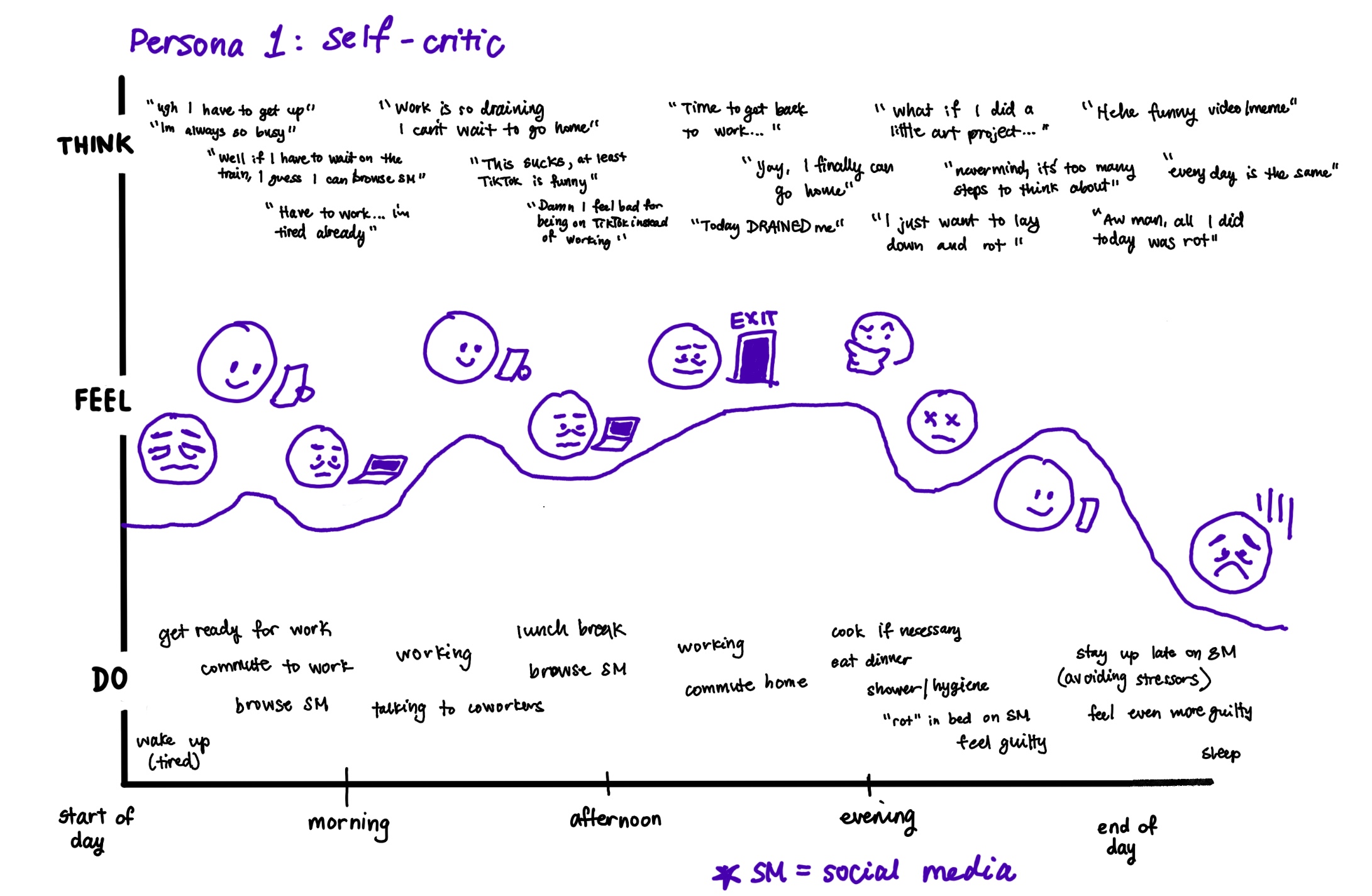
Persona 1: the self-critic
Activated role: human / young adult / early career employee / mentally ill
Goal: Wants to use their downtime in a self-identified productive manner instead of mindless/unintentional usage
Motivation: They want to engage in their day-to-day life in a way that feels rewarding and accomplishing to them, as social media usage currently feels wasteful
Conflict: When this person has free time, they default to using social media for entertainment and leisure. However, it ends up having a draining effect as they feel guilty from self-imposed judgements on what they should instead be doing, with the goal of being productive in some way
Attempts to solve (and results):
- Added some friction to media usage, such as screen time limiters, which ultimately had little to no effect as they were easily able to ignore and skip it
- Redirected attention to other hobbies/activities that were intrinsically rewarding, such as arts and crafts like knitting or reading. These generally were a more effective manner of screentime reduction, but were difficult to maintain as it required mental energy to participate in these hobbies in the first place, whereas social media usage took little to no energy when they were mentally drained/exhausted.
Settings: Home, work hours, situations where they were waiting for prolonged periods of time such as in a pharmacy line or on the train
Key Tools/skills:
- Uses social media to maintain distanced interpersonal relationships
- Consuming different social medias such as TikTok, Reddit, YouTube, etc
- Engaging with other hobbies that don’t inspire internal guilt or shame, which often happened to be activities that would produce a craft or product (knitting, crocheting, etc)
More:
- Has a tendency to overconsume social media when they weren’t initially intending to do so. This usually stems from having free time and mindlessly opening social media for prolonged periods of time, reaching up to a couple hours at a time without breaks. Because this person has a high mental load, they often don’t have the capacity to ruminate/decide on which or what hobby to pursue in their limited downtime, as it takes considerable mental effort to consider, decide, and begin a new project. So, this user ends up on social media, which is an effective way of distracting from stressors and doesn’t require a lot of mental overhead to commit to.
Persona 2: social media reflex
Role: active employee, young adult, early career, family member
Goal: wants to meaningfully engage in their downtime instead of mindless social media usage. This can mean focusing on work-related tasks, but also specifically self-identified ‘productive’ tasks like spending time with family or loved ones.
Motivation: They want to form deeper and more intimate relationships with the people close to them or around them
Conflict: Struggles to use their devices mindfully. Social media browsing is so ingrained in the user that at times they may even open their phone, automatically open their social media of choice, and forget what their initial task had been in the first place.
Attempts to solve:
- utilizing simple blocker/nudging apps such as Apple Screen Time, which ultimately turned out to be ineffective, demoralizing, and easily ignored or turned off
Settings/environments: In-office work days, remote work days, situations with prolonged idle waiting times
Tools and skills
- Using contextual and personal reminders for accountability, such as other people or alarms
- Do Not Disturb focus setting on phone
More
- Uses their phone for social media unintentionally and automatically. If they open their phone to check their email or respond to a message, this persona often instinctively clicks into an app and gets immediately distracted. As a result, a lot of accidental social media occurs. This action doesn’t stem from a desire to be on social media, but rather a reflexive habit to open the apps, and it is very unintentional/mindless. The problem isn’t necessarily opening apps unintentionally, but rather becomes problematic because they immediately get distracted or ‘hooked’ on an infinite scroll system of instant gratification like TikTok, Reddit, Instagram, etc.





Comments
Comments are closed.