
Spotify: squads and tribes
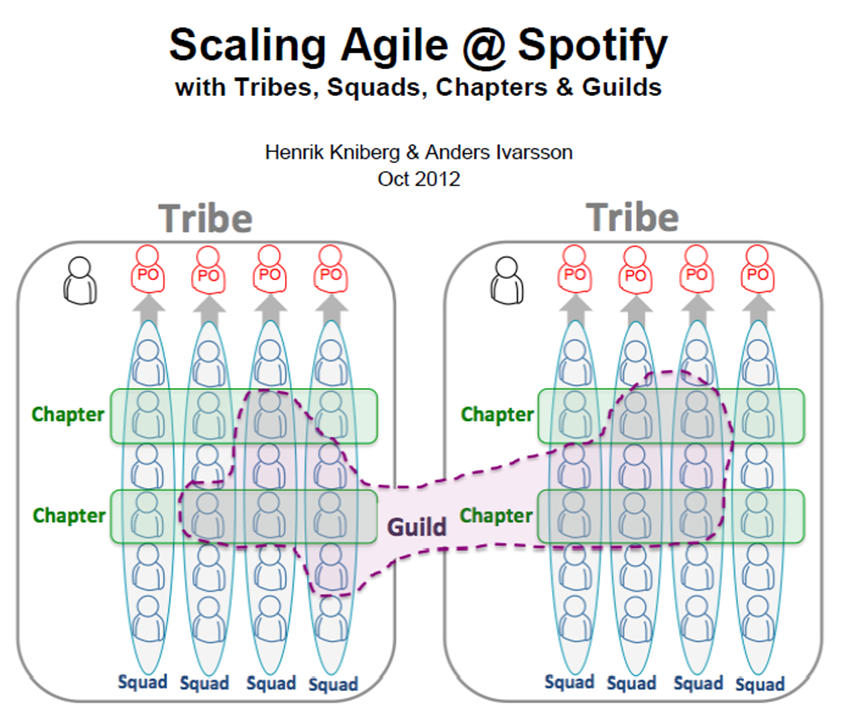
At Spotify, each squad of 6 to 12 people owns one feature area and chooses what to build within its tribe’s mission. The PM sits inside the squad as a product owner, and each tribe (collection of related squads, typical up to 100 people) also has a product lead in its leadership trio. The product owner sets priorities while the squad decides how to build, so their authority is high but comes from persuasion. Spotify itself later moved away from the pure model.
Airbnb: functional, design-led
At Airbnb, decisions come from the top. Brian Chesky moved the company to a functional org with one roadmap, and he reviews the work himself. The classic PM role was merged with product marketing, designers became equal partners, and program managers took over coordination. PMs have limited say on direction and focus on why a product matters and how to explain it to customers.
Zappos: holacracy
At Zappos, self-governing circles make decisions, and roles own the work instead of managers. There is no PM title, so anyone can hold a product-type role, and their authority is only what that role’s written accountabilities give them. About 18% of staff left during the 2015 rollout, and Zappos later shifted to market-based teams that each run their own P&L.
Where I would want to work
Spotify. As a new PM, I want to own a real problem with a small team, without a CEO overruling each call or the confusion of having no titles. Airbnb would teach me taste and storytelling, but I would have little say in direction. Zappos sounds freeing, but unclear roles would make it hard to learn what good product work looks like.



