
Final Reflection
Before this class
I thought design was a matter of aesthetics. As long as something looks pretty and perfect, it will be lauded as an appealing product. For our app on posture, as long as it contains the obvious components such as settings, pause, resume, and start buttons and basic features such as login and session review, our users will find the workflows intuitive to use. However, I soon learned that “pretty” is subjective. An app with excessive and frivolous detail can distract from the user experience. As mentioned in the About Face, Chapter 5, an app that is flashy but adds no value to helping the user achieve their end goals will not gain user traction or sustain long-term value.
I also learned that nothing in design is perfect. Drawing from the diagram Christina should at the beginning of class below, I realized that there is no linear or direct path to successful design.
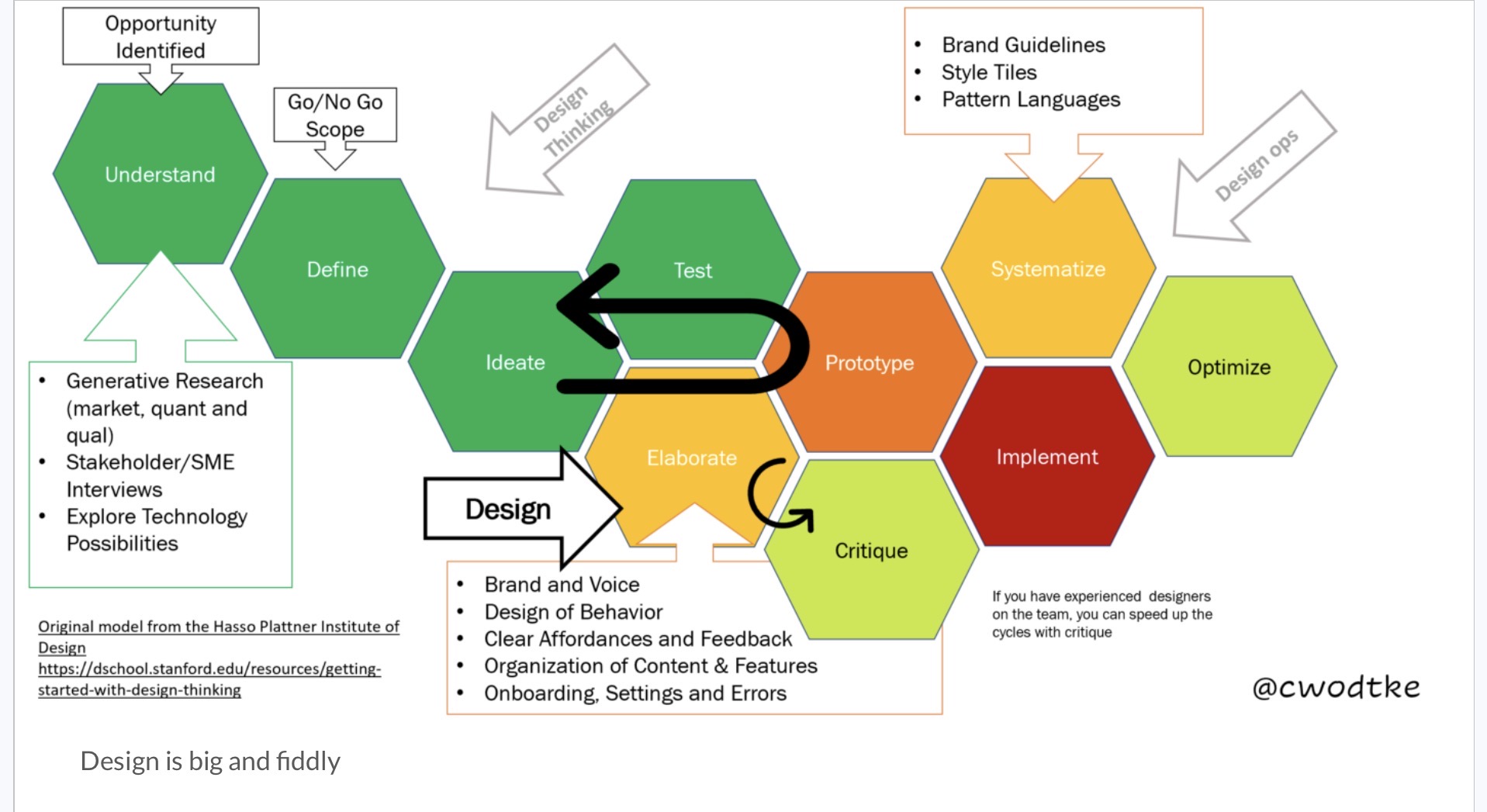
Design requires small iterations, collecting tests and evidence, making edits, and perhaps even backtracking and pivoting. It is a cycle of gathering feedback, extracting insight, and the humility to admit mistakes and implement change. The free listing and chunking into affinity groups exercises were messy and rough, but they were the necessary raw materials for creating a polished product.
Before this class, I never thought of the individual elements of design as a system. I did not consider the effective use of whitespace, visual hierarchy, or the wide range of layouts such as grids, cascading menus and toolbars. I did not think of the granular relationship between atoms, molecules, organisms, and webpages.
More importantly, I learned that design is all about enhancing the user’s capabilities and experience, and there is no better way to do that besides hearing it directly from them. By watching and talking with users during in class usability testing, I came to realize our navigation was not as clear as I presumed. Therefore, I implemented a guided tutorial to walk users through our app’s main features. I also experienced the rare thrill designers feel when a user’s eyes lit up at a certain implementation such as our reward system.
I did this work with these experiences…
The process of crafting user personas based on our interviews and making system path diagrams and journey and assumption maps changed my outlook on the user experience. Before then, I thought I had it all in my head–who they are, what they want, what they’ll do. Only when I forced myself to draw them out on paper did I realize the ideas in my mind were generic and blurry. I began adding more details and considering new scenarios.
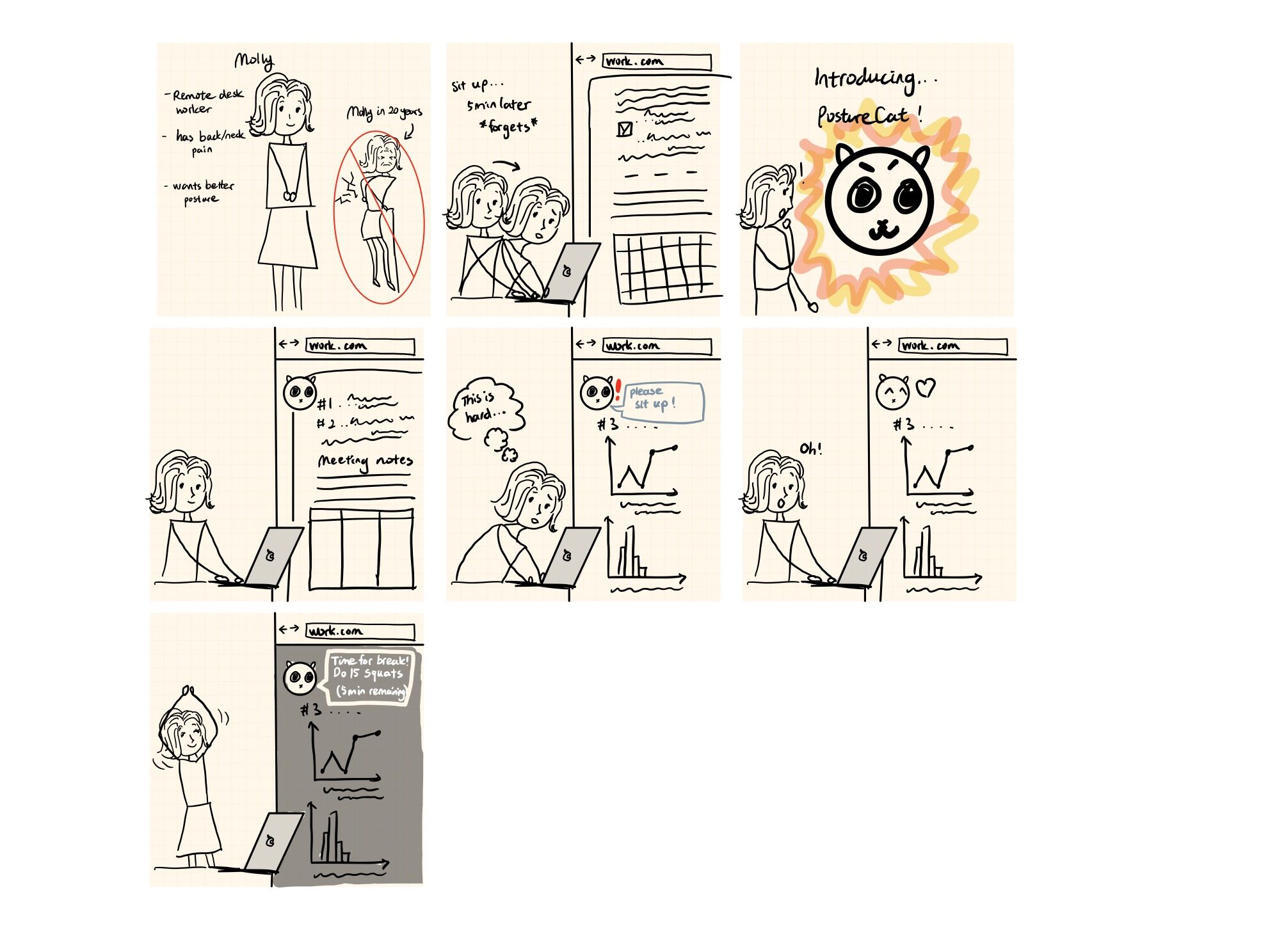
The user personas didn’t just help me put my thoughts into pictures, it helped me communicate. Just as guest lecturer Debora Aoki mentioned, pictures help bridge the gap between cultures, languages and professional differences. It helps construct an end-to-end user experience, present new ideas in a compelling manner, give form to customer insights, and promote empathy and perspective-taking. I changed my approach to my professional relationships and presentation style to use drawings to spark interest and invite conversation.
Besides these diagrams, I have also begun to incorporate sketchnotes in my other classes.
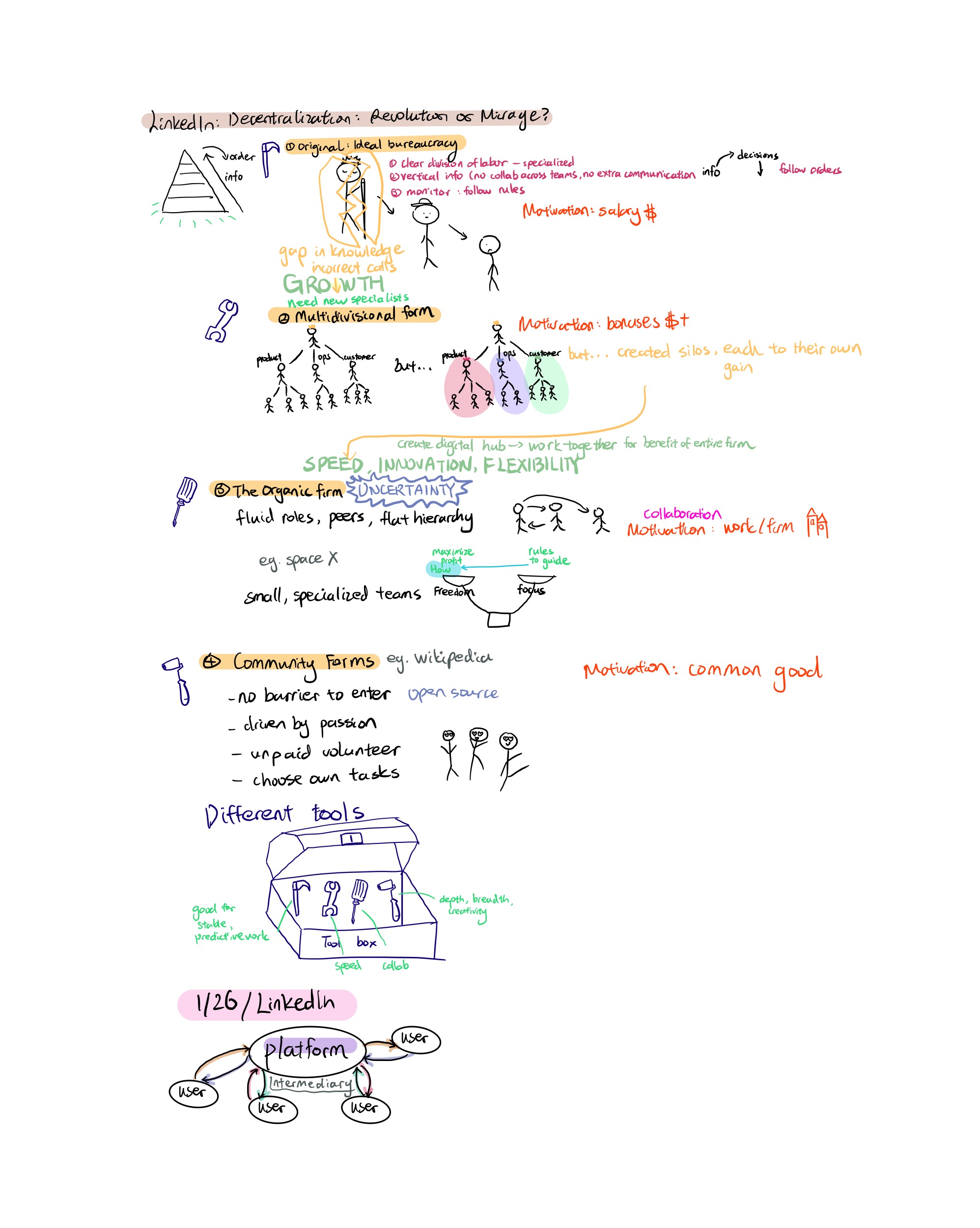
The process of creating sketchnotes does not just involve reframing the author’s ideas in my own words, it requires using my imagination to reproduce their ideas from scratch. Through this process, I internalize their teachings and add my own understanding. Different colors allowed me to group concepts together and arrows allowed me to find hidden connections beyond the linear flow of the text. It also made reviewing much more fun!
Ethical considerations.
The premise of our project was built on privacy. During our market research, we discovered that most posture apps and tools monitor the user in real time using their video camera. This incites a feeling of unease. Rachel, one of my participants, stated in her interview: “The person [the user] has to opt in, and then of course we would want to know what the data is being used for. Like, are you saving pictures of my face? Are you gonna anonymize me? Where are you posting this? Who can see this data?” As a result, we chose a non-intrusive intervention that captures as little of the user’s data as possible. By using a physical device to detect hunches and using the app solely for record-keeping purposes, the user no longer needs to worry about their privacy and data being leaked.
We also incorporated Design Values in our prototype by focusing on inclusiveness. We included a “High Contrast” option in settings to help users with color-blindness differentiate between buttons, a “Large Text Mode” for users with impaired vision, and space-bar shortcuts for users with motor impairments.
Now I think this
Design is not just what the designers or stakeholders think, it’s about both the user experience and societal implications of our product. There is no better way to discover product market fit than to talk with customers and watch them use our product. As humans, we are subject to our own biases. Assumption mapping deconstructs that. Without user data, we may perpetuate existing systems of inequality and exclusion. In addition, we should be held accountable for the products we choose to deliver to the world. It should not undermine user choice. We should also consider how our technologies may be misused and proactively install preventive measures.
Next time when faced with a similar situation
I will try to recruit a more diverse set of participants and conduct more user interviews. I will take the time to organize my notes, brainstorm, and draw out wireflows. I will try to involve co-workers from different departments in our discussions and I will try to formulate multiple designs of the same feature for users to test.
From this class, I learned that the intuitive interface we interact with did not come from an intuitive design process. It was hours of work spent iterating, gathering insight, and experimentation. Moving forward, I aim to approach design not as an amplifier of personal preferences, but as a process grounded in intention, empathy, and accountability.



