Intro Note
Design for Behavior Change was genuinely one of the most rewarding classes I have taken this quarter. It was filled with small gems—ideas, frameworks, and moments—that reshaped how I think about understanding and influencing human behavior.
To organize my reflection, I structured it into two parts. The first highlights several key conceptual takeaways; how my thinking evolved over the quarter and how I hope to apply these ideas moving forward. The second revisits a few memorable experiences from the project process that revealed important lessons in practice.
Key learnings
1. Understanding Users Deeply: Beyond Interviews
One of my biggest takeaways was learning how to conduct deeper and more dynamic user research.
Before taking this class, I largely thought of stakeholder interviews as the primary way to conduct qualitative research. While interviews are valuable, the course introduced me to other powerful ways of understanding users—particularly baseline studies, intervention studies, and behavior tracking.
These methods capture what people actually do, not just what they say they do. For behaviors that unfold over time—like eating habits or late-night routines—this kind of real-time observation is especially valuable.
Going forward, I hope to combine interviews with diary studies, behavioral tracking, and intervention testing to develop a more complete understanding of user behavior.
2. From Data Collection to Sense Making
Another major shift for me was learning how to systematically synthesize qualitative data.
Previously, my approach to analyzing interviews was fairly informal: I would read through transcripts and jot down observations.
The course introduced me to a much more structured process—affinity grouping with sticky notes, clustering insights, and translating those insights into personas and journey maps. Another surprisingly powerful lesson was the role of visual thinking. Drawing ideas, sketching systems, and mapping experiences often conveyed patterns more clearly than paragraphs of notes. Visualizing information not only helped communicate ideas to others, but also helped me understand them better myself.
These tools—affinity mapping, personas, journey maps, and visual synthesis—are methods I hope to continue using in future research and design projects.
3. Understanding Human Behavior (Our Class Theme!)
A third takeaway was developing a deeper understanding of how behavior actually works.
One idea that stuck with me is that behavior often emerges from habits shaped by environmental cues and triggers. Frameworks like BJ Fogg’s Behavior Model (B = MAT) provided a useful starting point for identifying potential intervention points.
But more importantly, the course emphasized that behavior rarely exists in isolation. Instead, behaviors are embedded within systems of interacting factors, often forming feedback loops.
This systems perspective shifts the design challenge: instead of trying to change behavior directly, the goal becomes identifying leverage points within the system where a small intervention can create meaningful change.
4. Trusting the Process- And the Team
Perhaps the most important lesson was learning to trust the process of design, even when the outcome is uncertain.
During the project, there were moments when I felt stressed because it was unclear whether we were even heading in the right direction. One example occurred when our baseline interviews revealed that participants often had valid reasons for eating late at night, and many of them did not actually want to stop doing so.
This discovery challenged the entire premise of our project.
But this experience taught me that product design is inherently iterative. Assumptions get overturned, ideas get refined, and pivots are part of the process. It is okay not to know where things will end up when you begin.
What matters is continuing to learn, test, and adapt. If you trust the process and the team (no need to stress to figure things out all by yourself!), things tend to work out.
Key Experiences & Memorable Moments
Story 1: A Lesson on Adaptability, Flexibility, and Pivoting
One of the most memorable moments came when we were synthesizing our baseline study data.
Our original goal had been to design an intervention that would stop late-night eating altogether. However, our interviews revealed something unexpected: most participants were not motivated to eliminate late-night eating.
This challenged the entire premise of our project, and we faced a difficult question: Do we stay the course, or pivot?
With our intervention study deadline approaching, we decided we needed more data before making a decision.
Instead of scheduling formal interviews—which would have taken too long—I quickly wrote down a few guiding questions and went into the dining halls and dorms to talk with students directly. That afternoon, I conducted five additional rapid interviews.
These conversations revealed an important insight: while students were not motivated to stop eating late at night, many did want to make healthier late-night choices.
That insight allowed us to pivot our intervention from eliminating late-night eating to supporting healthier late-night decisions.
This experience taught me two important lessons. First, projects often begin with assumptions that may turn out to be wrong. When that happens, the most effective response is to gather more evidence rather than debate possibilities internally. Getting out and talking to users is far more productive than speculating in circles.
Second, it reinforced the importance of adaptability when solving problems. Rather than getting stuck trying to follow the “right” research process (i.e. drafting a comprehensive interview guide, recruiting participants, scheduling interviews ahead of time), I focused on what would help us learn the fastest. By stepping outside traditional molds- conducting quick, scrappy interviews in dining halls and dorms- we were able to gather actionable insights in a single afternoon and make a confident pivot.
Story 2: On Ethical Considerations: Designing for Wellbeing, Not Control
Another memorable moment occurred during usability testing.
One participant said something that stuck with me:
“I like the idea of building a community of being healthier. It puts snacking in a positive perspective instead of framing it as something you shouldn’t do.”
This comment highlighted an important ethical dimension of designing for behavior change.
Some health apps frame behaviors in a punitive or restrictive way, which can sometimes backfire by increasing anxiety or guilt. If we had insisted on designing an intervention that discouraged late-night eating entirely, we might have unintentionally reinforced that kind of negative framing.
Instead, listening to users helped us design something more aligned with their needs. By recognizing that late-night eating can sometimes serve practical or social purposes, we were able to meet users where they were and focus on supporting healthier choices rather than restricting behavior.
This experience reinforced how important it is to design with users rather than for them, so that products genuinely and ethically support users’ wellbeing instead of imposing assumptions about what might be best for them.
Closing Note
Overall, this class was an incredibly meaningful experience.
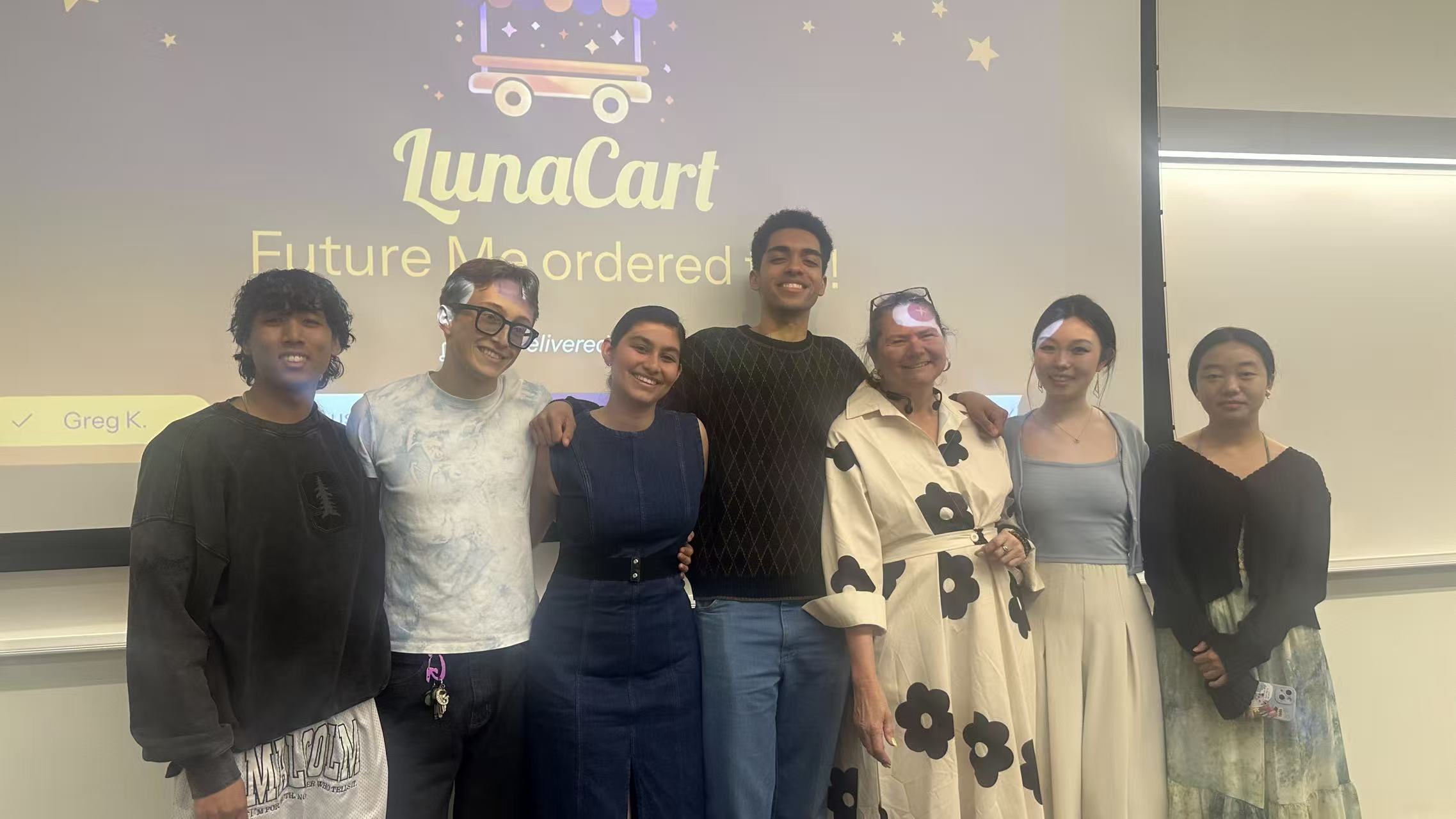
I am deeply grateful for my team, who made the entire process both productive and fun—from unboxing sponsor food together to temporarily transforming ourselves into a late-night delivery team during testing.
I am equally thankful to the teaching team for their support and guidance throughout the quarter, especially when we were navigating difficult decisions like our project pivot.
I leave this class with not only new tools and frameworks, but also a deeper appreciation for the process of designing thoughtfully for human behavior.
Endless gratitude and appreciation for such a wonderful quarter. <3