
Description of the behavior
The behavior I want to change is my tendency to play with my phone when I have urgent work to do, especially when I am fully aware that I have important deadlines or works to do. Before I start my work, I often choose to scroll on my phone. This usually happens during unstructured time, such as between scheduled commitments.
My phone use feels automatic. I pick it up without thinking, especially when a task feels stressful. While being on my phone gives me short-term comfort and distraction, it usually makes me more anxious afterwards because I end up rushing my work or staying up late to finish what I left behind due to procrastination.
I have noticed that I only become focused when the deadline feels extremely urgent or that I sense immediate consequences for not starting right away. When the pressure is high, I can work efficiently, but before that point, my phone becomes a major source of procrastination. This habit prevents me from using my time effectively and adds unnecessary stress to my schedule.
My goal is to reduce my phone use during important work periods and build a habit of starting tasks earlier to have more control over my schedules.
Measurement
To better understand my phone-use habit, I monitored my behavior over the course of two days: Sunday and Monday. On both days, my schedule included structured commitments and unstructured time in between the commitments
Rather than tracking every minute of my day, I focused specifically on the gaps between scheduled commitments. These were the moments when I had the most freedom to choose what to do with my time. I paid attention to whether I used those gaps productively or whether I was using my phone.
Below is the link to the time-log excel sheet for my schedules on January 11th and January 12th:
Models I used
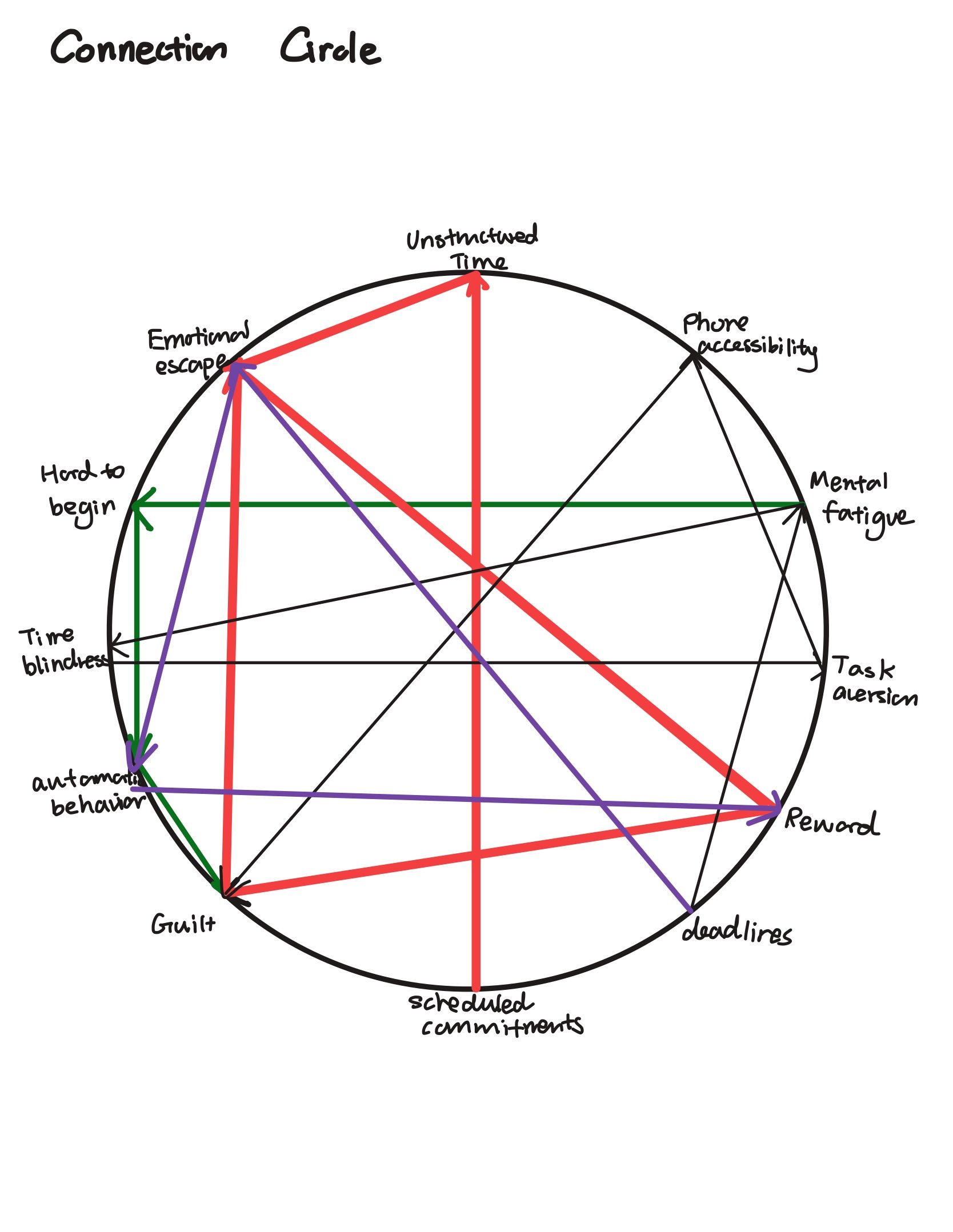
Connection Circle
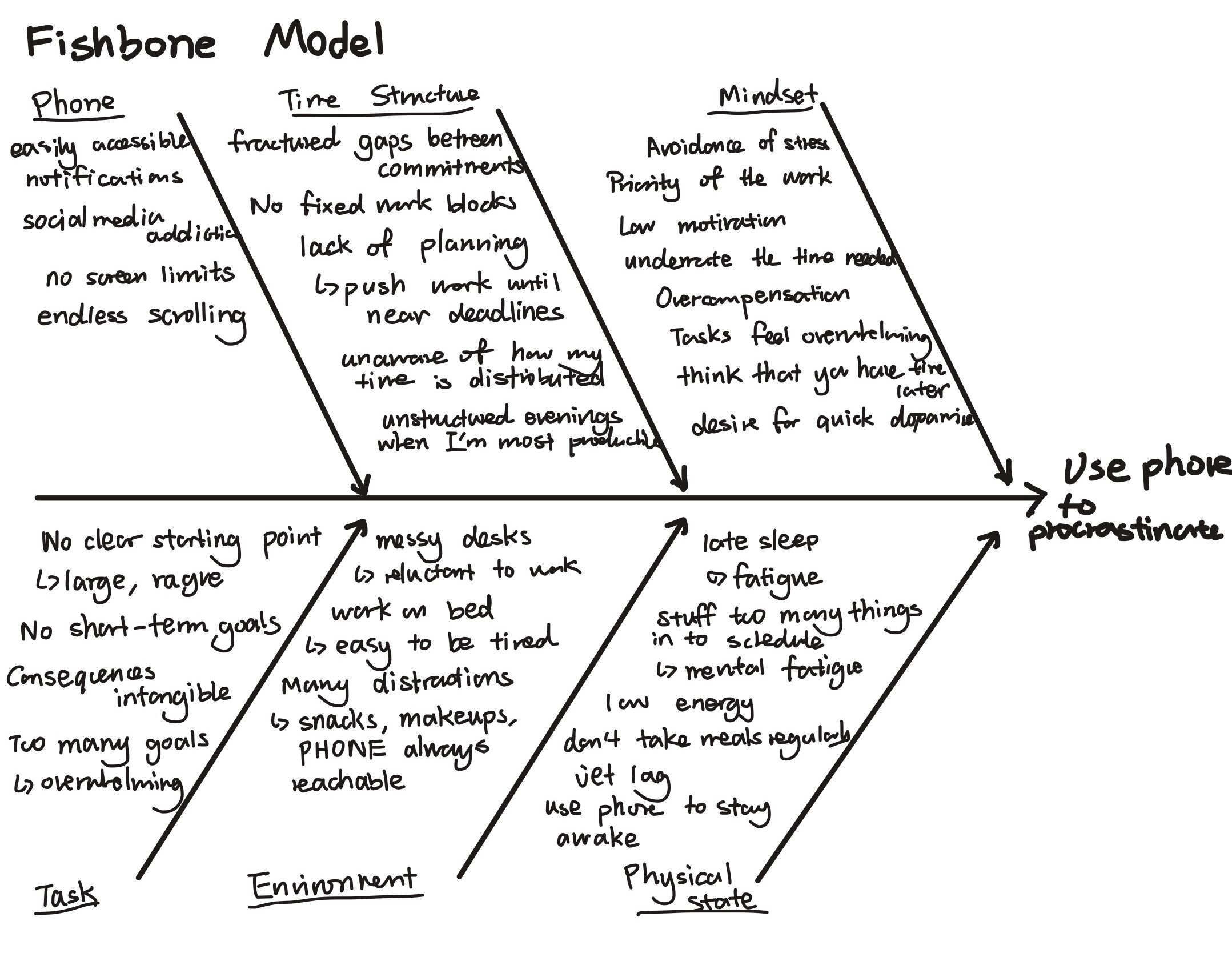
Fishbone Model
Main Learning from the Process
I realized that my phone use is not just a bad habit, but part of a larger system involving my schedule, physical states, and environment. I noticed that I rarely use my phone excessively during scheduled commitments like meetings, classes, or interview coaching sessions. Instead, most of my phone use happens during unstructured gaps between these events, especially when I do not have a plan. Once I started working, I do not have the tendency to use my phone and is able to concentrate for a fairly long period of time.
Another important learning was that I tend to start working only when a deadline feels extremely urgent. When tasks feel distant, I avoid them by scrolling on my phone because I do not have a clear awareness of the time and consequence of procrastination.
I also realized that my physical state plays a big role. Late nights, mental fatigue, and sleepiness during the day make it harder for me to resist distractions. When I am tired, my phone becomes an easy way to escape effortful thinking. I always think that after playing my phone I’d be awake and start working, when it’s not often the case.
Overall, this process helped me see that my habit is not just about lack of self-control, but it is strongly influenced by other cues around the environment. Understanding these patterns makes the habit feel more manageable and less like a personal failure.
What I Will Try to Do Differently
Based on what I learned, I want to focus on changing my environment and structure, rather than relying only on willpower.
First, I will create clearer plans for my unstructured time. Instead of leaving gaps open, I will write down specific tasks I want to work on between meetings and classes. Having a clear starting point should make it easier to begin without procrastinating.
Second, I will reduce my phone’s accessibility during work periods. I plan to put my phone out of reach when I need to focus. This should decrease phone use as automatic behavior.
Third, I will break large tasks into smaller, more manageable steps. Instead of thinking “I need to prepare for interviews,” I will write specific actions like “review one question” or “practice one answer.” This should reduce task aversion and make starting easier.
Finally, I will try to protect my physical state by going to bed earlier when possible. When I am less fatigued, I have more mental control and am less likely to rely on my phone for stimulation.
Sujin Lyu, January 13th 2026, Writeup: Measuring me 2



