
Behavior I Chose to Track
The behavior I chose to study is using my phone after getting into bed, particularly scrolling social media and passively consuming content before I go to sleep. I chose this behavior because it happens every night, is something I do for way longer than I intend to, and I find that it affects how long it takes me to fall asleep and how rested I feel the next day.
How I Measured Myself
Duration & Frequency
I measured this behavior over two consecutive nights, logging my behavior each night at bedtime and reflecting the following morning.
What I Logged
Rather than using strict minute-by-minute tracking, I logged data that felt more meaningful for understanding this particular habit :
- When I got into bed
- Whether I picked up my phone
- Approximate length of phone use
- Type of phone use (scrolling, texting, watching videos)
- Emotional state before sleeping (tired, anxious, overstimulated, calm)
- How long did it take me to fall asleep
- How rested I felt the next morning
I chose this approach because I wanted to understand the patterns of this habit better and how it actually affects other aspects of my life
Data Logged
Night 1
- Time I got into bed: ~11:30 PM
- Picked up my phone: Yes
- Approximate phone use: ~35 minutes
- Type of phone use: Instagram scrolling, texting
- Emotional state before sleeping: Mentally tired, slightly anxious about school
- Time it took to fall asleep: ~45 minutes after getting into bed
- How rested I felt the next morning: Groggy, low energy
Night 2
- Time I got into bed: ~12:00 AM
- Picked up my phone: Yes
- Approximate phone use: ~20 minutes
- Type of phone use: Watching TikTok, replying to messages
- Emotional state before sleeping: Jet-lagged and tired
- Time it took to fall asleep: ~30 minutes after getting into bed
- How rested I felt the next morning: Slightly better than Night 1, but still tired
Experience Logging the Behavior
Logging the behavior made me much more aware of how natural phone use before bed feels to me. I find myself just reaching for my phone even without realizing it. Writing things down forced me to slow down and notice emotional triggers like stress and mental overload that I usually ignore.
Main Learnings from Measuring
Across the two days, I noticed:
- Phone use often began as an attempt to “wind down” or to make up for “lost time” during the day, but ended up extending my bedtime
- Emotional states mattered more than time of day, and for me, stress made phone use a solution to it
- Once I started scrolling, it was difficult to stop
- Nights with more phone use led to worse sleep and lower energy the next day
- Lower energy the next day made me more likely to repeat the habit the following night
These observations made me realize the habit wasn’t isolated but it was part of a larger feedback system.
Model 1: Connection Circle
Using a Connection Circle, I mapped out the ecosystem surrounding my phone-before-bed habit.
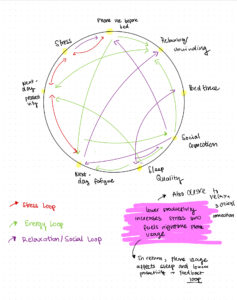
The connection circle helped me see that this habit persists because it satisfies several needs at once: comfort, distraction, and connection. At the same time, it also reinforces negative side effects like fatigue and stress.
Model 2: Iceberg Model
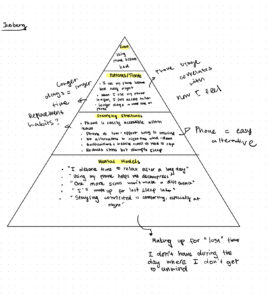
The iceberg model made me realize further that my habits also form due to the belief that my phone is the easiest, most accessible way to wind down, further supported by my desire to relax and my belief that sleep can be made up.
What I’d Do Differently Next Time
If I were to repeat this experiment, I would:
-
Track the habit over 5–7 days to capture more data
-
Separate intentional phone use from mindless scrolling
-
Experiment with small changes (e.g. phone outside the bedroom, alternative wind-down routines)
-
See how these changes affect my mood and sleep quality rather than trying to eliminate phone use entirely
Final Reflection
This exercise showed me that habits are formed by desires, and not because I lack discipline (I would argue the opposite.) My phone usage before bed habit exists because it solves short-term emotional needs, but it also creates long-term costs, and I find that they often exist in a feedback loop (stress leads to phone usage leads to poor sleep leads to more stress). By using the models, I gained insights about if changes can happen, and that is by addressing the entire system that formed this habit, and not just the habit itself.



