
One behavior that I would love to change is my daily water intake. As someone who is often dehydrated, drinking water consistently has been an uphill battle for years. I’ve tried many methods to improve my water consumption, including apps that nudge you every 20 minutes, smart water bottles with flashing lights as reminders, and far too many complaints from my parents and concerned friends. Despite these efforts, I’ve struggled to drink water consistently unless my mouth feels parched or I’m eating something really spicy or salty. For the sake of my wellbeing, I attempted to track myself every two waking hours for three consecutive days. To make matters simpler, I used water bottles with measurement markings to get a better sense of how much water I’m drinking. Here is the data I’ve gathered:
Table 1: Water Intake for Day 1 Measured Every 2 Hours
| Day 1 / Time | Water Intake in Time Interval | Reason for (Not) Drinking Water |
| 6 AM | 4 oz | Woke up/Thristy |
| 8 AM | 12 oz | Breakfast |
| 10 AM | 4 oz | Slightly Thirsty |
| 12 PM | 8 oz | Lunch |
| 2 PM | 0 oz | Class/got Busy |
| 4 PM | 0 oz | Class/got Busy |
| 6 PM | 8 oz | Thirsty/ Dinner Time |
| 8 PM | 10 oz | Did workout/thirsty |
| 10 PM | 4 oz | Remembered I should drink water! |
| Total Water Consumption | 50 oz |
Table 2: Water Intake for Day 2 Measured Every 2 Hours
| Day 2 / Time | Water Intake in Time Interval | Reason for (Not) Drinking Water |
| 7 AM | 0 oz | Didn’t have water bottle filled |
| 9 AM | 8 oz | Got thirsty |
| 11 AM | 0 oz | Doing work/busy |
| 1 PM | 8 oz | Lunch |
| 3 PM | 0 oz | Doing work/got Busy |
| 5 PM | 12 oz | Physical Activity/Tired |
| 7 PM | 4 oz | Dinner Time |
| 9 PM | 0 oz | Did not have water with me |
| 11 PM | 4 oz | Thirsty |
| Total Water Consumption | 36 oz |
Table 3: Water Intake for Day 3 Measured Every 2 Hours
| Day 3 / Time | Water Intake in Time Interval | Reason for (Not) Drinking Water |
| 7 AM | 12 oz | Woke up pretty thirsty |
| 9 AM | 0 oz | Didn’t have water with me/doing work |
| 11 AM | 10 oz | Lunch |
| 1 PM | 0 oz | At Mall without water bottle |
| 3 PM | 0 oz | At Mall without water bottle |
| 5 PM | 8 oz | Tired/Got Access to water |
| 7 PM | 4 oz | Dinner Time |
| 9 PM | 4 oz | Water Drinking Reminder on phone |
| 11 PM | 4 oz | Thirsty before bed |
| Total Water Consumption | 42 oz | |
From these measurements, there were several key insights that become obvious:
- Being occupied, either by being in class or doing work, often prevents me from thinking about drinking water and makes me ignore my bodily signals of feeling thirsty.
- Access to water is a big deterrent. If I do not have a filled water bottle with me, I am less inclined to go fill my water bottle or find another source of water.
- I tend to drink water consistently during meals, especially if I am eating alone
- Currently, I average to drinking ~43 oz of water a day, which is less than half of the daily recommended intake for women my age.
Next time, I would try to time myself in shorter intervals so I get more frequent nudges, which could lead to more consistent water intake over time. Additionally, I would try my best to always carry a filled water bottle with me so there is not an additional barrier to drinking water. I would also like to explore ways to be more inclined to consistently drink water even when I am focused on work or in class. One way could be keeping my water bottle within eyesight and making it a habit to drink water before and after class.
To better reflect on my experience with tracking my water consumption, I’ve added the following diagrams:
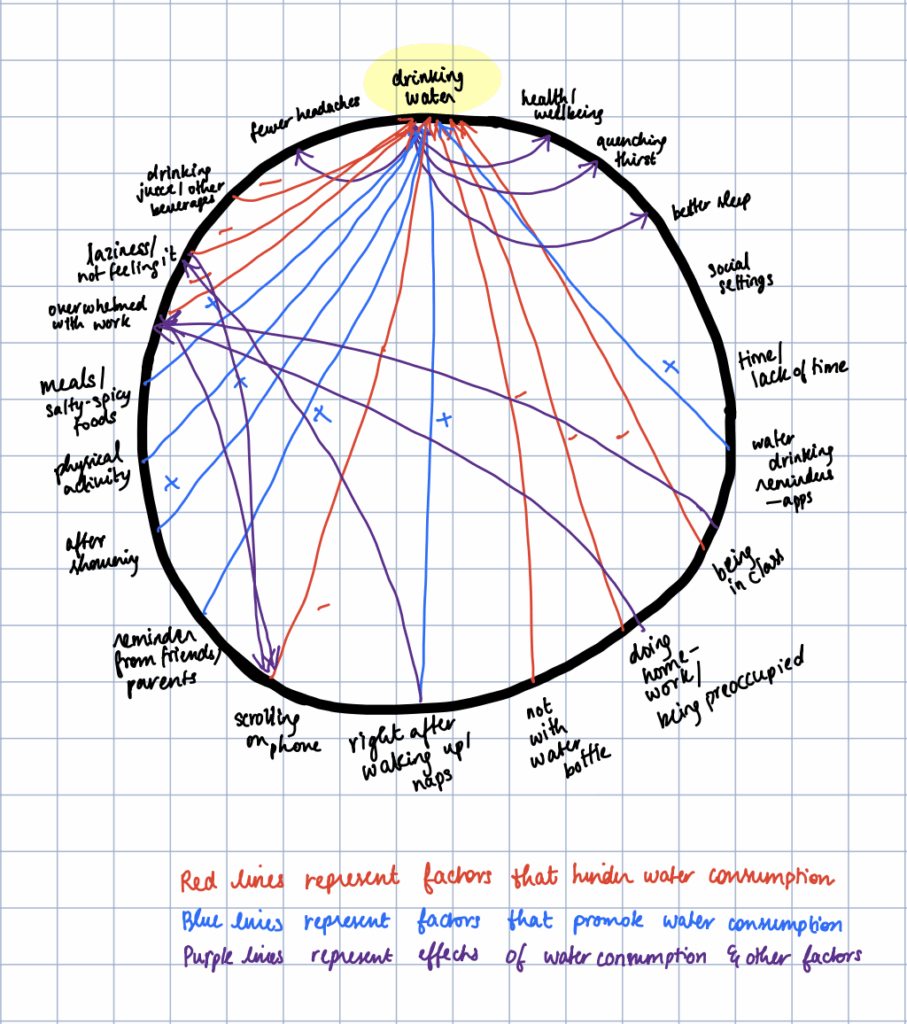
Figure 1: Connection Circle indicating factors that support and hinder water intake, along with effects of select factors
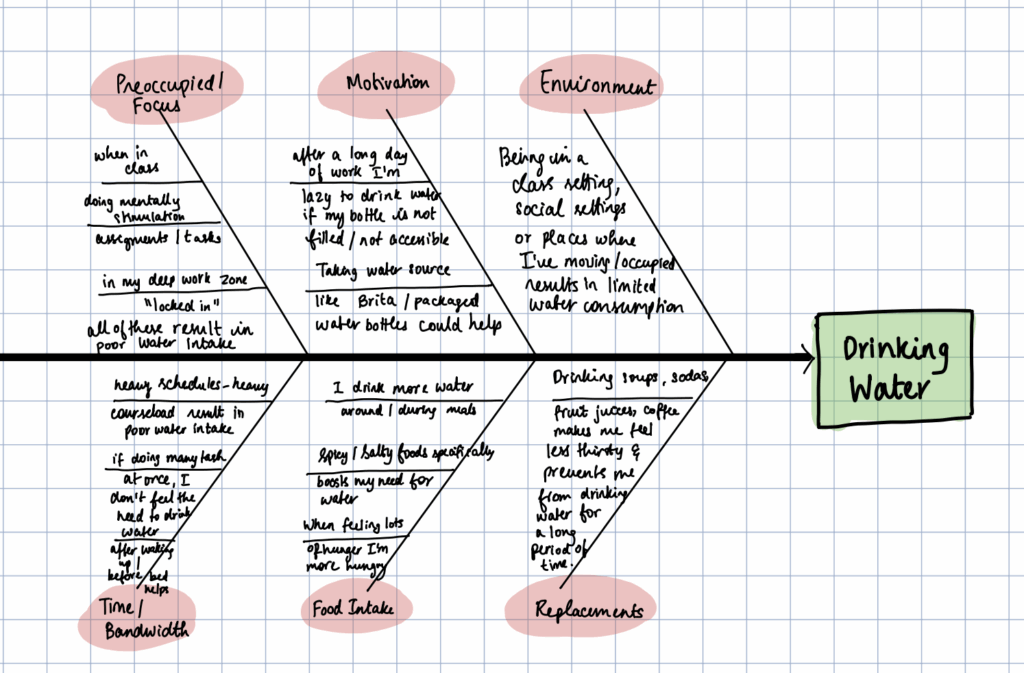
Figure 2: Fishbone diagram representing factors and subfactors that lead to water intake or lack thereof.
From Figures 1 and 2, I noticed that there was a constant tension from a variety of factors, some of which enabled water consumption and some of which prevented it, rather than a single root cause. In situations where I was performing physical activity, eating meals, or getting reminders from external sources, I naturally felt inclined to drink more water. However, when I was in a state of deep mental work or did not have a water bottle nearby, I felt demotivated or simply could not remember to drink water. That being said, through this process, I felt that my biggest hindrance was not a lack of motivation but a lack of access to water and attention to my bodily signals to drink water. Even though I understand the benefits of drinking water, factors like being preoccupied, forgetting to carry a bottle or being in environments where drinking feels inconvenient caused me to override that knowledge. Further, as I thought through ways to improve water consumption, keeping non-water beverages to a minimum, embedding water intake into existing routines and class transitions, and trying my best to carry a filled water bottle with me at all times came to mind. My hope is that I am able to consistently incorporate these changes and see a positive change in my water drinking habits soon!



