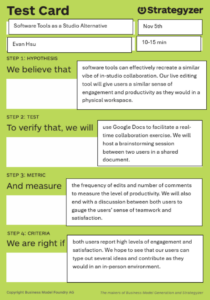
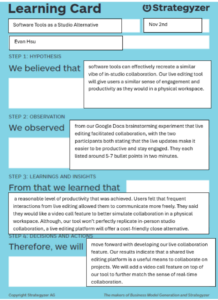
We tested assumptions about the feasibility of software tools as alternatives to traditional in-studio collaboration. First, we explored whether software could recreate in-studio engagement and productivity. Using Google Docs for a live editing session, we found participants felt engaged and productive but expressed a desire for a video feature to enhance the collaborative experience. This suggests that adding video capabilities would make the tool more effective in simulating in-person collaboration.
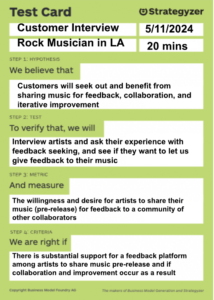
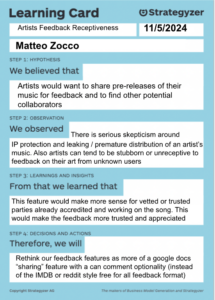
We also tested if musicians would benefit from sharing music for feedback and collaboration pre-release. Interviews revealed that while artists valued feedback, they were cautious about intellectual property risks and preferred sharing within a trusted group. This insight led us to prioritize secure, permission-controlled sharing over a broad feedback platform. Our next step is to design a feedback system similar to Google Docs, enabling safe, controlled collaboration among trusted peers.
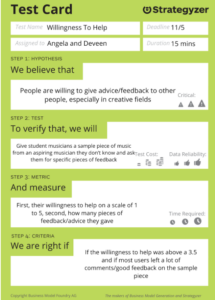
Furthermore, our hypothesis was that musicians are generally willing to help others in their field by offering feedback and constructive advice on music. To test this assumption, we asked student musicians to listen to a sample piece from an unknown aspiring musician and provide specific feedback. We measured their willingness to help on a scale of 1-5 and tracked the amount of feedback they gave. The observations showed that most participants were not only eager to help but also offered detailed and thoughtful feedback. This demonstrated a strong sense of community and mutual support within the music field, particularly among younger musicians or those still in school.
The insights we gathered from this test confirmed that people in creative fields, especially in a peer or student environment, are inclined to give advice and support each other. This validates our idea that a collaborative feedback platform could thrive within the music community, where musicians can benefit from one another’s input. Moving forward, we plan to develop a feedback feature similar to “Google Docs” for music, enabling musicians to share their work and receive structured, detailed feedback. This confirmation of our assumption strengthens our belief that a peer-driven feedback environment would be both feasible and well-received in our target community.