
Errors are inevitable—but how products handle them determines whether users churn, retry, or lose trust entirely. Comparing Slack, Uber, and major mobile banking apps reveals that not all errors are equal, and each industry protects a different revenue stream when things break.
Slack: The Cost of Broken Flow
Slack’s core value is workplace retention—teams stay only if communication feels instant and reliable. A message-send failure threatens not just a single action, but an entire organization’s workflow. When Slack shows its “Reconnecting…” banner, it anchors the user: progress indicators, autosave, and transparent status updates minimize panic. The business cost of failure is high—slower teams mean cancellations—so Slack invests in graceful degradation (local drafts, retries, non-blocking UI).

Uber: The Cost of Failed Completion
Uber’s revenue depends on completed rides. The most damaging errors are those that disrupt the matching and pickup flow: GPS drift, payment verification issues, or “Driver unavailable” loops. Uber’s recovery flows—automatic rematching, live map recalculation, and one-tap rebooking—are optimized to reduce drop-off friction. Every abandoned ride is direct revenue lost. Cleverly, Uber reframes errors as progress: “Finding another driver nearby…” rather than “Something went wrong.”

Banking Apps: The Cost of Broken Trust
In contrast, banking apps face a more existential risk: trust erosion. A temporary balance-load error or failed transfer triggers fear, not frustration. That’s why banks prioritize reassurance-heavy flows: precise error language, timestamps, server-side verification, and clear next steps. Ambiguous errors can lead to costly support calls and—even worse—account closures.
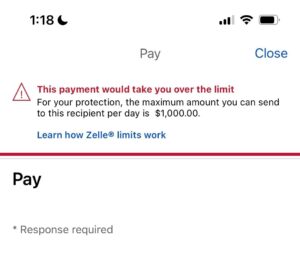
The best recovery flows do more than fix the error—they control user emotion, protect brand trust, and anchor revenue. And the quickest way to learn is hands-on: break the flows, screenshot the cracks, and observe where great product teams have quietly built the safety nets.
