
Freemium models hinge on balancing free accessibility with strategic friction that nudges users toward paid tiers. Spotify, Figma, and The New York Times each optimize this balance differently, aligning conversion design with the nature of their core product value.

For Spotify, conversion depends on emotional and experiential triggers. The free tier provides nearly full functionality but introduces friction through ads, limited skips, and lower audio quality. This controlled irritation is designed to make users internalize the difference between passive listening and “ownership” of experience—on-demand, uninterrupted, high-fidelity sound. Spotify maximizes lifetime value (LTV) by converting habitual engagement into long-term subscriptions, relying on personalized playlists and recommendation loops that deepen user dependence over time. The risk lies in over-limiting the free tier, which could drive users to competing platforms or piracy.
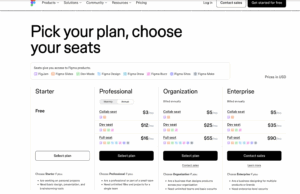
Figma, by contrast, embeds conversion into collaboration scaling. The free version enables small teams to design and prototype, but shared component libraries, administrative controls, and organizational security are locked behind paid tiers. Its “viral” usage path—designers inviting teammates—creates natural expansion within organizations. The friction is organizational rather than personal: as teams grow, the costs of remaining on the free plan (coordination inefficiencies, lost version control) outweigh the subscription fee. LTV is thus maximized through institutional lock-in and cross-team adoption, with minimal risk of alienating small users since the free tier remains highly functional for individuals.
For The New York Times, conversion leverages intellectual scarcity. The free tier offers limited articles, creating cognitive friction—readers hit paywalls just as stories deepen engagement. Subscription value compounds through perceived credibility, breadth, and habit formation (e.g., games, recipes, newsletters). The risk is that too much friction deters casual readers before trust and brand attachment form.
Across all three, the strategic calculus is identical: use friction not as denial, but as activation energy—transforming free usage into commitment while preserving enough generosity to seed dependence and loyalty.
