
Spotify, Airbnb, and Zappos organize product teams very differently, but what stood out to me most is where decision-making power actually sits and how much authority a PM really has.
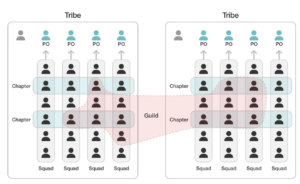
At Spotify, power is pushed down to the squad. Squads are small, cross-functional teams with their own mission, and they have a lot of freedom over how to solve problems. The product owner helps guide priorities, but the PM is not really the “boss.” I like this because the people closest to the product have real ownership and can move quickly. At the same time, too much autonomy can make alignment across squads harder, especially as the company grows.
Airbnb feels more top-down. Product, engineering, and design still work closely together, but design has a particularly strong voice, and Brian Chesky remains deeply involved in product direction. I think this can create a much more consistent product experience and stronger company vision. The tradeoff is that teams may have less freedom when senior leadership already has a clear opinion about what the product should become.
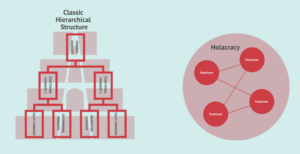
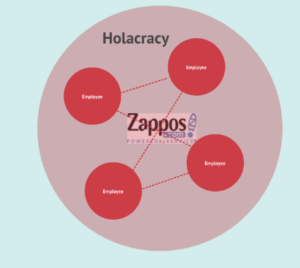
Zappos took the opposite approach with holacracy. Instead of traditional managers, authority belongs to specific roles and circles. In theory, this gives employees more independence. In practice, I think it can also make decision-making confusing, because removing managers does not automatically remove power.
This connects to Ries’s idea of “financial gravity”, where people who control important resources can shape behavior even without directly giving orders. He also argues that gravity can override formal authority, which made me realize that an org chart does not always show who really has influence.
I would choose Spotify, but I would add some of Airbnb’s stronger top-level alignment. I want autonomy and ownership, but still enough shared direction to keep everyone moving toward the same goal.
