
- Spotify
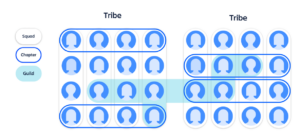
Small, cross-functional teams (~6-12 teams) called squads own portions of the product and are entrusted to ship it as they see fit. The Product Owner decides what ships and in what order while the team decides how. This model best works when squads are in sync with each other.
Other team-oriented components of the Spotify model include Tribes, Chapter, Guild, Trio, Alliance. A Tribe is a group of multiple squads who align on the same feature area and is led by a Tribe Lead.
Each specialist has a Chapter that holds them accountable to certain engineering standards.
Guilds are voluntary communities of shared interests.
- Airbnb
Brian Chesky, Airbnb CEO, transformed product management into something closer to product marketing. He gave designers equal authority over what gets built. Decisions essentially run through a solidified middle ground instead of getting pushed down to teams. The PM literally has less unilateral power as compared to other organizations.
- Zappos
Another fascinating model, Zappos has no managers, no fixed titles, just circles of roles that hold formal authority over defined areas, and anyone can propose a change through Holacracy’s governance process. In short, decisions lie wherever the accountability lives.
Where I’d Work
Spotify’s model is the best of all worlds. I would prefer to be a squad member as a squad small enough to agree on things beats both a single centralized system and approximately 500 circles trying to figure out who owns a decision.
Sources
https://www.atlassian.com/agile/agile-at-scale/spotify
https://blog.logrocket.com/product-management/airbnb-eliminated-traditional-pm-role-now-what/
https://qz.com/work/1776841/zappos-has-quietly-backed-away-from-holacracy
