
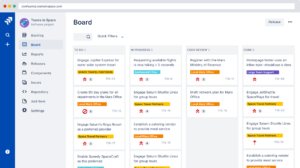
Source: Atlassian
Jira is a project management and issue-tracking tool. It has status columns, backlogs, road maps, dashboards, and automation rules (Coursera). More than 300,000 companies use Jira (Atlassian). It has customers in financial services, retail, software, high tech, automotive, non-profit, government, and life sciences amongst others, making its generality clever. Jira entered an existing market in 2002 with Bugzilla being the leading bug tracker at the time (Atlassian). This is a red ocean. Jira had to believe that PMs’ needs weren’t being met by tools like Bugzilla. Jira is flawed because it is complex and bloated.
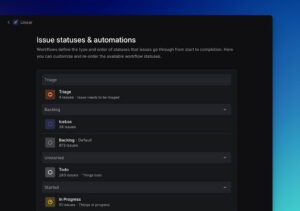
Source: Everhour
Linear, founded in 2019, is a tool with the same use-cases as Jira, but designed for speed (Linear; Everhour). The tool is used by more than 40,000 companies like OpenAI, Vercel, Salesforce, Figma, Cursor, Coinbase, and Ramp (Linear). It originally focused more on small developer-led startups by eliminating bloatedness, which is clever for these use-cases, but flawed in complex contexts (Everhour). By having a different target audience, it entered a resegmented market. This is a patch of blue in a red ocean. Linear had to believe that PMs needed a lightweight UX.

Source: Productboard
Productboard, founded in 2014, gathers market context with AI to help decide what product to build (Built In; LinkedIn). Over 6,000 companies use Productboard including Salesforce, Autodesk, Zoom, One Medical Group, Cartier, and The Coca-Cola Company (Built In). By creating a new category for PMs, Productboard entered a new market, which is clever. This is a blue ocean. Productboard had to believe that PMs needed help getting context for deciding what product to build. Productboard is flawed because AI has ethical concerns as explained in the reading by Cristina.
I would instead combine a lightweight solution like Linear with a product-deciding approach like Productboard.
