
How does it show the problem, the evidence that it’s real, and the size of the market? What would an investor ask that the deck doesn’t answer? What will you steal for your Sanity Check pitch next week?
Uber, originally known as UberCab, was founded in San Francisco, California, in 2008. They introduced their problem by describing the outdated cab system in 2008, highlighting its inefficiency for both users and drivers. The “problem” deck entices investors by showing a big/obvious issue in the industry that their product can solve.
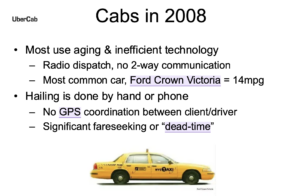
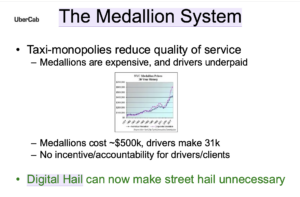
The founders then show that it’s a real issue by including examples of inefficient technology and the significant coordination problem between the client and drivers. They dive into further detail with evidence that this product is needed by showcasing the market size:
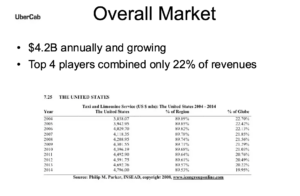
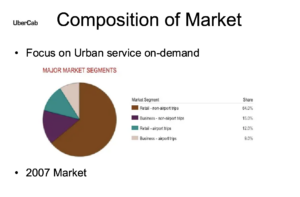

The overall market size is $4.2B annually, and only 4 top players dominate it. In addition, the market composition is very urban-focused, with target cities being SF/NYC. The pitch deck underscores how their product can be a market dominator and the potential it offers, making their idea very appealing and strong. A missing part the investors might ask for in the pitch deck that isn’t included is the potential costs their service will incur. It’s a key factor in whether investors see their business as profitable. Moving forward, I think it’s good to steal their probelm slides and the multiple market slides format because it provides a lot of convincing evidence and information to investors.
