
I chose LinkedIn’s 2004 pitch deck because I was curious how a professional networking platform convinced investors when online networking was still relatively new.
The Problem
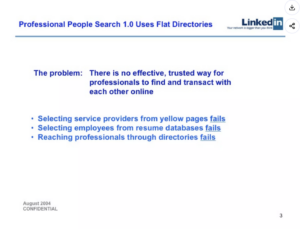
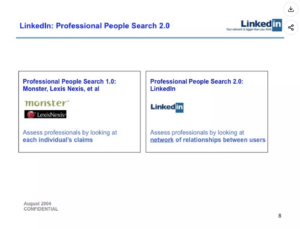
On slide 3, LinkedIn argues that traditional directories and resume databases fail to help professionals find and trust each other. I think the problem is presented pretty clearly, but the deck doesn’t really include direct user interviews or examples showing how frustrating these existing tools were. Slide 8 makes the solution more convincing by comparing individual profiles with networks of relationships. The idea is that knowing someone’s connections can help build trust.
Evidence and Market Size
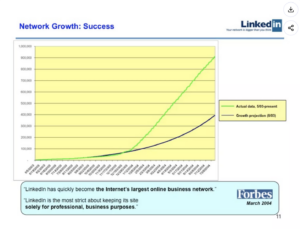
What stood out to me was slide 11, where LinkedIn compares its actual user growth with its earlier projections. By mid-2004, it had around 900,000 users, far above its projected 400,000. I think this is one of the strongest slides because it provides real evidence that people wanted the product. Slide 12 also shows LinkedIn had already captured 54% of the professional networking market by February 2004, suggesting it was growing faster than its competitors. Slide 16 adds more evidence, showing 29,000 new users per week and over one million searches per month. However, I noticed that only 20% of older users logged in monthly, which makes me wonder how engaged these users actually were.
For market size, slide 22 compares LinkedIn’s potential revenue streams with existing advertising, recruiting, and subscription markets. I like this approach because it helps investors understand the opportunity using businesses they already know. However, these markets are quite different, and the deck doesn’t explain how much LinkedIn could realistically capture.
What I Would Ask and Steal
If I were an investor, I would ask how LinkedIn planned to turn its growing user base into paying customers, and whether people would keep using the platform regularly. Slide 16 shows that only 20% of older users logged in monthly, which makes retention another question. For our Sanity Check pitch, I want to borrow LinkedIn’s approach of comparing a new solution with familiar alternatives. I also want to show real evidence of demand instead of making broad claims about our market.
