
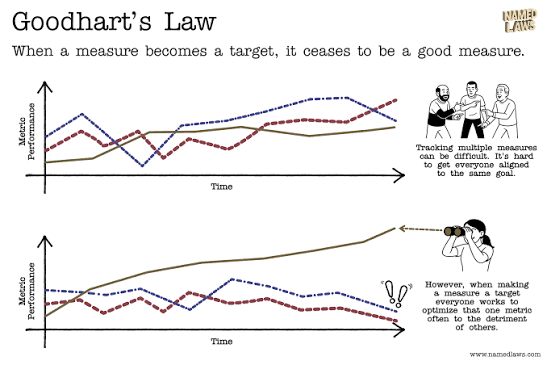
Airbnb, Facebook, and Slack was able to build their early growth engines around a one core metric, but it shows how easy it is to trigger Goodhart’s Law when a measure becomes the target, and it stops being a good measure.
Airbnb chose nights booked because it was able to include both sides of a two-sided marketplace. It serves as a direct proxy for value delivered, meaning a host earned income and a guest completed a stay. A growth team could easily hack this by pushing for cheaper inventory, discounting multiple weeks worth of bookings, or lowering listing quality standards. Bookings at night would spike on paper, but low quality is visible and thin margins eventually will hurt guest trust and host staying on the platform.
Facebook’s early growth team rallied around “getting new users to seven friends in ten days.” They found this as their inflection point for user retention, serving as a proxy for social density. Seven friends meant the News Feed had enough fresh content to feel alive. A team could hack this by aggressively importing address books and automatically adding recommended contacts. Then users would be able to get to 7 friends in a heartbeat, but their feeds would be filled with strangers/spam.
Slack decided on teams reaching 2,000 sent messages, noting that nearly all teams hitting that threshold stuck around permanently. It acted as a proxy for habit formation and real organizational buy in. To hack this, an internal team could build automated bots or scripted channel greetings to inflate volume and to achieve the 2,000 faster. The workspace would cross 2,000 messages in days. But no real human communication would have actually happened.
