
The Concept of Onboarding
The length and activities required of onboarding is mainly about how a platform balances “information gathering versus immediate value delivery”. Different types of platforms view and structure their onboarding processes differently and each reflects the values it represents and the services that it provides.
Instagram Onboarding
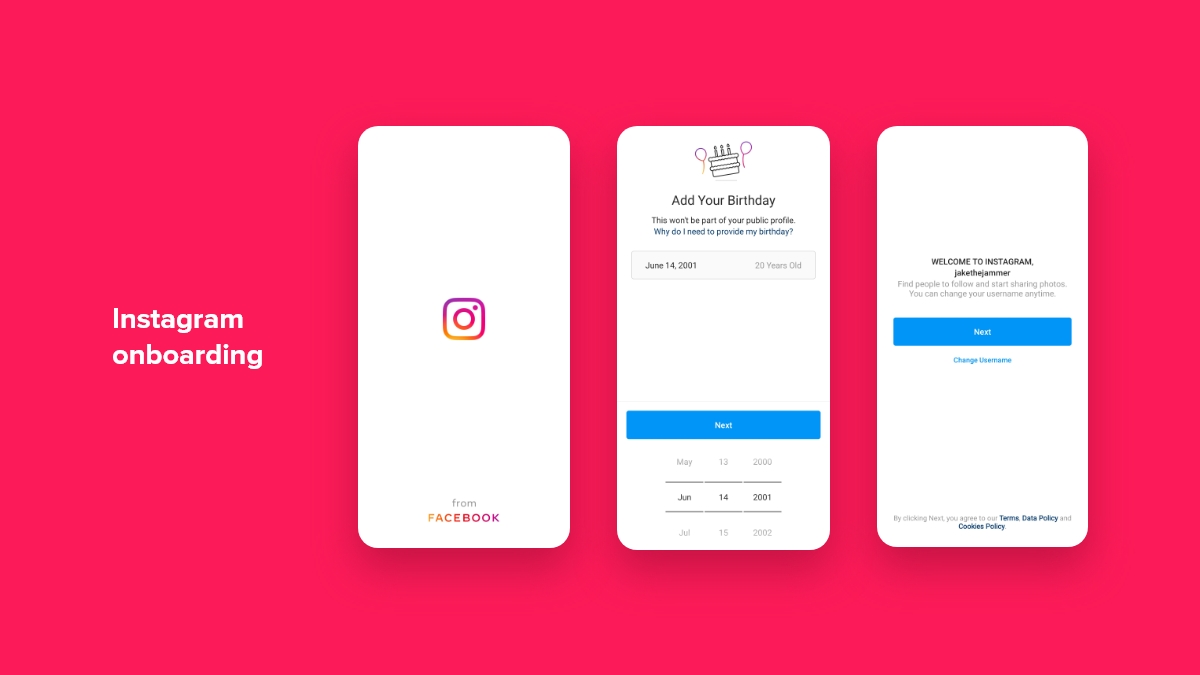
Instagram’s onboarding is very minimal in comparison to other platforms. It asks for your birthday, username, optional bio, and lastly, if you want to sync your contacts. All this information is readily available and some pieces of information (like your display name) can also be edited at frequent intervals so the pressure of creating an account is alleviated. Then, the user is able to access the feed and content. Because syncing contacts happens just at the click of button, it’s very frictionless (besides the mental pondering of why it needs to sync) so dropoff is lower than if it was requesting harder-to-reach information (i.e. social security, bank details, etc.)
Notion
Notion’s onboarding is a bit heftier than Instagram’s and requires the user to answer questions about their usage intentions, workspace, dashboards, and even any imports you want to do. This adds a good deal of friction, but their values are being able to customize and adapt the platform to a user’s needs and workflow. The investment of time in the beginning allows the user to have a better experience with the platform so they end up doing it or having to break it into parts to do it which causes a higher dropoff than other low-friction platforms.

Venmo
Venmo’s onboarding is also a straightforward, yet heavy process including multistep authorization as well. They require the user to upload banking details and communication methods and confirm those as well. While this takes a mental load and is considered friction, it is also necessary because the platform and its users value protection of data and strictness of authentication policies. While there might be some friction, users appreciate it because it ensures protection of financial details and they are more willing to do it.

