
Pinterest clearly focused on providing quick access to their platform and minimizing friction. When I signed up with an email and password, I was asked for my name, where I could put little or false information if I wanted, then how I identified (male, female, or “other”), then where I lived and what language I speak, before finally asking me which topics I was interested in seeing content about. This seems like the optimal process for a social app: asking just enough information to know what to call me and what content it might be illegal to show me (based on region).
Sunsama
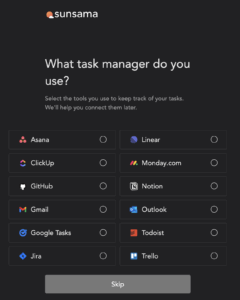
Sunsama, a productivity app that helps the user set goals to complete tasks within a set timeframe, had a lot more friction because it wanted to integrate itself with the scheduling tools I already use. It asked me which task manager I used, giving me a wide array of options (see screenshot). After that, it asked which calendar I used, and when I checked Google Calendar, it requested permissions to view and edit calendar items via Google. This definitely slowed down the onboarding process, but seemed worth the sacrifice to appeal to a market of organized people who feel spread among too many tools, and want something to effectively read from all of them and save them time.
CashApp
CashApp, being the financial app and therefore the one to the most regulations, surprised me with its short but important onboarding. I was offered the chance to enter my debit card information, but declined. It then asked for my legal first and last name, my ZIP code, and to create a PIN number. The complete de-anonymization probably creates friction, but it likely pushes away potential users who are just browsing rather than those who are ready to actually send or receive money, which seems like an intentional tradeoff.
