
In addition to advertising how Patagonia will buy back a user’s used gear, Patagonia incentivizes users to shop used options when browsing items (see screenshot below).
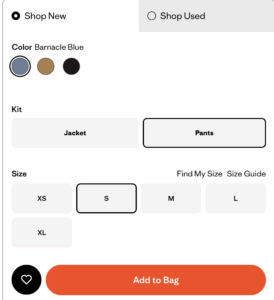
Similarly, product descriptions emphasize durability, simplicity, and production transparency. In the actual checkout space, Patagonia notes that each item is covered by an Ironclad Guarantee, where users can return an item for repair, replacement, or refund if they aren’t satisfied with the product. These choices demonstrate how Patagonia values giving customers value through durability, transparency, guaranteed satisfaction, and in supporting sustainable efforts by purchasing Patagonia, emphasizing Patagonia’s customer lifetime value and loyalty.
In contrast, Warby Parker supports a confidence-building shopping process. As shown in the screenshot below, the company encourages users to save a product for later through the heart icon, and to try a product virtually to see if they’d like the product before adding to cart.
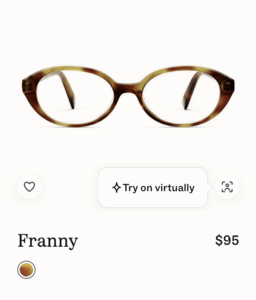
They also offer a style quiz for users to find the best fitting product for them and mainly offer product details for customization, like prescription offerings, frame measurements, and lens material. Through these choices, Warby Parker helps the user build confidence that they are buying the right product for them amidst the many offerings and customizations available, lifting the average order value.
Finally, Amazon optimizes for speed in the checkout process. When viewing an item, users can skip the whole shopping process of adding items to a cart and click “Buy Now” (see screenshot below) to immediately skip to the final step of the checkout process, significantly reducing the time it takes to buy something.
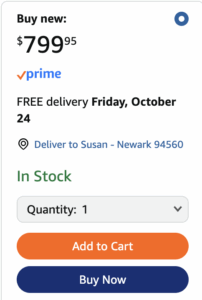
In addition, Amazon optimizes for speed by saving addresses and payment methods in the checkout process. These choices help boost conversion rate.
