
Freemium products have to decide when and how to ask for money. Spotify, Figma, and the New York Times all put that moment in a different place and aim it at different kinds of users. Their upgrade flows reflect what they’re trying to sell: entertainment, collaboration, or access.
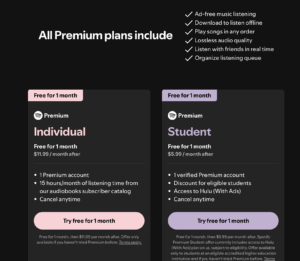
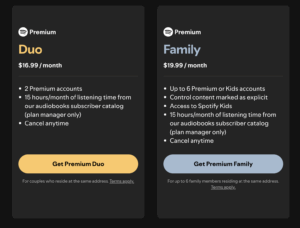
Spotify keeps the offer in the background. There’s a small “Explore Premium” button in the top bar, but the real push happens on the Premium page itself. It starts with a banner for a one-month free trial, then shows four plan options side by side. The plans are nearly identical, but the layout encourages comparison and shows how much better Premium sounds than Free. A chart at the bottom repeats the shared benefits across all paid tiers. Once you choose a plan, the checkout asks for your address and card, and includes a long explanation about how the free trial will convert to a paid subscription.
 .
. 
Figma presents its upgrade prompt in the left navigation bar of the app. Clicking it leads to a flow built around teams. You choose a plan, then pick whether you’re upgrading alone or with others. If you select a team upgrade, it prompts you to add unassigned seats before checkout. The payment screen breaks down pricing by seat and billing frequency, and the whole flow assumes the person upgrading could be managing more than just their own use.

The New York Times doesn’t hide its paywall. If you’re logged in without a subscription, a message appears in the sidebar reminding you that your access is limited. If you open an article, the lower half of the page is covered by a trial offer: seven days free, then $1 per week. Clicking through goes straight to checkout. The only required step is payment, followed by a screen with a short timeline showing when the free trial ends and billing begins.

