
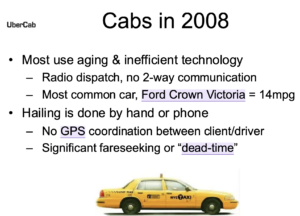
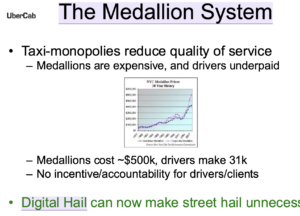
In 2008, the problem of cabs is outdated technology: radio dispatch, no GPS link between rider and driver, and cabs cruising empty. It’s vivid, though a 14mpg Crown Victoria costs operators money, not riders. And the medallion system is the strongest evidence. A 30-year city chart shows NYC medallions climbing toward $600k while drivers earn about $31k. Artificial scarcity is the real villain, and “digital hail” is the way around it.
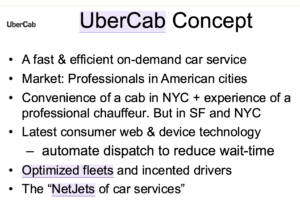
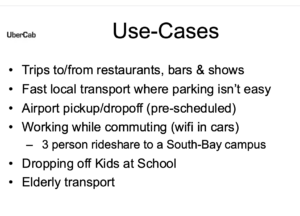
Uber brings the concept of on-demand cars for urban professionals, pitched as “the NetJets of car services.” The product is premium, managed fleets, not cheaper taxis. And the use cases are bars, airports, commutes, school runs, elderly riders. The list is imaginative, but there’s no data on which one people would actually pay for.
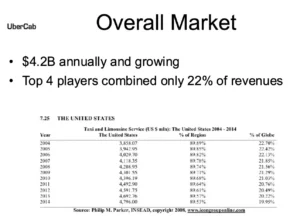
As for the market, US taxi and limo revenue is $4.2B, and the top four players hold just 22% of it. That fragmentation suggests room for a newcomer. But the 2009–2014 figures are projections, and they show only about 2% annual growth.
An investor would be curious about: who owns the cars and who drives them?; What does a ride cost, and what’s the margin?; Is there any proof of demand? Who’s the team?.
The deck makes a strong case that the old system is broken. It barely shows that this business can be built, and that is the fight Uber spent the next decade on. This is something I can include in our pitch deck.
