
Team members: Christine, Jenny, Lynn, Terry
Value Proposition
Our product helps product managers working in various sized build consensus across teams on key decisions, from design and quality to prioritizing what to build. Through structured voting and collaborative decision-making, it brings everyone’s input together in one place, making it easier to identify disagreements and align with a direction. Unlike lengthy debates in meetings or time-consuming Google Docs filled with scattered feedback and back-and-forth comments, our product streamlines decision-making so teams can reach consensus faster and move forward with confidence.
Opportunity Solution Tree
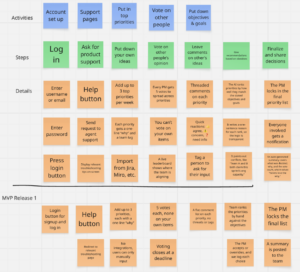
Story map
User stories
- As a big tech product manager, I would like to know the different priorities of other teams, so that I can reach a consensus quicker.
- As a big tech product manager, I would like to have an easier way to inform all team members involved in a project, so the process of shifting to a different priority is more streamlined.
- As a product manager at a startup, I would like to resolve ticketing issues more efficiently, so that I can move projects forward more quickly.
Smoke test
https://accord-dn2y.vercel.app/ (play around with the link!!)
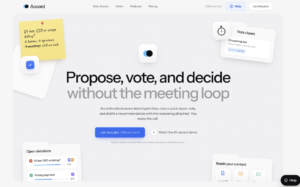
Results: posted on Reddit, will update accordingly as results come in
Reading & Learnings
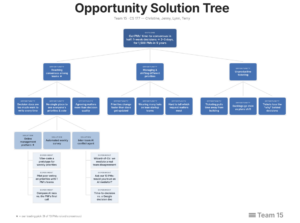
Torres’s reading helped us understand how an opportunity solution tree can clarify the problem we’re trying to solve, organize potential solutions, and reveal gaps in our current approach. When we built our tree, we identified that PMs struggle to reach consensus on decisions ranging from design to quality and priorities, often spending too much time debating in meetings or going back and forth in Google Docs. Mapping out potential solutions, such as structured voting, also helped us recognize what might be missing: voting can show which option is most popular, but it doesn’t necessarily explain why team members disagree or address their underlying concerns. This insight led us to consider how our product could go beyond voting to help PMs surface different perspectives, understand disagreements, and reach consensus more efficiently.
