
Spotify became known for their own kind of agile framework. A squad is a small team of people from a variety of different roles, with a product owner and support from an agile coach. One squad is in charge of one feature area. A tribe is formed when multiple squads work in related product areas. The PM in this model is similar to Scrum’s Product Owner: they prioritize what gets built, while the squad decides how to build it. Spotify prioritizes speed and autonomy in a large scale environment.
Airbnb is organized into departments, such as marketing and engineering. The leadership decides what is built using a shared roadmap. They combined product management with product marketing, and emphasize the work of designers. Product marketers help shape what gets built, but the larger decisions are left to leadership. Their CEO Brian Chesky stays closely involved in product decisions: “As CEO, I am the keeper of the roadmap.”
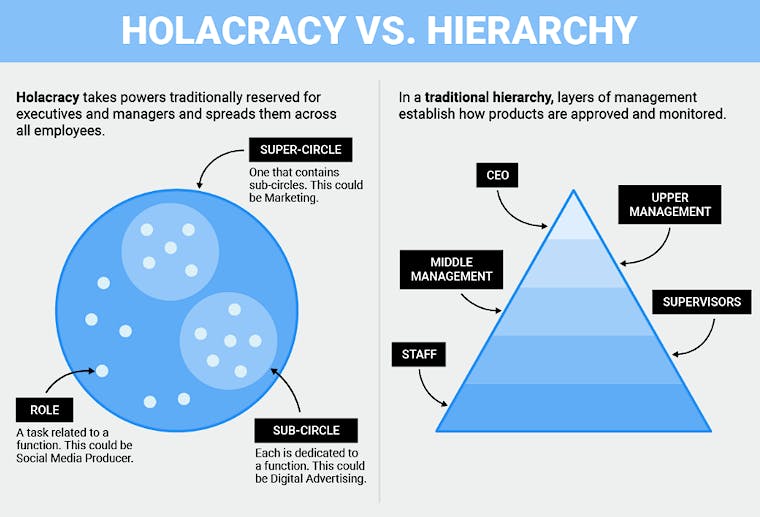
In 2014, Zappos began adopting Holacracy. It removed traditional corporate hierarchy, and distributed authority to different employees with different responsibilities. Employees were given roles and organized in smaller sub-circles with one specific focus. Product decisions fall to the relevant roles within circles. A PM’s authority depends on their assigned responsibilities. Some employees reported that the hierarchy was still there, but it was simply more obscured and confusing.
I would want to work in Airbnb’s model. I’d love to work closely with others in my field, even if leadership has more control over product decisions. I think a room full of specialists can come up with much better ideas together. As a designer and artist, I would love to be a part of a company that gives designers a strong voice.
https://www.corporate-rebels.com/blog/zappos
https://hbr.org/podcast/2016/07/the-zappos-holacracy-experiment
https://www.figma.com/blog/config-brian-chesky-airbnb/?utm_source=chatgpt.com
