
Spotify, Airbnb, and Zappos each take very different approaches to organizing product teams, especially in how they distribute decision-making and authority.
Spotify’s “squads and tribes” model pushes decisions close to the work. Each squad is a cross-functional team with a Product Owner who prioritizes what to build, while the squad decides how. Tribes connect related squads, while chapters and guilds help share expertise across them. The strength of this model is the amount of autonomy it gives teams, but as Spotify scaled, that same autonomy could also create fragmentation and coordination challenges.

Airbnb moved in the opposite direction. Brian Chesky shifted the company from business units to a functional organization, with functions such as design, marketing, and engineering organized under a more centralized roadmap. He also elevated design, combined classic product management with product marketing, and became much more involved in deciding what ships. This creates focus and strong design coherence, although concentrating so much product judgment at the top risks making leadership a bottleneck.
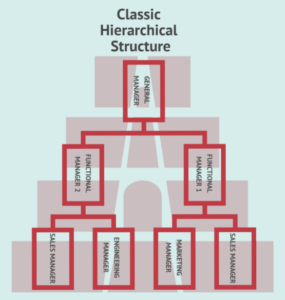
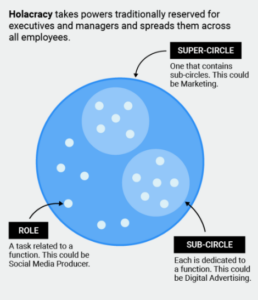
Zappos adopted holacracy, a system that distributes authority through roles and circles rather than a traditional hierarchy. Authority belongs to a role’s defined purpose and domain, allowing people to act without waiting for a boss. This makes decision rights much more explicit, but the governance required to define roles and boundaries can also become complicated and process-heavy.
I personally would choose Spotify. Lecture 1A describes PMs as having “total responsibility but no authority” and emphasizes partnering with UX and tech rather than commanding them. Spotify fits that product-trio philosophy well. From our first reading, LeMay also argues that PMs succeed through coordination rather than command, which Spotify seems to embrace. Ideally though, I would keep squad autonomy but borrow Airbnb’s strong design voice and clearer company-level priorities so that autonomy doesn’t become fragmentation.
