ChatGPT, GitHub Copilot, and Intercom Fin each charge customers in a distinct way. It was interesting to look at how each one does it.
ChatGPT
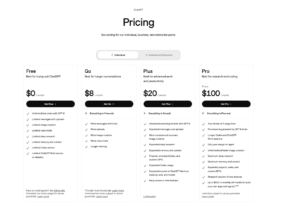
ChatGPT charges flat subscription tiers, so it actually charges for access to higher limits, models, and features. Users carry the risk of incorrect answers because they still pay regardless of quality. The risk of it being too expensive to run is carried by the company (OpenAI), since users with higher usage can consume a lot of compute and not necessarily pay proportionally more. In the reading, we see how flat-fee pricing can create negative margins for power users, where costs stop being proportional to usage. The main tradeoff is that it is very simple for users, but the usage can actually vary a lot from user to user.
Github Copilot
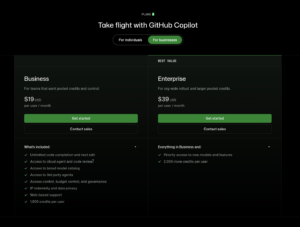
GitHub Copilot charges using a per-seat model, so it actually charges for each person with access to Copilot. The risk if the AI is wrong mostly falls on users, since they keep paying for a seat even when the product is not useful. Both the company and the user carry the risk that it will be too expensive to run. This is because GitHub includes AI credits per seat, but also bills extra usage beyond its established allowance. This helps limit compute risk. The main tradeoff is that it’s easy for companies to budget by headcount, but actual usage may not be equal across all seats.
Intercom Fin
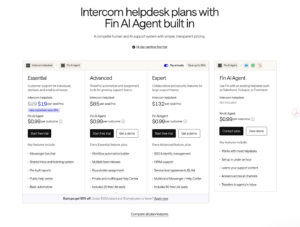
Intercom Fin charges per successful outcome, so it actually charges for an outcome. The risk carried if the AI is wrong is mostly for the company because if the outcome is not successful and the customer asks for a human, then the customer does not pay anything. The risk of it being too expensive to run is also on the company, since it might spend compute dollars without getting paid when the outcome fails. The main tradeoff is that it aligns with customer value, but from the reading we learn that outcome pricing is hard if a customer disputes what counts as a successful outcome.
Our team’s product
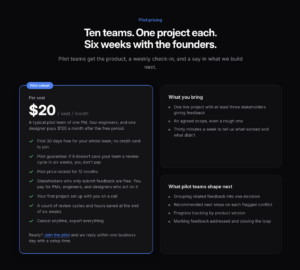
I think the model that fits our product best is per-seat pricing, similar to what Copilot has. The product helps specific PMs, engineers, and designers coordinate work, so the value is tied to who uses it. Something like outcome pricing might make sense because we care about reviews/rework saved, but it’s hard to prove or justify where that saving came from. I think the best hybrid is what we have now, which is per-seat pricing alongside an outcome guarantee such as “if it doesn’t save a review cycle in 6 weeks, you don’t pay.”
Sources: