
At Spotify, each squad of six to twelve people owns one feature area, and its product owner sets the order of the squad’s work. Squads working in the same area form a tribe of 40 to 150 people with a tribe lead. Jeremiah Lee joined as a product manager in 2017, after Spotify tripled to 3,000 employees in 18 months, and he found the model was never fully implemented. Product managers reported to the tribe lead, while software engineers reported to managers outside the squad.

At Airbnb, Brian Chesky merged product management with product marketing, gave coordination work to program managers, and made the product group smaller and more senior. He says a person cannot develop a product without knowing how to talk about it. Chesky also stays directly involved in hiring, promoting, and firing about 50 employees, so final product calls often reach him.
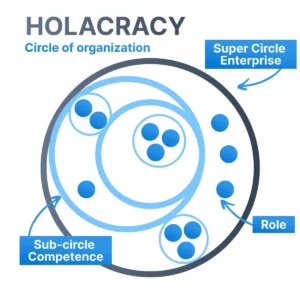
At Zappos, Tony Hsieh planned about 400 self-governing circles for the company’s 1,500 employees. Lead links assigned people to roles, and each circle decided through governance meetings what those roles covered. In March 2015, Hsieh told employees to commit to holacracy or leave, and 18 percent took the buyout. By 2017, Zappos had reorganized teams to run their own profit and loss statements, and it later brought back managers.
I would choose Airbnb. A product manager there knows which senior group makes the final call and presents the launch personally. At Spotify, a product manager ranks the backlog without managing the engineers who build it. At Zappos, an idea needed a defined role and a governance meeting before anyone could own it.
