
PART 1
System Path:
We mapped an ideal system map for our use case: using our app (a game to plan your meal) while waiting in line at a dining hall. Because of this, our 2 personas have the same entry point to begin their journey, since additional steps (planning meal, eating with avatar, logging waste) are sequential and not available without completing the previous step.
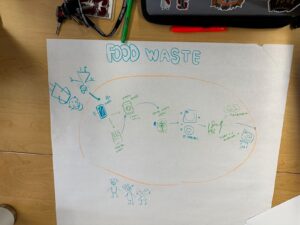
Bubble Map:
In our bubble map, we considered three main areas of our app: settings, meal planning, and meal eating. In settings, we provide onboarding and setup for the rest of the app experience (avatar upload ad dietary restrictions). In meal planning, we provide context around dining hall menu options and an interactive game to plan a digital plate with menu items. In meal eating, after users have gotten their food, we provide a chance to eat alongside digital avatars, log waste, and a diary/analytics screen to foster understanding of general consumption and waste habits.

PART 2 – Individual Wireflows
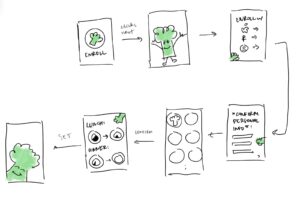
We split up our individual flows based on our most core interactions: onboarding, assembling virtual meals, eating with an avatar and logging waste. Per our bubble map, these interactions seemed disparate enough for us to design individual wireflows around. Coming together to discuss our individual wireflows helped us synthesize the final cohesive wireflow and work through differences in each design so we could see a comprehensive vision.
Onboarding
Assembling Meal

Eating with Avatar

Logging Waste

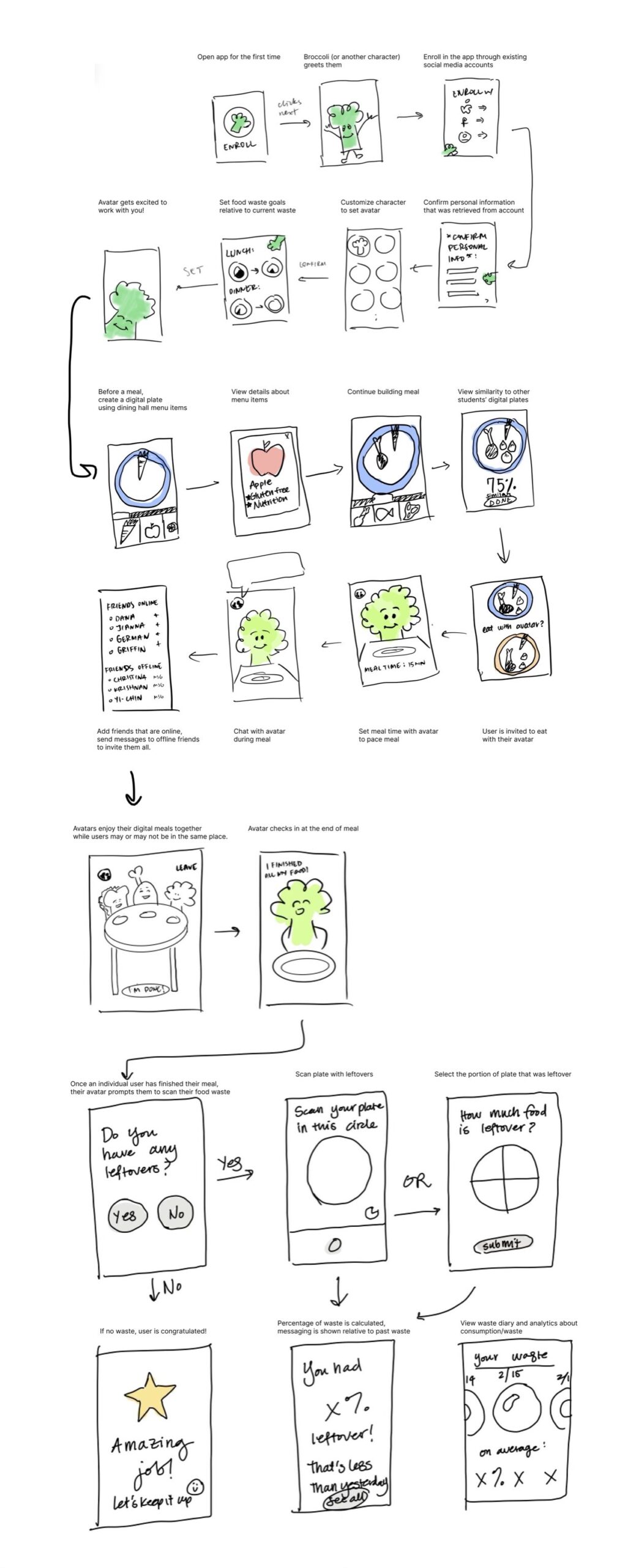
PART 3 – Synthesized Wireflow




Comments
Comments are closed.