
Encouraging Productivity, Decreasing TikTok Usage: Comparative analysis of productivity tracker apps
Taking a deep-dive into young adult TikTok habits.
This quarter, our team is exploring how we can help TikTok users reduce their usage of the app. We noticed that many of our friends and family members had negative feelings regarding their TikTok usage, so we wanted to explore a number of successful solutions currently on the market aimed at helping users reduce their screen-time.
Deep diving into the market
Below, we analyze 9 apps and their effectiveness for keeping Gen-Z users on track with reducing their TikTok usage. We used these apps to determine best practices and flaws in the screen time-reduction space. These insights will assist us in creating our own solution to diminish TikTok usage in young adults
Qustudio
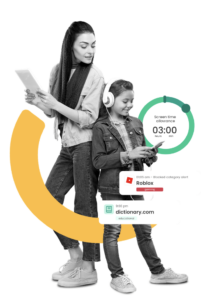
Qustudio is a digital parental control app that allows parents to monitor their childrens’ screen-time usage. Although the concept of parental control over each digital action their child takes is personally a bit questionable, the idea of an external influence helping to establish healthy digital practices is an important concept that I believe we can incorporate into our own products. Qustudio offers a variety of features that allow parents to limit screen time for certain apps as well as establish screen-free periods of time. I believe that we can extend this concept to include friends as a source of accountability instead of parents to create a similar social pressure to encourage digital health.
1Question
 1Question is a really novel app that relies on the concept of “earning” screen-time by solving educational challenges. It has a super simple installation process that takes less than 5 minutes. The most helpful aspect of this app is that it establishes a sense of intentionality behind each attempt to open the app because it takes time and effort to solve the educational challenges that the app provides. From anecdotal evidence, I’ve noticed that any added resistance to entry into the app will often exponentially reduce the number of times the app is opened because oftentimes we open these apps out of habit rather than intentional use. This added intentionality is something that I’d love to incorporate into any project that we work on.
One Sec
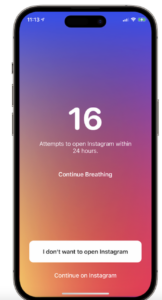
One Sec prompts users to take a deep breath for ~3 seconds before opening an app that the user has selected to have this functionality. When auser selects the app to open, a gradient screen instructing users to take a deep breath shows up and users must actively select a prompt that they do indeed want to open the app. It is very helpful for making more active choices with your app usage and not mindlessly opening apps. However, the free version only allows for controlling 1 app.
Apple’s Native Screentime Feature
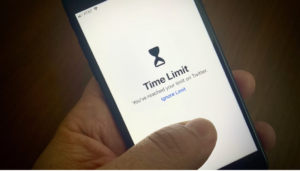
Apple allows users to set screen time limits on apps. Once the screen time limit is met, Apple gives a notification to the user that they have exceeded their limit. Users are given an option to exit the app, extend by 1 minute, or extend by 15 minutes. This app is easy to setup because of its native nature, but many users claim it is too easy to go past your screen time limits.
App Detox
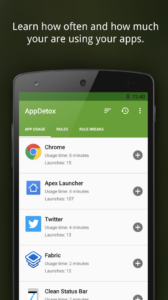
App Detox allows you to customize the limitation of access of any apps on your phone. There are various features such as setting your own custom schedule for each app, putting your phone in “focus mode” when app use is blocked, or even a feature that requires you to take a walk to earn more time on an app. There’s also a “Forever” option, that sets limits on apps forever, and cannot be removed from your phone. However, this app is currently only available on Android, and there is no way to embed accountability because it lacks a social aspect.
Space
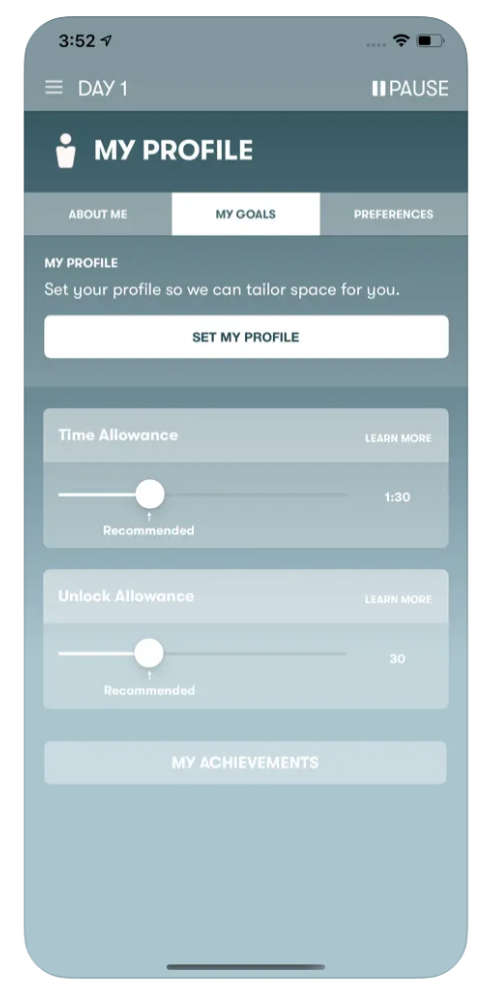
Space is an app that begins the user experience with a quiz to determine each user’s phone habits. Based on this individualized data, users can set goals for their ideal phone usage, which is then moderated by the app. The competitive advantage for Space is that they provide insight on why users’ phone habits exist (e.g., boredom, socialization, etc.). The target user is someone who wants to actively make a change, demonstrated by the social aspect of the app that facilitates accountability through progress sharing within a user’s network. However, the method that Space uses to maintain this progress is seen as “unpleasant” by some users. Passive aggressive questions aren’t universally seen as motivational, so this would be an area of improvement in our product. Personalizing the nature of notifications received by each user based on preference can help optimize an intervention.
Lilspace
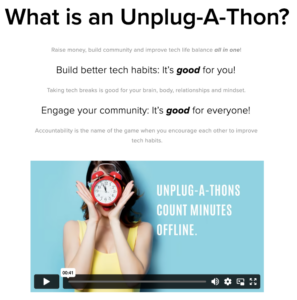
Lilspace is an app that hosts community Unplug-A-Thons and rewards time away from the screen with contributions to a cause. This solution appeals to users more philanthropically inclined, as well as those that do well with influence at the organizational level. While this is a unique solution that centers community contributions and high visibility, the mechanisms aside from these extrinsic motivations are poor. Unplugging is essentially a timer that lacks a reminder of the task at hand. Users often found themselves unable to extract full value from the app because of the opacity around when to unplug. In our product, clarity of the objective should be prioritized to prevent accidental deviations.
Flipd
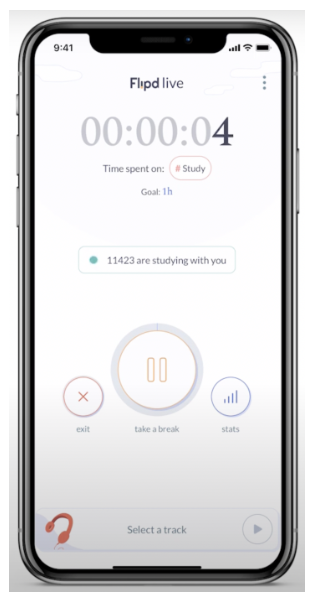
Flipd is a productivity tracker app that allows users to track their time on different tasks
,creates live opportunities for study groups, and uses motivational tactics such as a community leadership board and personal milestones to encourage user productivity. It targets users that already have a desire to hold themselves accountable for their work and achieve their goals. This option is helpful for keeping users on task, however it does not solve the issue of steering users of TikTok away from their addiction to the app when they need to work.
Forest
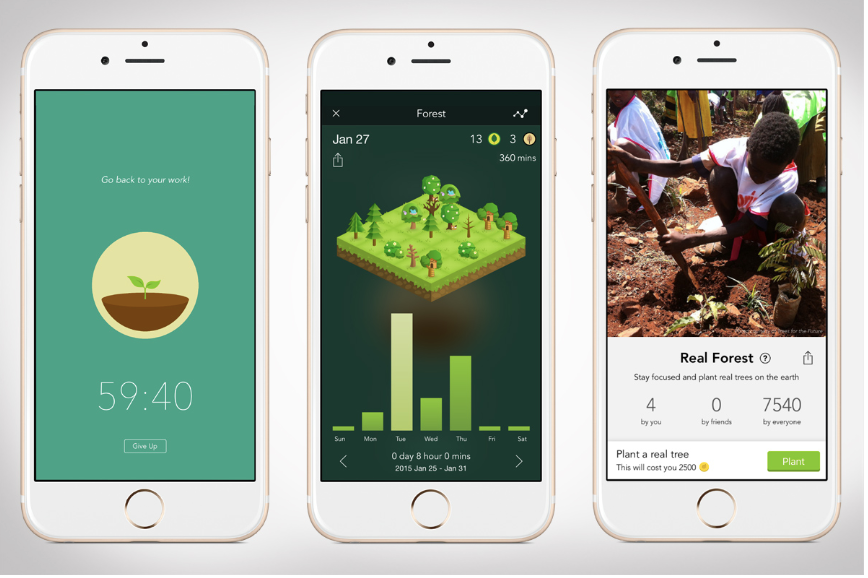
Forest is an app that helps users stay focused on their work by planting real trees around the world as the key source of motivation. This is an accessible app which can be used wherever the user chooses to study, and just requires the user to plant a tree on the app whenever they decide to focus and work. Alternatively, if the user loses focus in the middle of their work and leaves the app halfway through their work, their tree will die. This app offers an interesting social/environmental benefit to nudge users’ behaviors to focus better, but it could be costly and difficult to form a partnership with a non-profit organization as they have done; themes of saving the environment and TikTok usage might also not align very well.
Breaking it down with a map:
Combining all of this research, we mapped the apps on a comparative matrix where we measured impact (high and low effectiveness) and intervention (on the individual and social levels).
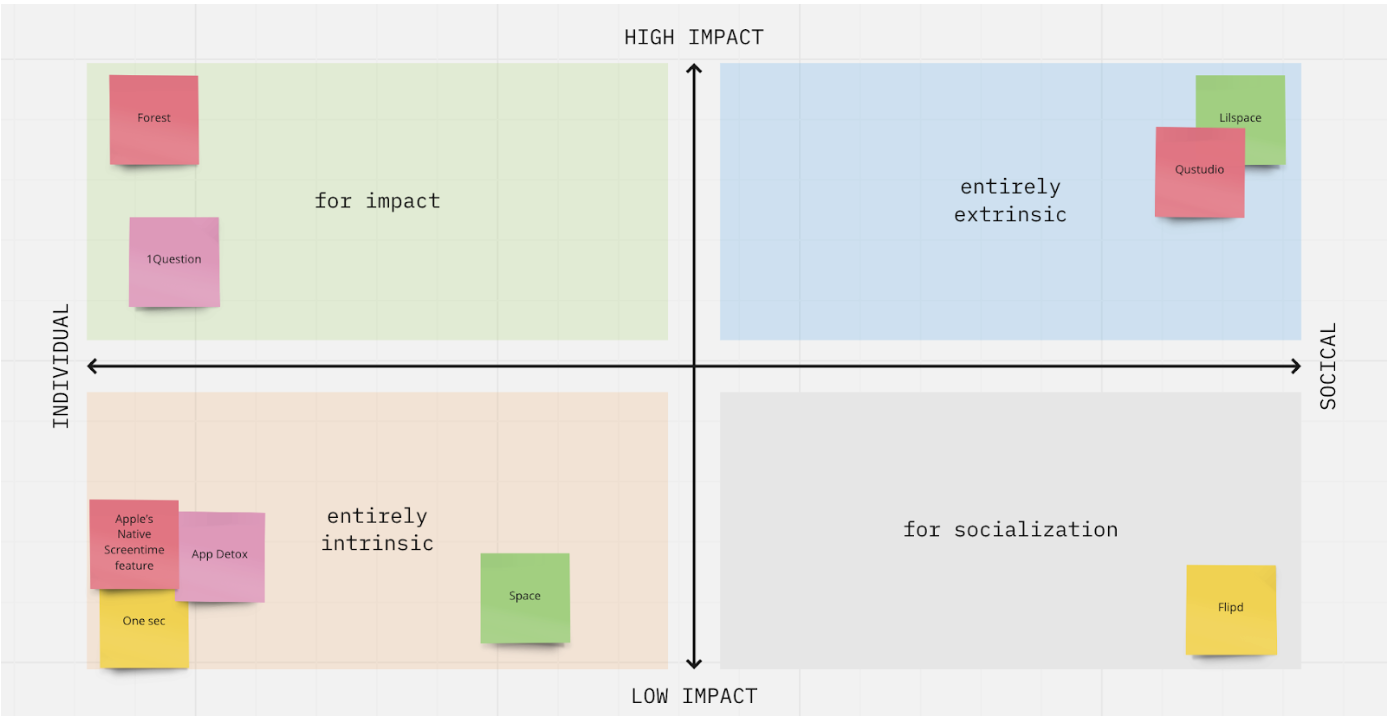
We found that solutions were most crowded around low-impact, individual spaces which is probably why most of the apps we evaluated were seemingly ineffective. Since there is low visibility surrounding the use of the app, accountability is enforced only on a personal level and depends entirely on intrinsic motivation.
From this matrix, we’ve found ourselves interested in creating an app with moderate impact on a social and individual level, so both extrinsic and intrinsic motivation is enforced for the user to change their TikTok usage habits. We lie on creating a moderate impact so as not to scare users away with over-intervention and criticism of the individual’s TikTok usage, and believe we can convince users to change their habit by involving more people than just themselves.

Comments
Comments are closed.