
Slack
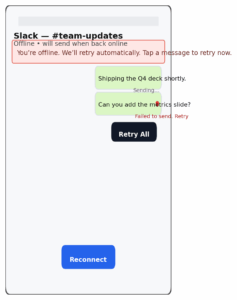
Slack’s primary errors are message send failures due to being offline or service issues and lapses in workspace authentication. The business cost is productivity loss, leading to lower daily and weekly active teams and eventual churn. A good recovery is queuing and retrying, clearing banners indicating that a message is sending or failed to send, retry per message, and local drafts. A missed opportunity is showing an ETA to recovery and a timeline of read-receipts. The recovery flow protects revenue by keeping conversations flowing, so organizations don’t abandon Slack during outages.
Uber
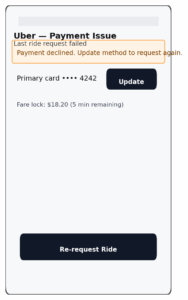
Uber’s primary errors are driver cancellations, payment declines, and drops in GPS or connectivity. The business cost is an immediate loss of gross bookings and higher rider churn, with frustration from the supply side increasing driver churn. A good recovery is preserving fare lock and the pickup pin, enabling re-requests or modality switches with one tap, and automatic credit for cancellations. A missed opportunity is implementing a payment and network check before the trip and a proactive nudge about the nearest reliable pickup zone. The recovery flow protects revenue by saving failing trips, preserving short-term gross bookings and long-term frequency.
Banking apps

Banking apps’ primary errors are transfer delays, deposit holds, and login failures. The business cost is trust erosion, leading to primary bank attrition, high support costs, and compliance risk. A good recovery is plain language status, expected release times, instant card freezing and unfreezing, and human support in at most two taps. A missed opportunity is labeling the payment network and explaining the difference between available and ledger balances. The recovery flow protects revenue by keeping deposits and interchange revenue through the prevention of panic-driven account moves.



