
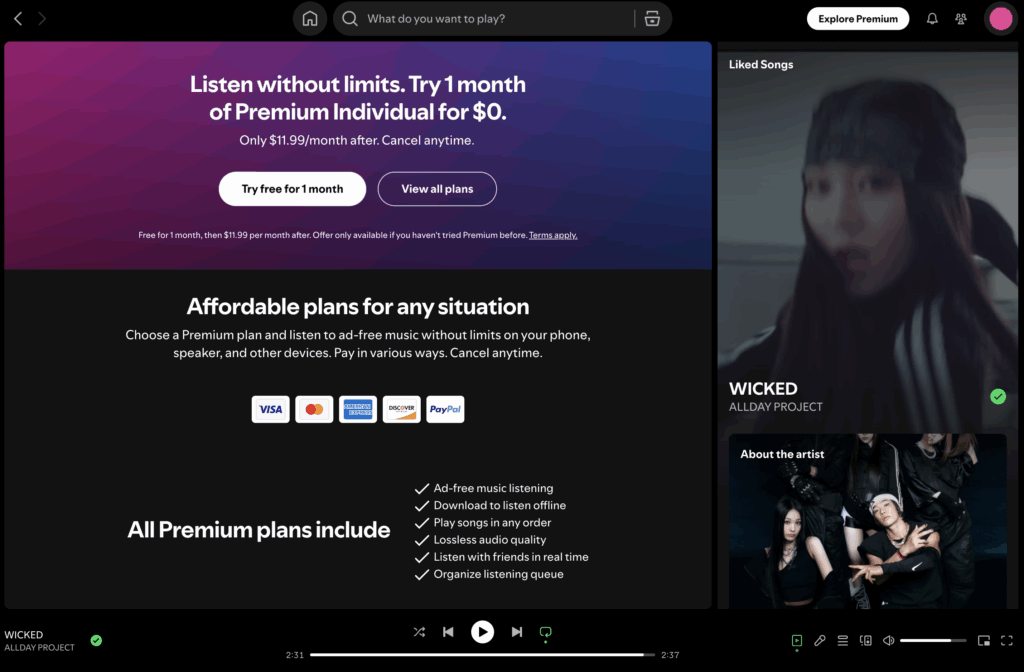
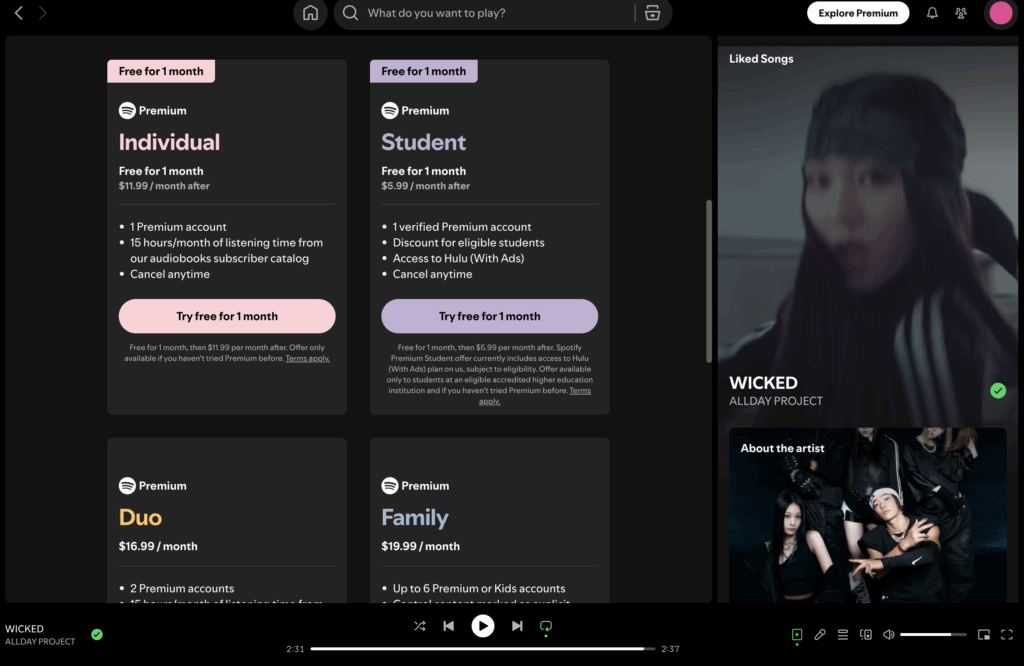
Spotify’s free tier strategically degrades the core uninterrupted music consumption. By introducing ads, shuffle-only mobile playback, and limited skips, Spotify creates friction at critical moments in the user journey. This pain can drive the upgrade path and convert users at a 25% annual rate. The value metric, which is the ad-free listening, directly addresses the friction point, making Premium feel essential rather than optional. I believe Spotify intentionally sacrifices some user goodwill to accelerate conversion velocity, betting that retained premium subscribers generate higher lifetime value than a larger free user base.
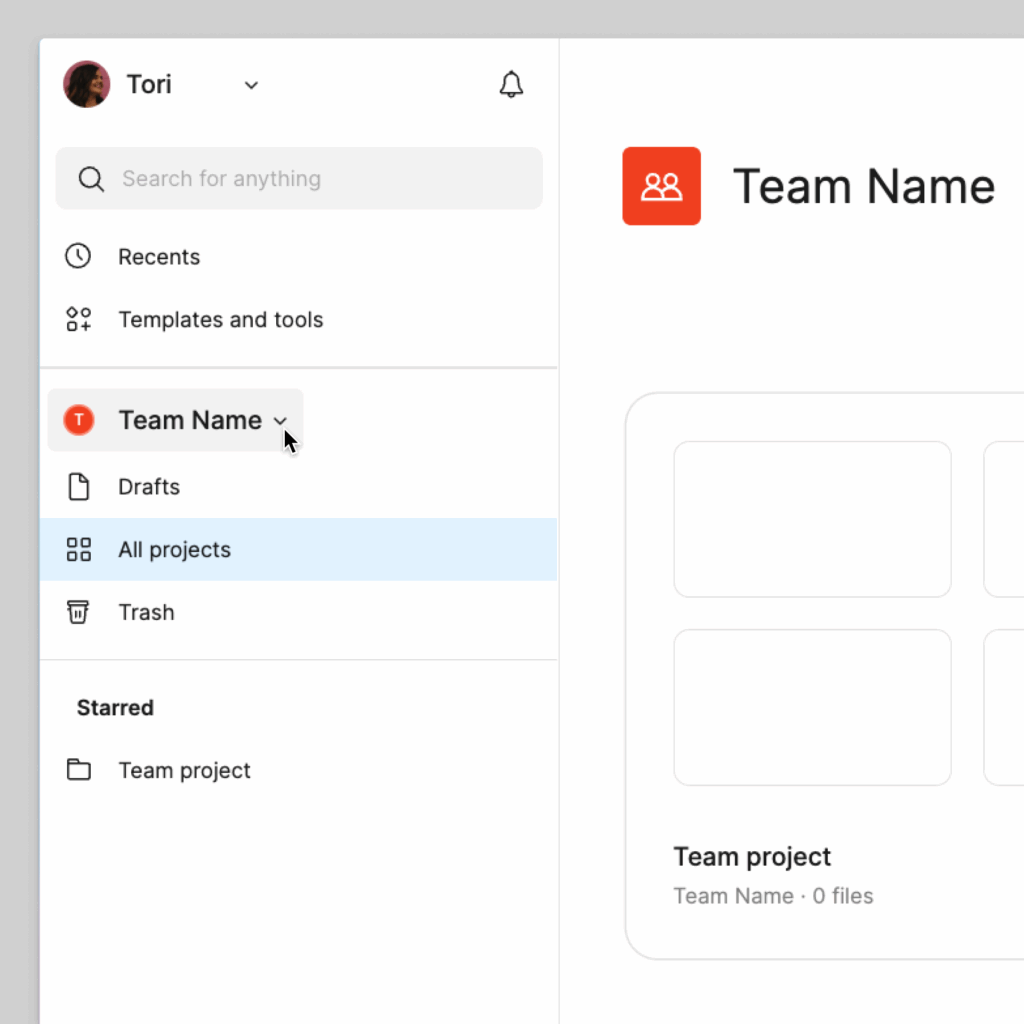
Figma employs a product-led growth strategy, as Jim touched upon in class, rooted in understanding its user personas. Individual designers receive full editing capabilities, building product dependency through daily use and habit formation. However, collaboration features, being the actual value metric for teams, remain restricted. This creates organic, bottom-up adoption where individuals advocate for Figma, and organizations pay for team functionality. So I think Figma leverages network effects heavily, as all of my design classes are required to do projects using it, and accepts lower initial conversion rates as their lifetime value calculation targets organizations rather than individuals.
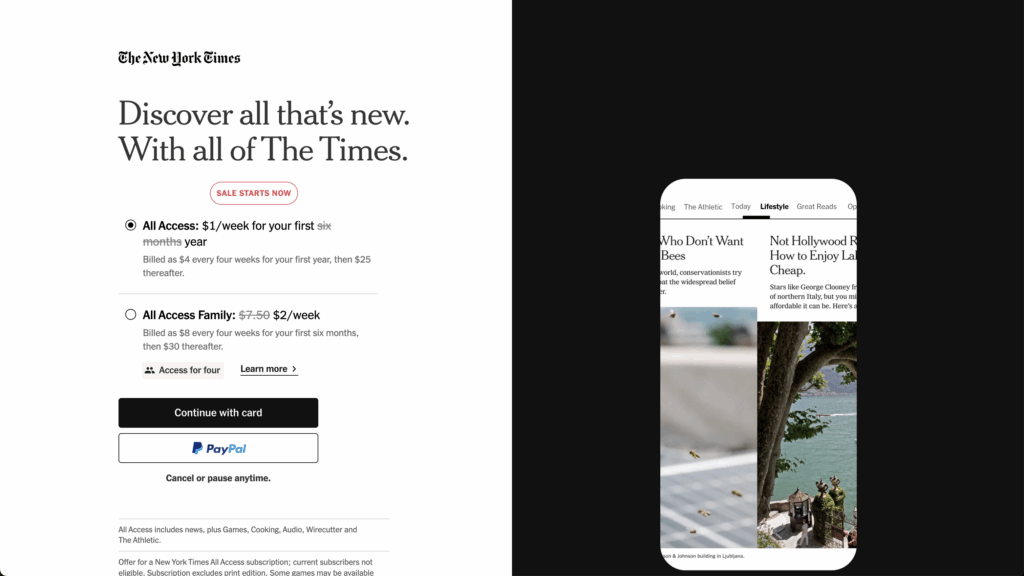
The Times’ metered paywall applies the Hook Model discussed in the reading, which limits free articles to trigger habit formation through repeated exposure before monetization. Their engagement metrics, such as article reads and visit frequency, predict conversion likelihood. The lifetime value optimization focuses on churn reduction through content bundling that increases switching costs and provides multiple hooks. It’s inspiring to see how the NYTimes balances this acquisition-conversion tension, as some free access sustains social sharing for acquisition, while strategic limits drive urgency through scarcity. Their value metric isn’t single articles but long-term engagement across multiple product offerings.



