
TLDR:
- Synthesis: Our Baseline Study tracked participants’ food waste. Our comparative research and literature uncovered insights about analogous waste situations and possible directions for intervention. A Connection Circle showed us that emotions like guilt decrease waste and factors such as social meals or unappetizing food increase waste. A Fishtail Diagram showed us factors of waste that participants have control over (values, health) vs. what they don’t have control over (dining hall layouts, their schedule).
- Personas: Introducing… (drumroll please): Typical Tatiana, a typical sustainability-conscious Stanford student, and Sustainable Svetlana, an extreme example of someone who is conscious about their food intake for health reasons and navigates dining halls methodically when getting food.
- The insight: Across these personas, there was a clear tension between when food waste is generated (at the beginning of a meal) and when that food waste is considered (at the end of the meal).
- The question: How might we make participants consider food waste while they are filling their plates?
- Our solution: Visual reminders of yesterday’s waste to provide lasting reminders of waste, keeping the goal of food waste reduction top of mind.
Team 12’s synthesis process began in class with affinity grouping and frequency chunking.
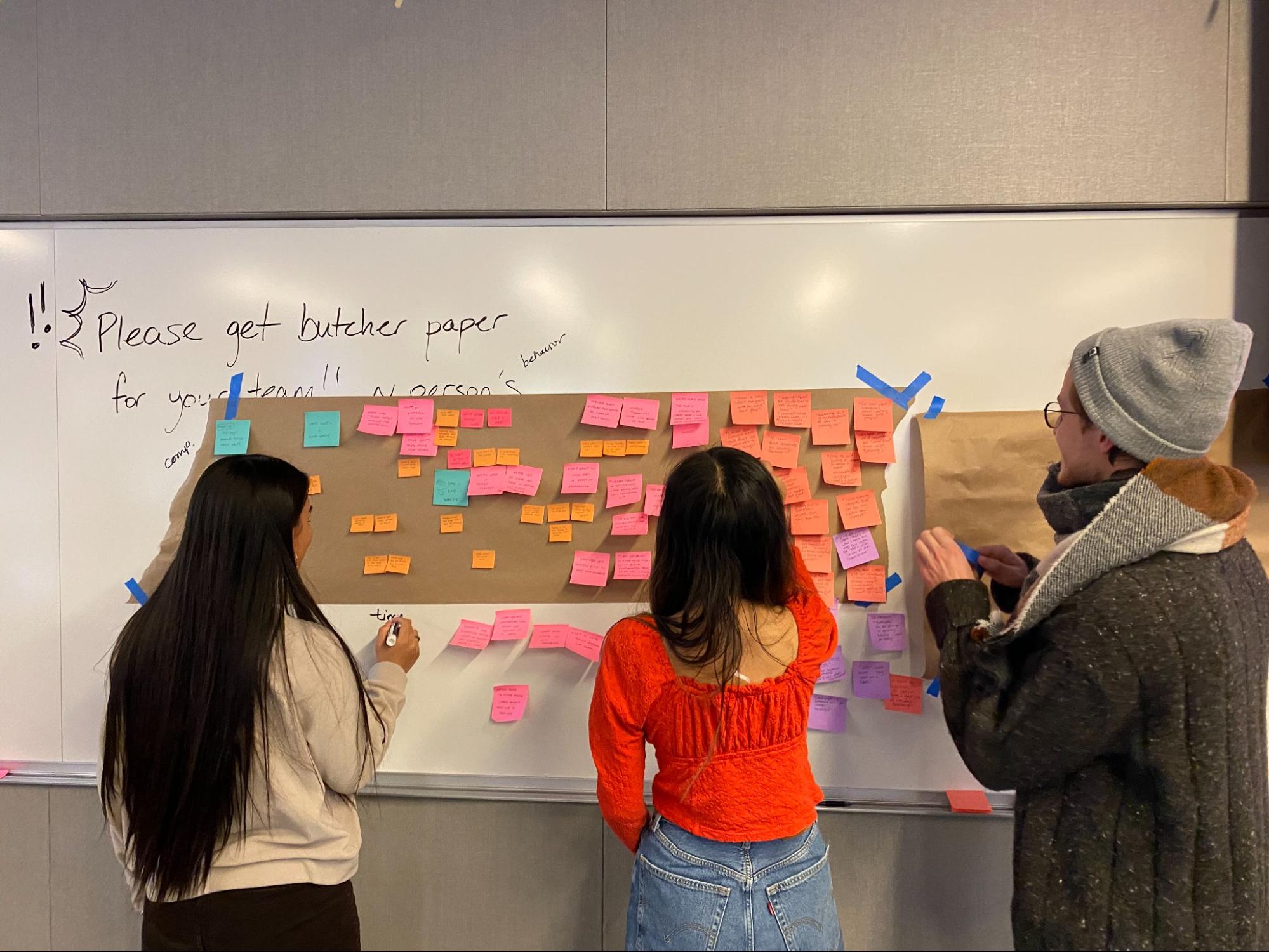
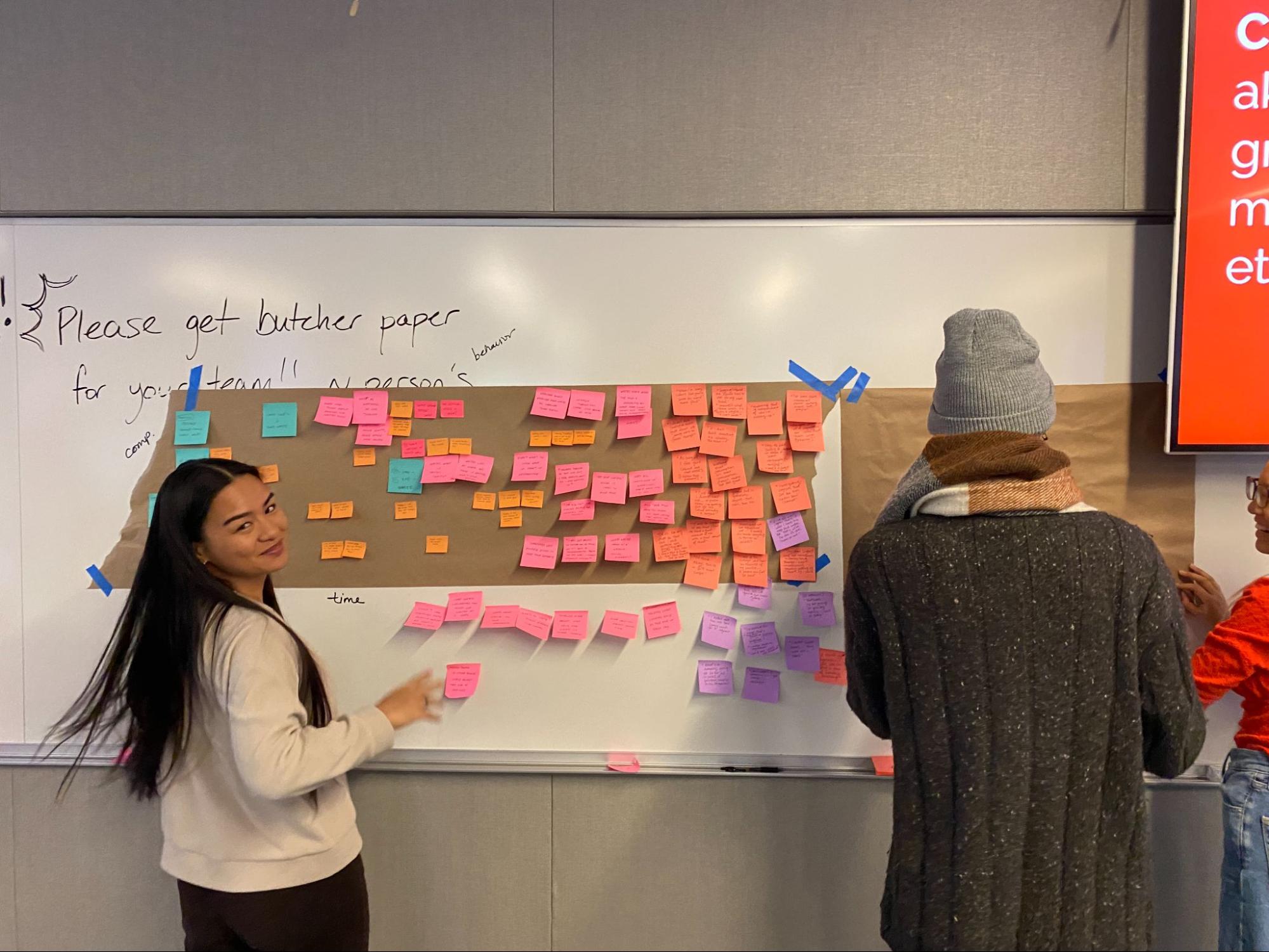
Affinity grouping revealed trends not only in the behaviors that mitigated or contributed to food waste but also the emotions and mindsets that participants had around their behavior.
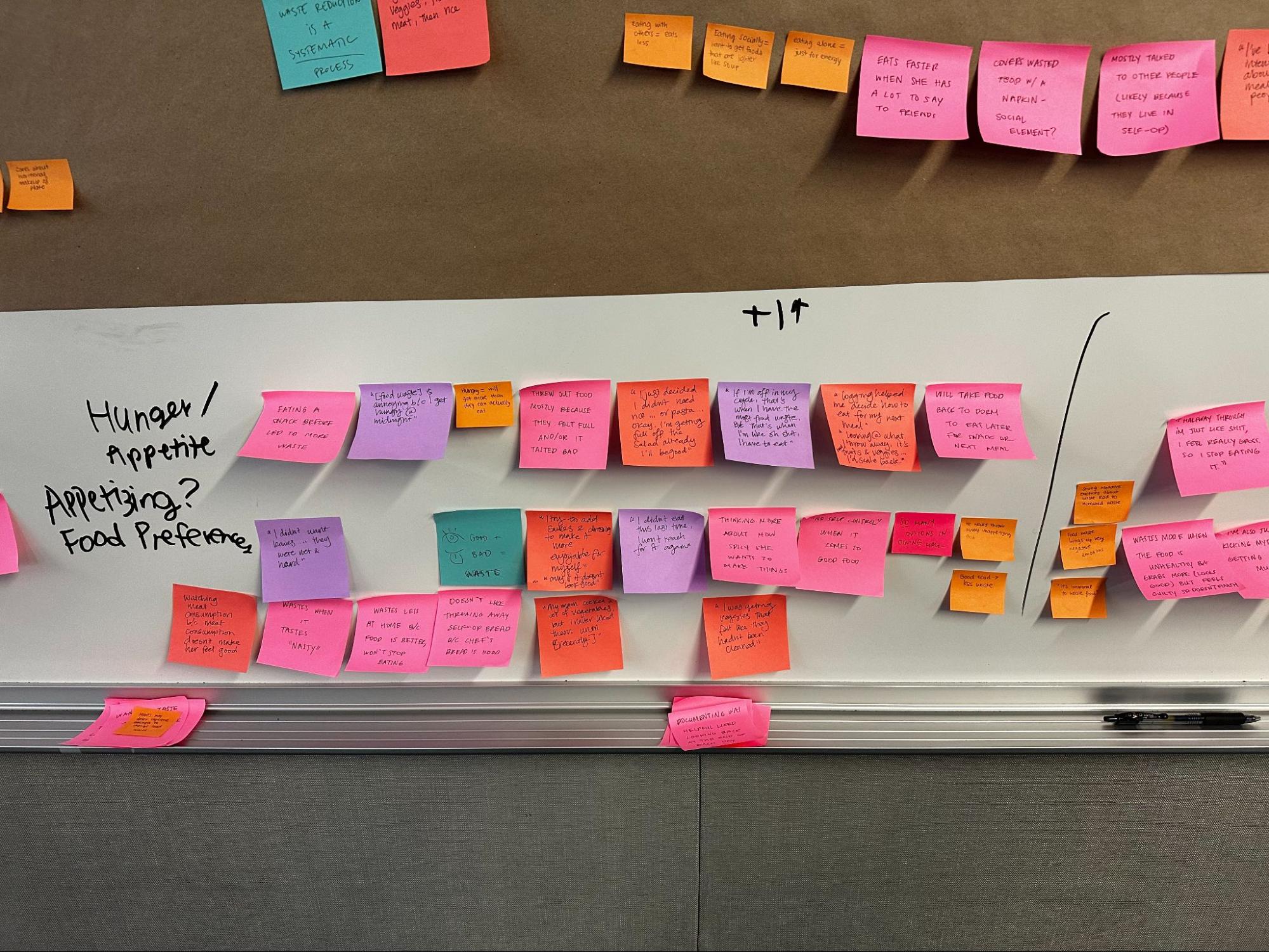
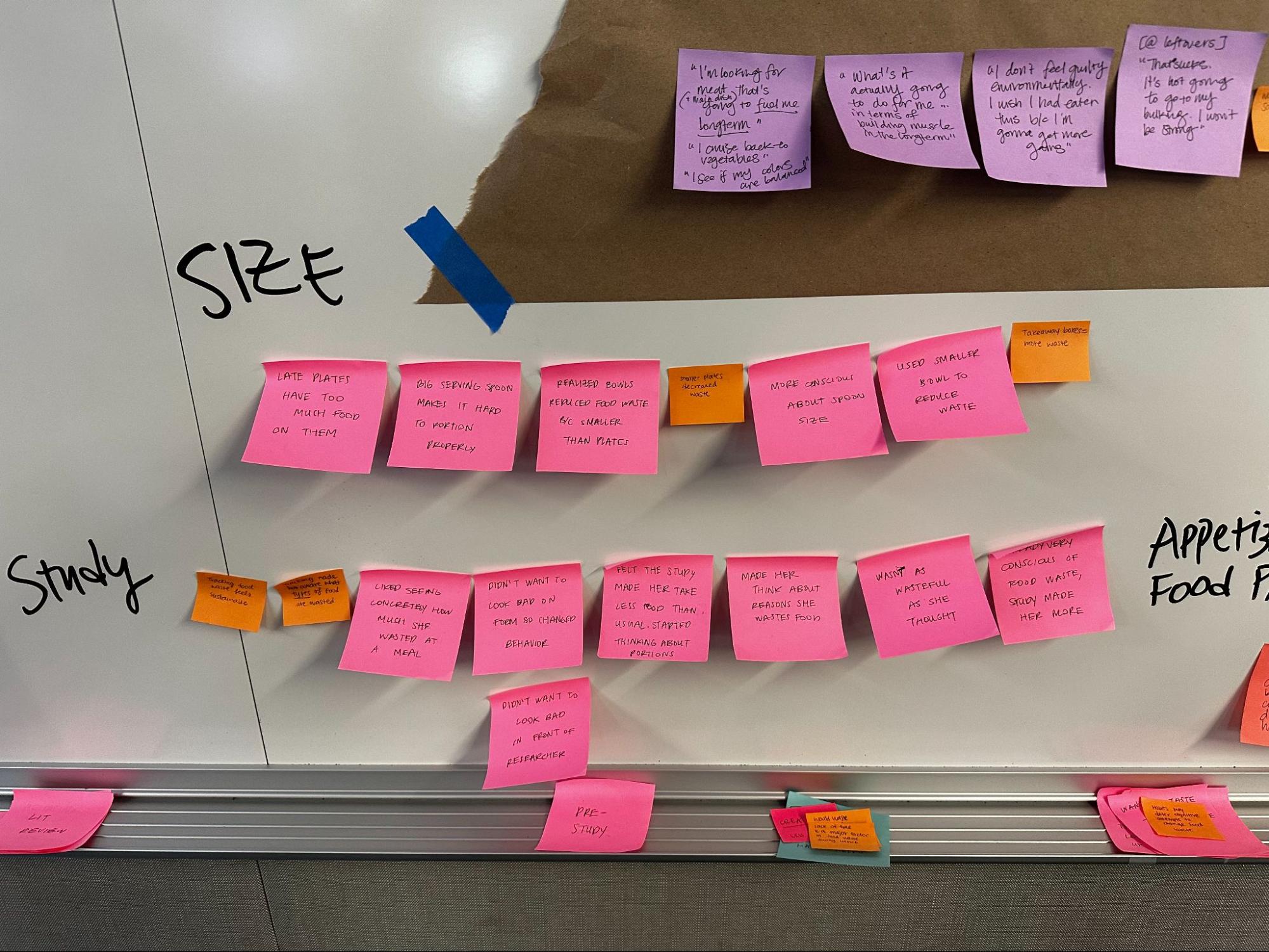

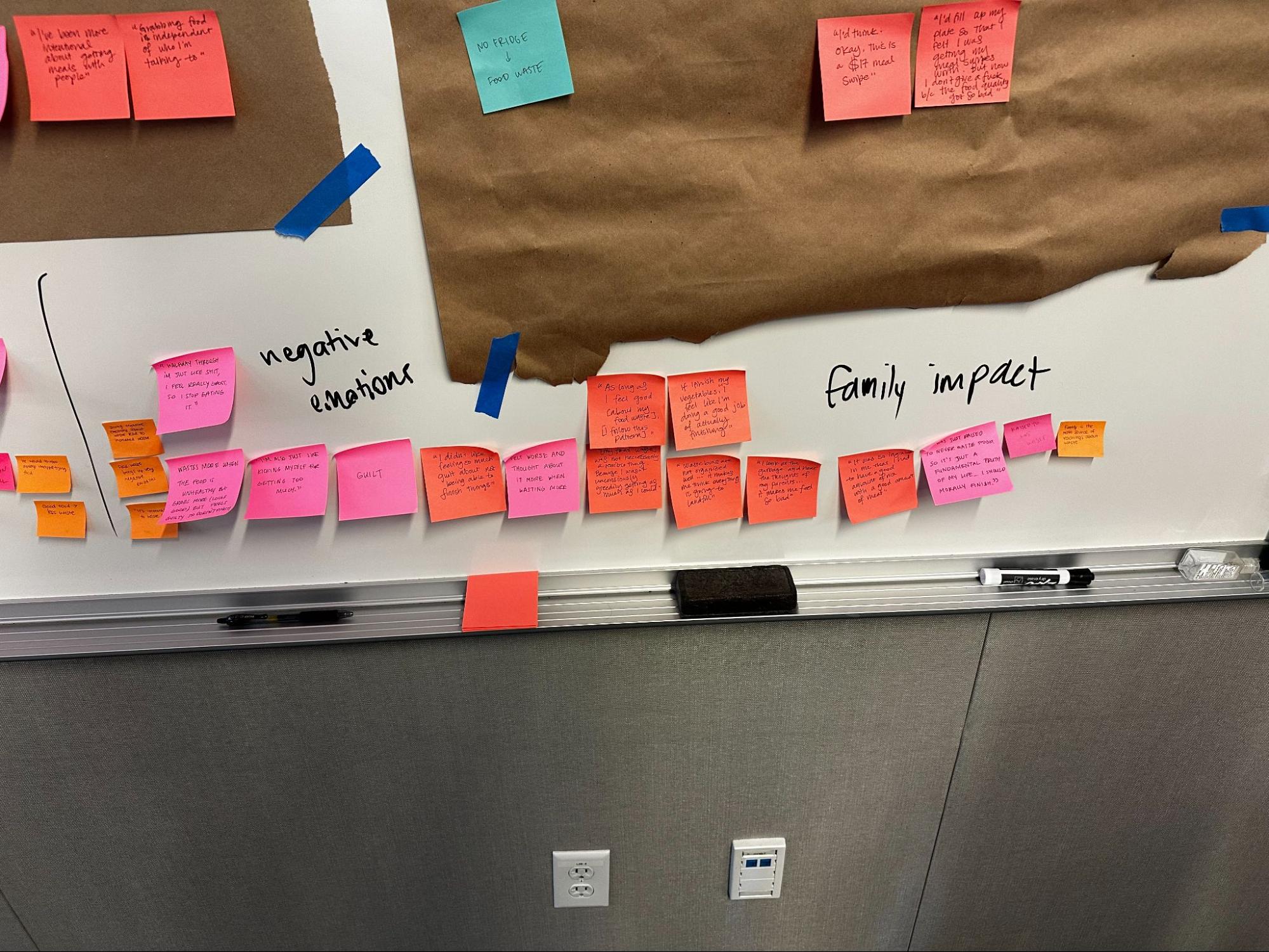
Participants’ negative emotions around food waste primarily consisted of guilt, shame, and anxiety. For several, these feelings stemmed from the belief that wasting food is morally wrong, a belief ingrained in our participants by their families. Ultimately, this negative emotion and thought process did not impact their food waste behavior but does provide a foundational motivation for these users to change their behavior. The second most frequent “chunk” involved food preferences. Participants often threw away food because it looked better than it tasted. A few participants mentioned that the study affected their behavior or feelings such as wasting less food or thinking more about food waste.
When looking at the timeline of each meal, we found that there were two contributing factors for food waste. At the beginning, participants took too much food, either because they had skipped the previous meal and were hungrier than usual, they were simply very hungry, the food looked really appetizing, or the serving spoons were too large to portion properly. At the end of the meal, either because the food tasted bad or they were simply too full, they had leftovers. While a couple participants found workarounds like giving their food to their roommate or taking dry food away on a napkin, tupperware proved implausible because they are technically not allowed in dining halls. Participants referenced experiences in which they were chastised or yelled at by dining hall staff for having tupperware and/or attempting to use it. Therefore, our main takeaway was that an intervention targeting the beginning of the meal was more implementable for our participants.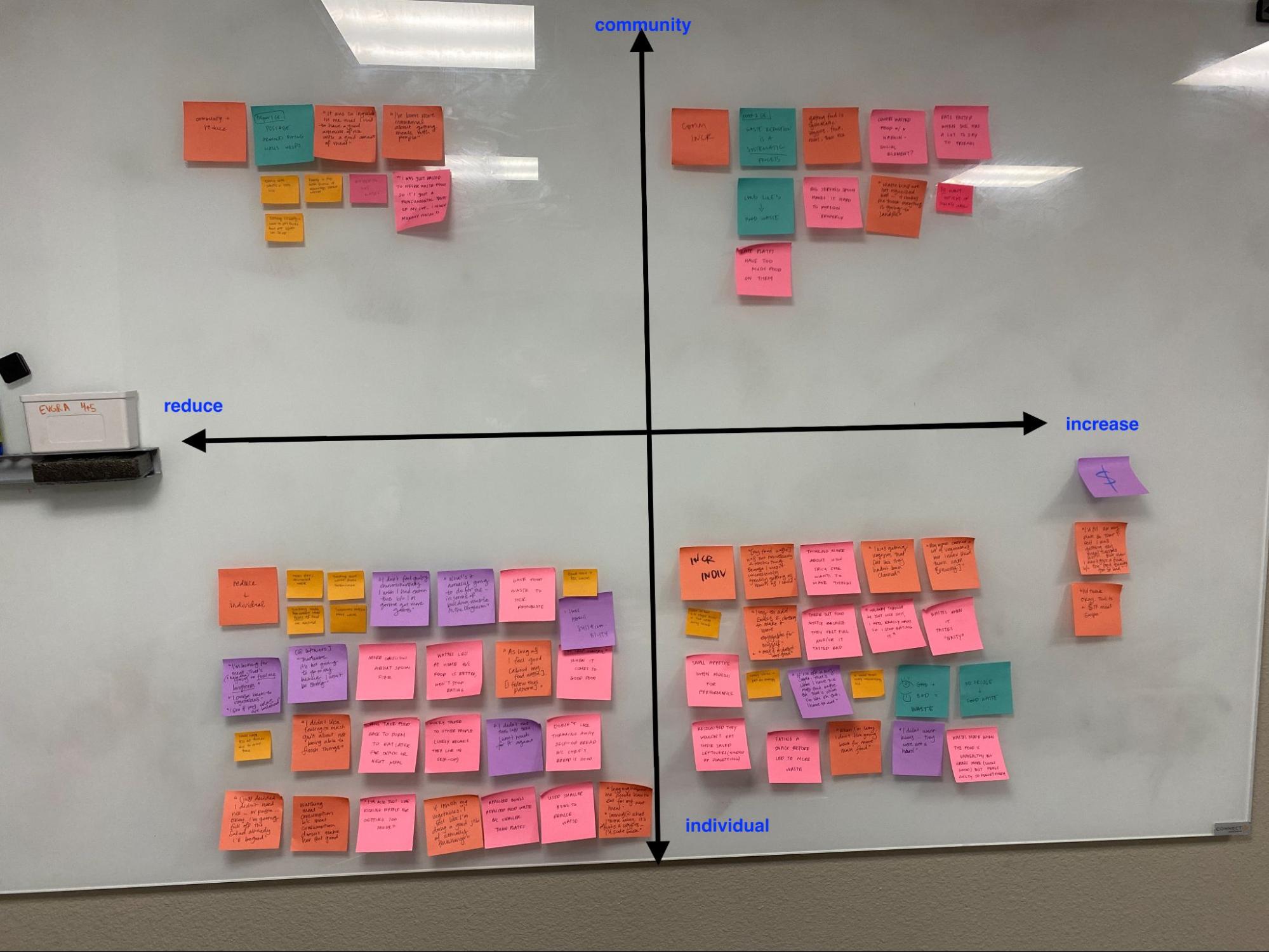
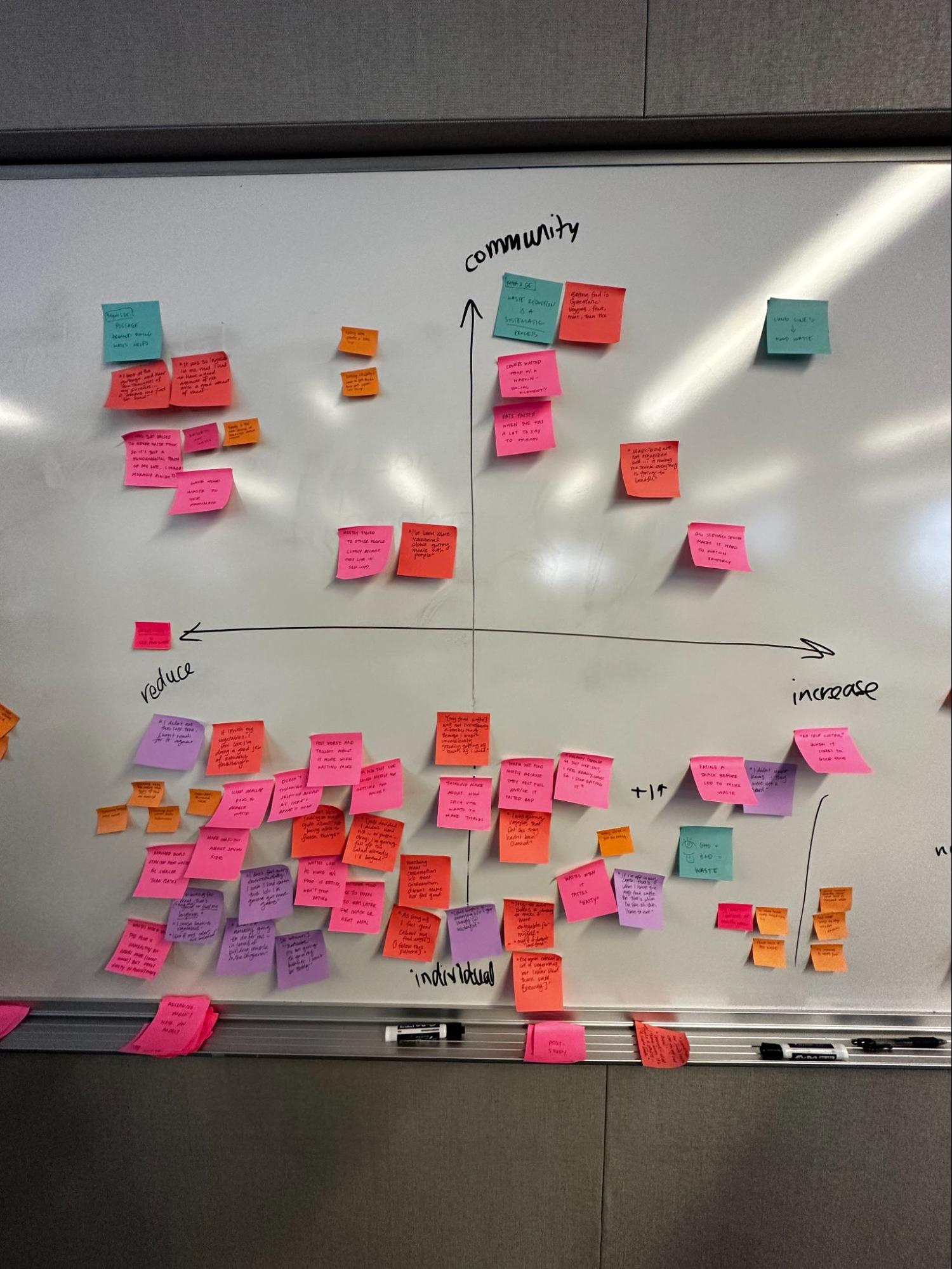
Our last step of synthesis during class time consisted of dividing our data into a two by two matrix. On the vertical axis, we placed individual and community contributions to food waste behavior. On the horizontal axis, we separated things that reduced food waste and things that increased food waste. Originally, we found it difficult to draw conclusions from this configuration but after recreating the matrix during separate team time, we discovered that while participants had many methods and feelings they believed could reduce their food waste, they were not able to on their own mitigate the behaviors and external factors that ultimately led to wasting food.
We considered insights from our literature review and comparative research as well. From the papers we read, we discovered that changing the environment in dining halls is often the most effective intervention to reduce food waste. This kind of intervention ultimately does not align with the intention of the course to design and prototype digital solutions. One analogous insight that offered some direction was organization and systematic design in domestic settings (through color coding fridges) helps reduce waste. However, most of the insights from users dealt with grabbing too much food rather than not knowing where to go or being overwhelmed by the layout of the dining hall. Therefore, our literature review highlighted a gap in individual-based interventions for food waste in dining halls.
Because there is very little interest or exploration in individual food waste in dining halls, the landscape is similarly devoid of competitors. We looked into analogous apps that targeted waste behaviors in commercial, domestic, and grocery settings, and extracted two kinds of interventions that aligned with our capabilities: phototracking and reminders.
Using the above techniques and our baseline results, we came up with the following models:
- Connection Circle

Via this model, we observed the emotional nature of food waste: there exists a self-reinforcing loop between food waste, anxiety, and availability of to-go containers. One of our interviewees shared that she has been feeling anxious eating with others, especially during the pandemic, which led to her to always take food home to EVGR in to-go containers when they were available. During that time, she shared that she generated particularly a lot of food waste, which led to more feelings of guilt and anxiety.
We also noted social eating increases anxiety for some of our interviewees. Participants mentioned covering excess food with napkins or worrying about how others would perceive their leftover food. These responses further confirm that we have selected a well-scoped problem to tackle by focusing on dining halls since they are highly social eateries.
A contradiction we found in the connection circle is that a tight schedule increases food waste (because participants miss meals then grab more they can eat at the next meal) but decreases care for health (due to prioritizing one’s work and deadlines) which in turn decreases food waste (because some of our health-conscious interviewees throw food out the moment they feel full, believing force-feeding is not healthy).
- Fishtail Diagram
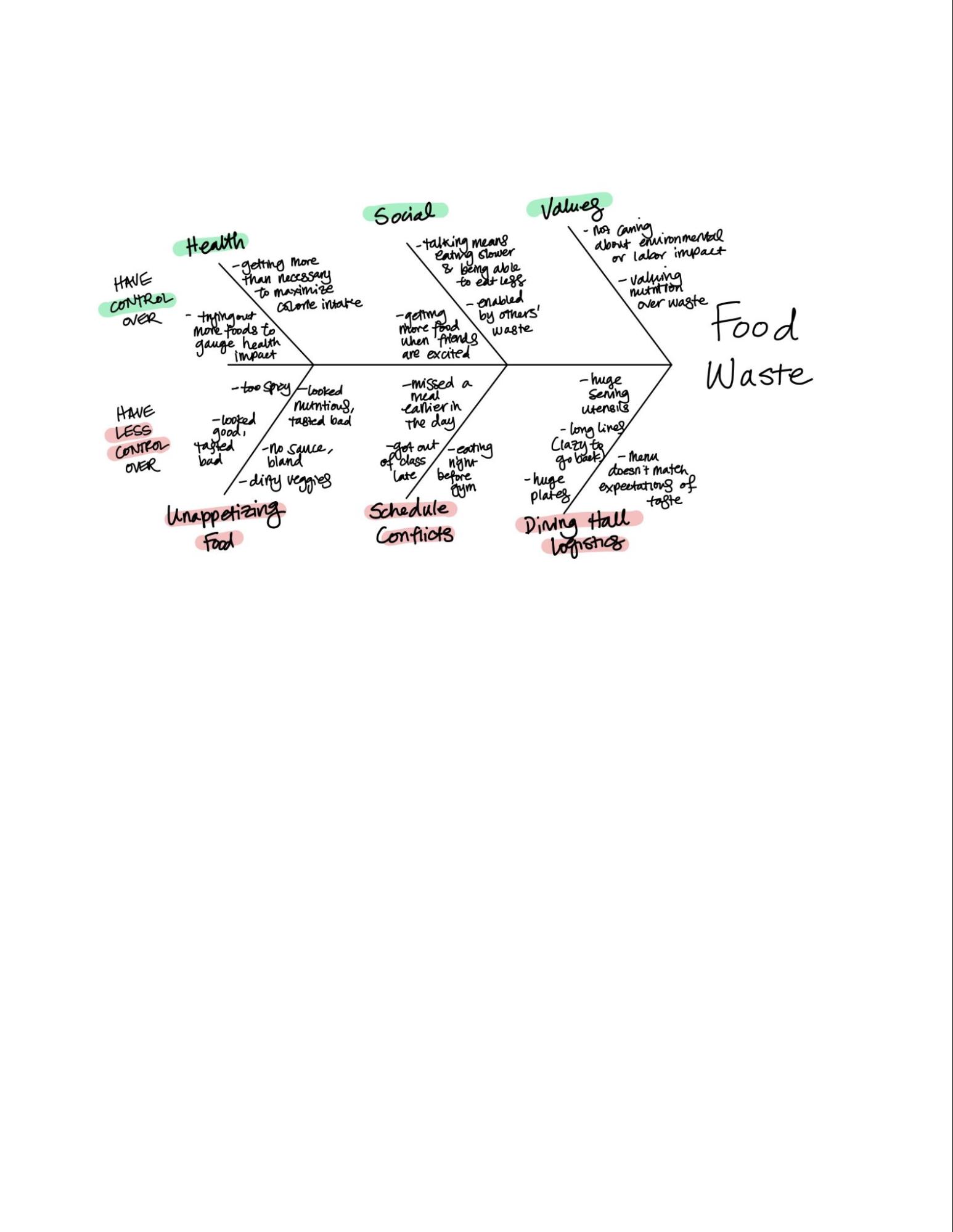
In the fishtail diagram, we can observe common reasons for food waste based on the insights above, sorted by whether participants had more perceived control over them. While this diagram shows a combination of factors that increase food waste across participants, the most common 2 groups that led to food waste were 1) unappetizing food and 2) getting too much food (either because they were rushed, lazy, or hungry). This shows us general areas where participants have more opportunity and agency to decrease their food waste. For example, participants have more control over how much food they get than how appetizing the food ends up being. On the other hand, they have very little control over dining hall logistics, such as how long dining halls are open, how dining hall schedules fit with their own, or what kind of cutlery and plates the dining hall uses.
Upon completing our models, we completed a final round of mini-synthesis, in which we gathered the contradictions and trends we had uncovered.
Important Contradictions
- We found that eating socially (with other people) had varying impacts on our participants. For some, they felt pressure to get less food compared to other people. For one participant, they noted in the study’s diary section that they ate faster and more of their portion, wasting less, because they want to spend more time talking. Another participant mentioned that if the other person(s) they’re with doesn’t care about food waste, they would get more food and waste more food.
- Some participants were methodical about their nutrition and plate makeup/portions. One participant found that caring about nutrition led them to waste less, but others explained that wanting to meet their nutritional/energy needs led them to overestimate their capacity and waste food.
Important Trends
-
- Not knowing how food tastes when grabbing it results in waste
- According to participants, negative emotions (guilt) heavily influenced their food waste behavior, though it is possible they simply experienced those emotions following instances of increased waste
- Participants did not think about their food waste before meals even though it consumes their thoughts once it happens
Personas and Journey Maps
We distilled our individual personas into 2 main personas and respective journeys maps. To do so, we categorized the behaviors into 2 distinct personas: Typical Tatiana, representing a typical sustainability-conscious Stanford student, and Sustainable Svetlana, an extreme example of someone who is extremely conscious about their food intake for health reasons and navigates dining halls methodically when getting food.
Personas
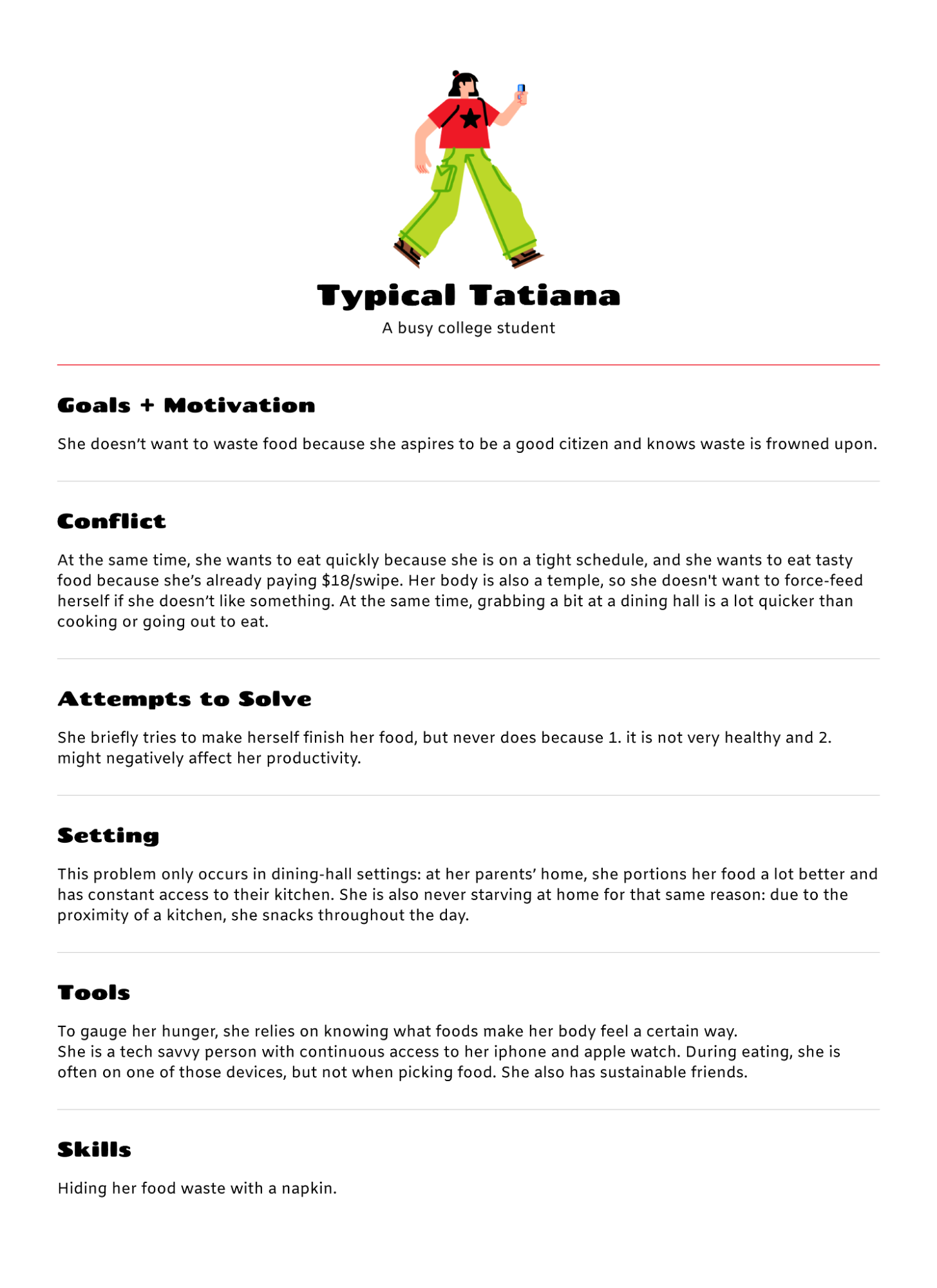
Typical Tatiana is a college student in challenging classes, a handful of extracurriculars, and a part-time job. We created her because she encompasses a few qualities almost universally shared by a subgroup of interviewees from the baseline study: feels rushed, likes good-tasting food, and is conscious enough to not want to not contribute negatively to the environment. She has one friend Sustainable Svetlana majoring in sustainability. Tatiana generally agrees corporations should be held accountable for food waste, but feels like a hypocrite if she personally wastes food no one forced her to take after her regular meals at Stanford’s dining halls.
Unfortunately, in the context of a dining hall, Tatiana still regularly wastes food because she recalls her goal to not waste the instant her hunger, accrued throughout typically busy days, goes away as she nears the end of her meal. Her plate resulted too full because, due to her tight schedule, she starts grabbing food she sees first without surveying the whole dining hall and skipping long lines; often, what she gets first without thinking does not taste good and she ends up tossing a part of it. If she does decide to wait in line for a “special”, she makes sure to grab more than enough for all the time she spent waiting, part of which often ends up in a compost bin. After her meals, she hears Sustainable Svetlana’s scolding voice; she feels momentary guilt which dissipates and doesn’t return until after her next meal. Tatiana wants to be good, but at the wrong times.
We heard very similar stories to Tatiana’s bio in our baseline study’s qualitative data–students are busy, they think about their own hunger when quickly picking food for their plate, their taste preferences during their meals, and their personal environmental footprint only after. Additionally, similar to Tatiana, to two reasons for tossing food uncovered in our baseline study are 1. bad taste and 2. lack of time. This proto-persona is likely to describe an American college student who has never felt food shortage and does believe that we need to save the environment.
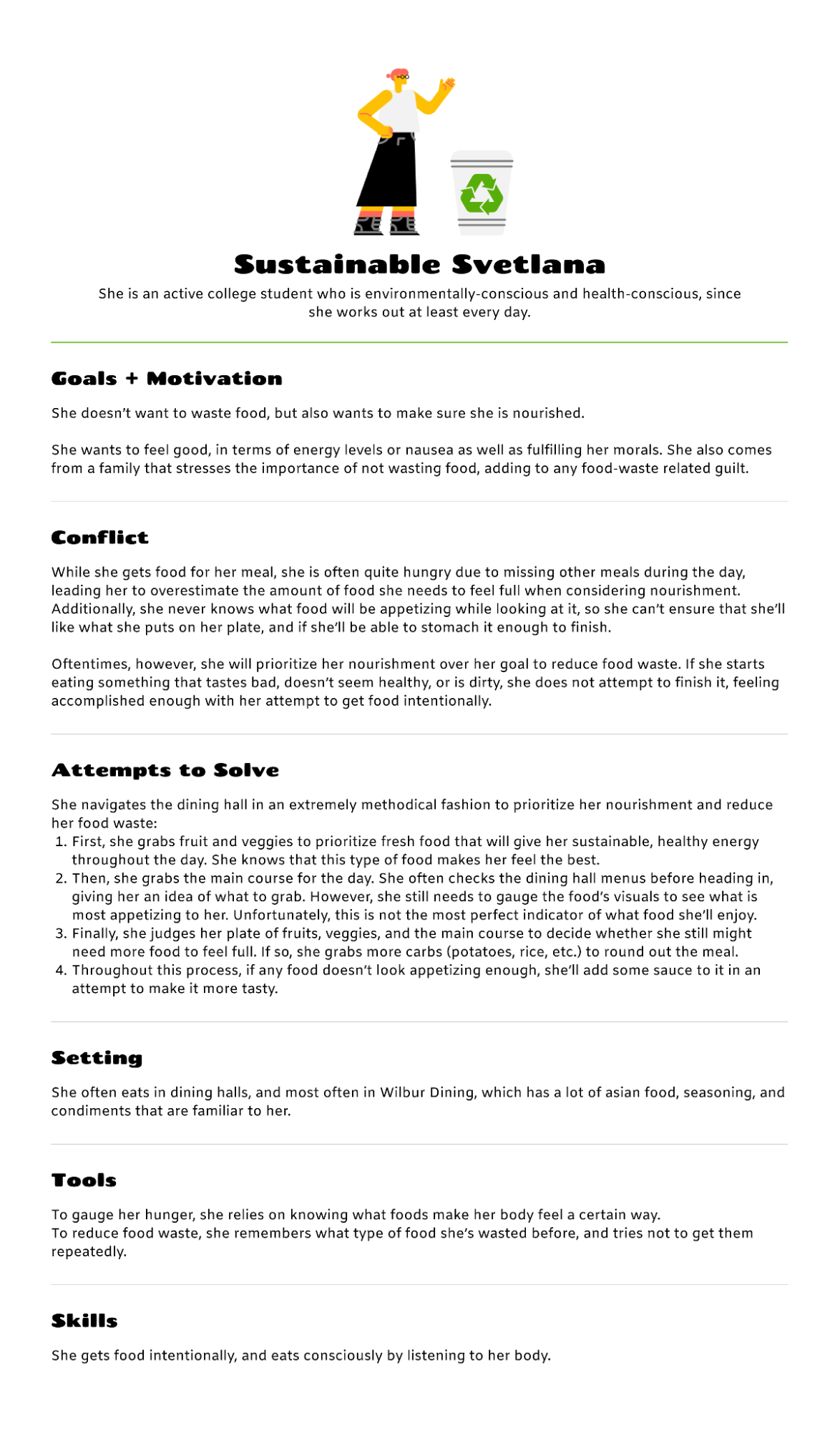
Sustainable Svetlana is on the more extreme side of sustainable-minded college students in the dining hall. She’s an avid gym-goer, knows details about how certain foods affect her physically and mentally, and also reduces her food waste as much as she can while prioritizing her nourishment. She is admirable in the way she practices her values, which are often rooted in values she learned from her family around cherishing her food and feeling shameful about waste in general. She navigates every dining hall methodically in the same order: fruits & vegetables, then the main course, then carbs.
However, her short term concern is her hunger and her exercise. She will prioritize her nourishment over food waste, and doesn’t feel too bad about it because she tries really hard to minimize it already. However, she often can’t anticipate what foods might be unappetizing, so her meals often end up with at least some waste.
We heard such stories in our baseline study from 3 participants who both navigated the dining hall with a routine that was rooted in their nutritional goals (e.g. eating clean or eating a balance between all the food groups) but had a positive effect on their additional goal of reducing their food waste. In this case, reasons for food waste such as hungry eyes and a lack of time were not in the picture, showing us that even when participants were more intentional about their food waste, factors such as their short-term hunger and long-term nourishment outweighed their care for food waste.
Journey Maps
Typical Tatiana
| Think |
|
|
|
|
| Feel |
|
|
|
|
| Do |
|
|
|
|
| Entering the dining hall | Grabbing food | Eating | Clearing plate |
Sustainable Svetlana
| Think |
|
|
|
|
| Feel |
|
|
|
|
| Do |
|
|
|
|
| Entering the dining hall | Grabbing food | Eating | Clearing plate |
Across these two journey maps, we asked ourselves what had we uncovered that could not have been guessed without interviewing and researching. To our surprise, there was a common trend across both personas:
They do not think about food waste while getting food for their meal, and only think about and feel guilt about food waste after their meal is done.
There is a tension between when food waste is generated (at the beginning of a meal) and when that food waste is considered (at the end of the meal). Since the main goal when entering the dining hall is to satiate hunger, more important than secondary goals of interacting with friends or getting some work done, participants are solely thinking about what will satisfy them when getting food.
We then asked:
How might we make participants consider food waste while they are filling their plates?
How might we give participants more agency over their food?
- Intervention Study Design
In the process of developing an intervention study that would address our central hypotheses, we came up with several ideas, of which our top three (unordered) are featured below.
Top Three Ideas:
- Location-based reminders to reduce food waste
Goal: To keep food waste top of mind while navigating a dining hall, where hunger and “hungry eyes” are often first priority when getting food, leading to overloading plates
In our second persona, their main conflict was between her long term goal of sustainability and her short term need to nourish herself. There was a disconnect between when food waste was thought of and felt guilt over (end of a meal) and when the food waste is generated (getting food after entering a dining hall). To bridge this gap in awareness, we thought of setting up location-based reminders for participants so that once they enter a dining hall on campus, they receive a notification that says “Reduce your food waste today! Only take what you can finish today, and remember– you can always go back for seconds :)” (or something similar).
Pros: The notification is delivered immediately, effectively providing a reminder as long as the participant is on their phone. It provides a reminder about food waste at the very beginning of a meal to introduce guilt proactively, rather than reactively as usual.
Cons: This is basically a digital poster– not too exciting or novel. We also had some concerns about depending on participants checking their phones before a meal, which not everyone does naturally, as well as tracking their location due to privacy and ethics concerns.
- Visual reminders of yesterday’s waste
Goal: To provide lasting visual reminders of previous food waste, to keep the goal of food waste reduction top of mind.
Like the location-based reminders, this intervention aims to ensure participants keep their goal of minimizing food waste top of mind while getting food from a dining hall. In this intervention, participants would take photos twice during a meal: once of a new plate and once of the leftovers and food waste from a meal. Daily between 5-6pm, the study organizers would send back the photo of yesterday’s food waste to encourage participants to keep their personal food waste habits top of mind while getting food. To ensure that participants have their phone and are thinking about food waste, we ask them to send a photo of their empty plate to the study organizers in a chat thread that shows yesterday’s food waste – effectively using the organic action of picking up a new plate as a trigger to remind participants to check their phone.
Pros: This intervention is personalized to each participant’s individual food waste goals. By providing reminders that show yesterday’s waste, participants may feel more motivated to challenge themselves to do better than the day before, or keep up the progress they have made. In addition, this intervention utilizes a natural trigger of picking up a new plate to attach the behavior change of thinking about food waste.
Cons: This is a technology-based approach that requires participants to have their phone on them in the dining hall, and we are unsure whether that is a behavior common to most participants. In addition, because we do not use location tracking, the study organizers cannot send the photos of yesterday’s food waste to the participants right as they enter the dining hall; we rely on the photo of the empty plate to serve as a reminder to check out the photo from the day before.
- Supplying small portable SSS kits (Spice, Seasoning, Sauce)
Goal: to make dining hall food taste better, thereby leading to less food waste.
As mentioned above, quantitative results of our baseline study indicated that one of the top reasons for food waste is bad taste. Furthermore, food often looks good which invites a person to take it, but tastes bad. To counter this problem, we can supply our study participants with portable small kits with 6-7 compartments (available on Amazon) to store seasoning and sauces that are unavailable at dining halls. For instance, not all dining halls have soy sauce, and many lack spices whatsoever.
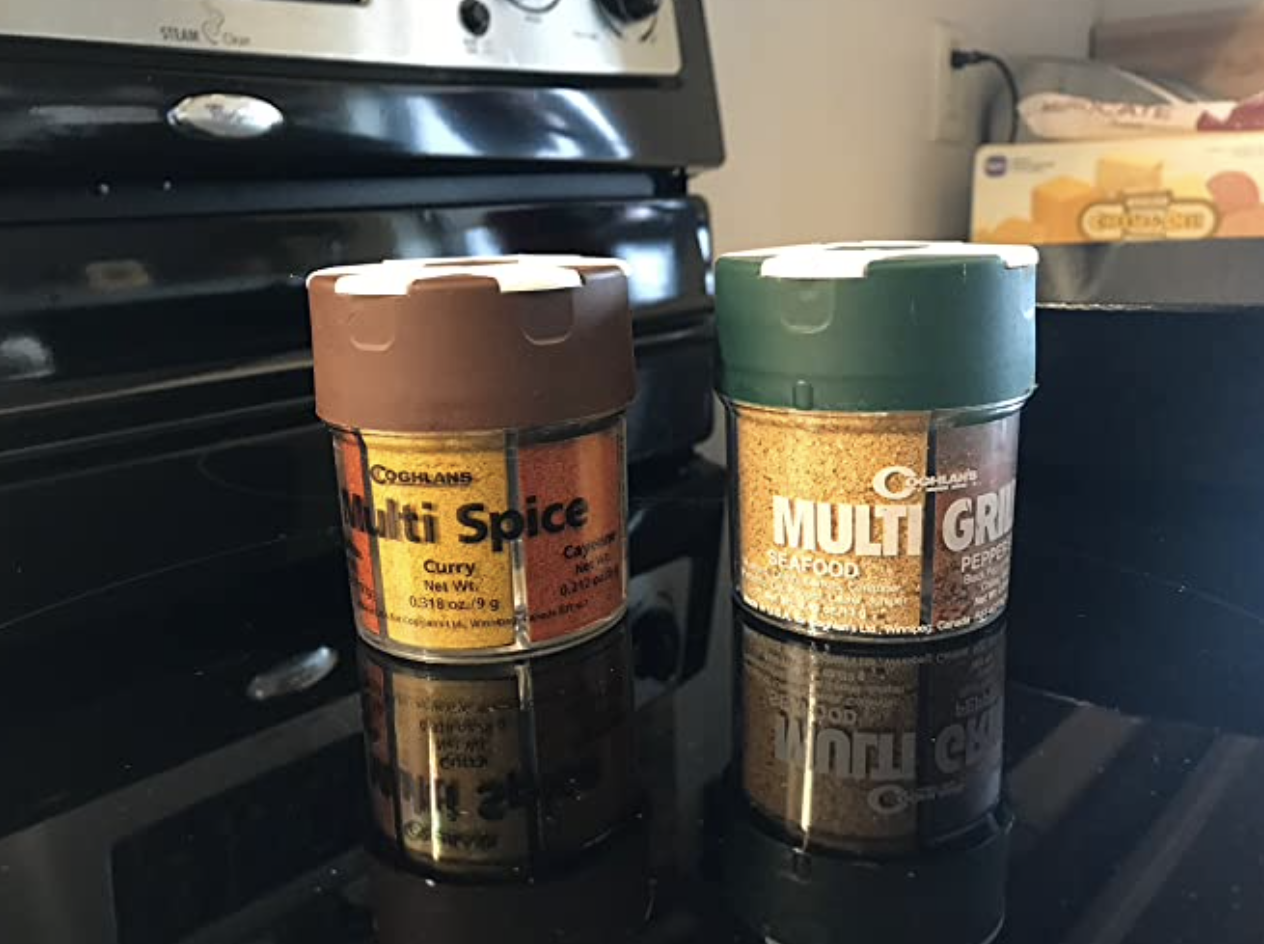
source: link
Pros: This idea attempts to solve the problem from a different angle from most others. It also has high potential for success because it directly tackles one of the reported causes of food waste–poor taste. Finally, SSS kits are portable, spill-proof, and easy to store in a backpack, which busy, rushed students like Typical Tatiana likely have at all times due to their busy schedules.
Cons: This idea costs money. SSS kits would work better for lunch than dinner because more students can carry them in a backpack between classes. Additionally, constant refilling of the portable kit with spices, which might add overhead in our study subjects’ already busy lives, like that of Typical Tatiana. Finally, our study subjects would have to remember to pack the SSS kit after refilling it after meals.
Rationale for selecting final idea:
Ultimately, our group ended up going with Intervention 2, visual reminders of yesterday’s waste.
We did not pursue the SSS kit idea due to anticipated logistical difficulties for both study subjects and us, the study organizers. We did not select the notification idea since we had concerns about the ethics of tracking participants’ location.
After receiving feedback from the teaching team, we also didn’t want to depend on participants checking their phone for a text-based reminder since we could not ensure they would do that. Through the action of taking a photo of an empty plate, we were able to effectively combine an organic trigger with the behavior change of viewing previous food waste and thinking actively about food waste through our idea in the visual reminders intervention. In addition, we are excited about the personalized aspect and the lasting effect of a visual based reminder.
Intervention Protocol
- Intervention: Show participants photos of last night’s food waste directly prior to them getting dinner from a dining hall
- Protocol
- Each day, participants will be texted a reminder photo of their previous day’s food waste around 5-6PM.
- Upon entering a dining hall, participants are asked to take a photo of the empty plate they have selected before getting their meal and send it to the organizers. While sending the photo participants are asked to view their previous day’s food waste.
- After their meal, participants will take a photo of their leftovers and send them to the organizers.
- This process will be repeated for 5 days (dinner).
- Who will be recruited: A mix of new participants and participants from our baseline study—all college students who eat at buffet-style dining halls with an interest in reducing their own individual food waste. Participants may live in a variety of living settings such as self-ops, co-ops or dorms with dining halls.
- Key questions addressed by the study:
- Is getting an empty plate an effective trigger to link the change of thinking about food waste to?
- Are participants motivated by their previous food waste to waste less in the future?
- How does viewing a photo of yesterday’s food waste impact the amount of food a participant may get from the dining hall?
- How do participants feel about their previous food waste when faced with it?
- Hypothesis: Viewing a photo of yesterday’s food waste right before getting a meal will reduce food waste, because people are motivated to compete with themselves, and because people usually do not think about food waste until after their meal.
- Data collected:
- Photos of food waste after meals
- Post-study interview insights




Comments
Comments are closed.