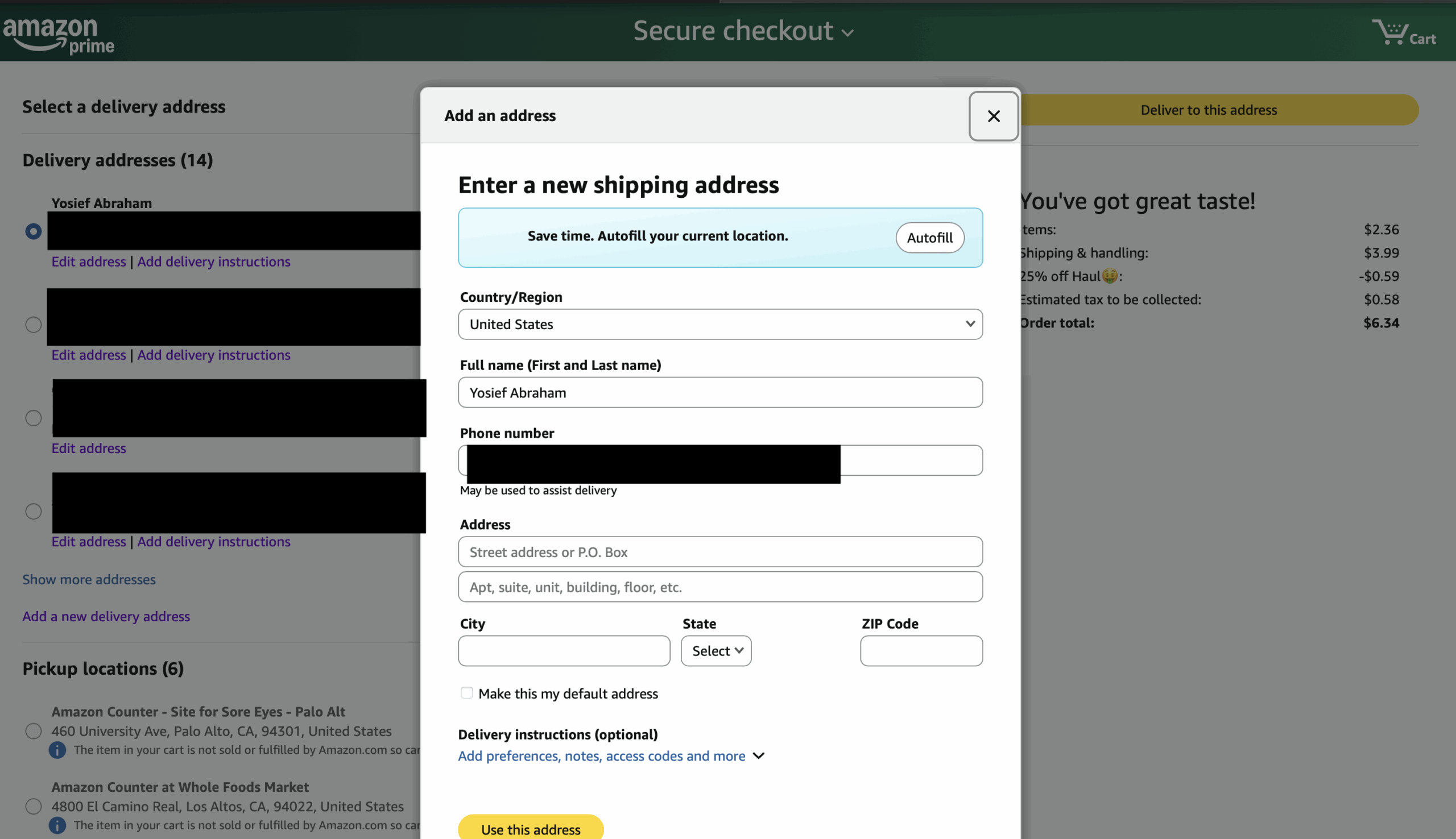
With Amazon’s check out process, the shoppers’ information regarding payment, address, etc. are saved based on previous orders. Shoppers can view this summarized information and even make changes to it (add new information or select previously imputed information) via a dropdown menu. Amazon’s goal is to keep you ON the “place order” page. It’s really clear that they’re looking to reduce friction and make buying become a very seamless and quick process. Sidenote: I began looking at Amazon Haul, (which I view as) the Temu of Amazon. It’s very much of a quick high conversion rate model where it’s very easy to add things to your cart and purchase them really, really quickly.
Warby Parker has a completely opposite approach from Amazon, where instead of trying to quickly make you rush through the process, they really slow you down and ensure that you know exactly what you’re purchasing. There’s great visuals on all the different frames and lens for sale, with a very clear breakdown into each product. There are a lot of reminders of the different warranty provisions and return policies which help the shopper gain trust and confidence in the product. Their models rely on making the shopper feel that they’re informed and encourage them by feeling safe and informed to take on these additional buy-ons and commit to a more premium lens.
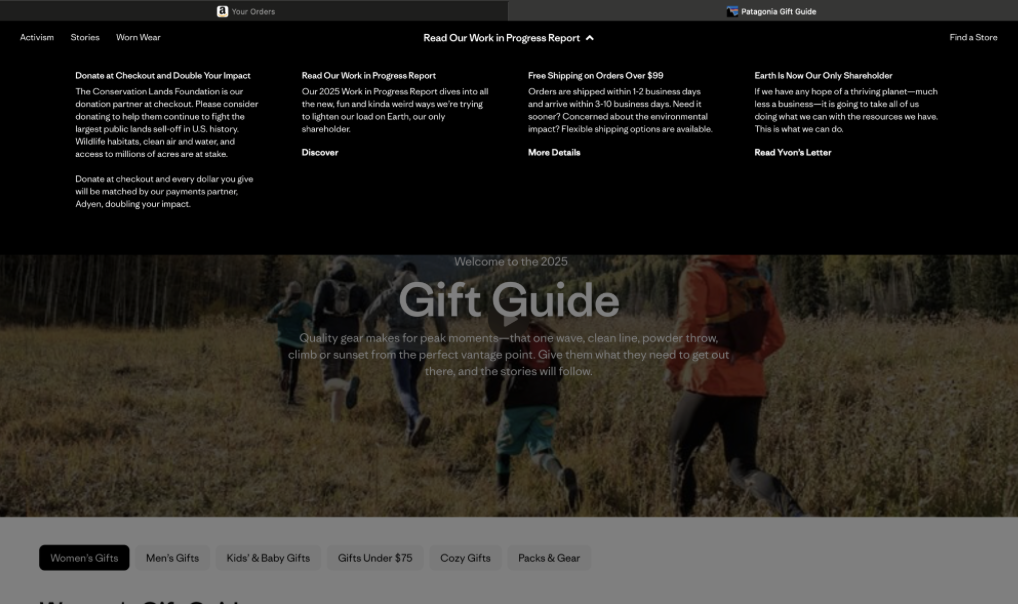
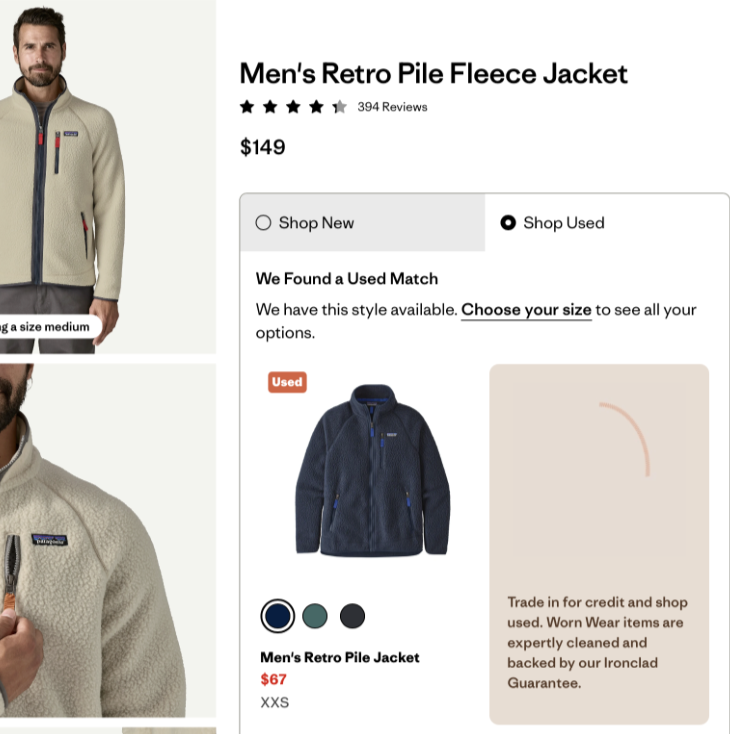
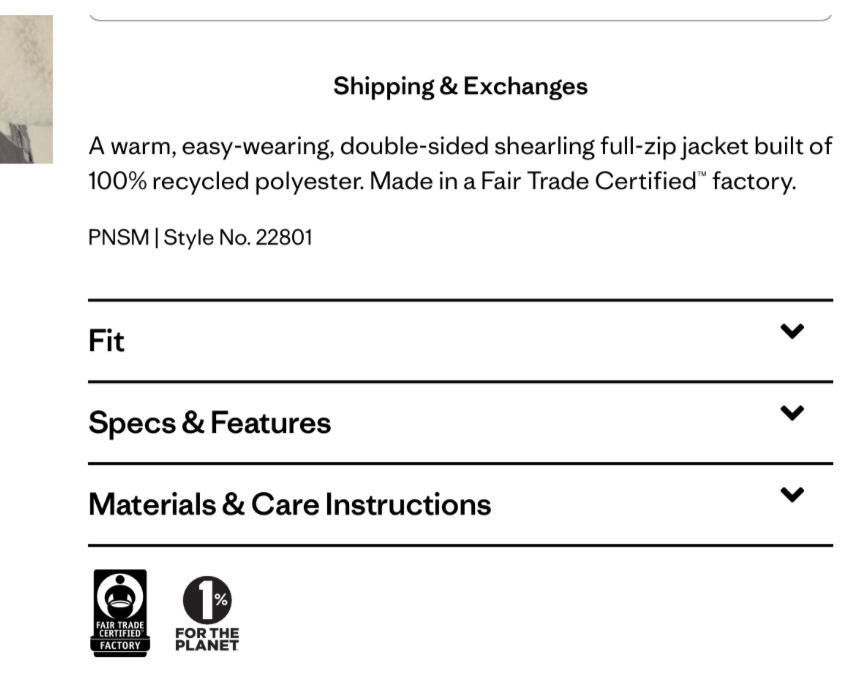
Lastly, Patagonia reminds the user that they’re sustainable. They have a recycling/repair program. They are saving the planet and that their mission is thoroughly ingrained in everything that they do and stand for. Patagonia’s shoppers are searching for a place where their values are aligned; understanding this, Patagonia reiterates their mission as a way to establish long-term loyalty (hence investment) with their customers.