
Subscriptions optimize customer lifetime value by providing a reliable, predictable, and recurring revenue stream from a customer. They foster strong loyalty and retention, and by keeping the customer in the product’s ecosystem, they broaden opportunities for cross-sells and up-sells. Subscriptions also reduce churn by increasing friction for a customer to stop using the product completely. Across Spotify, Figma, and The New York Times, we see three different freemium conversions, each allowing a customer to experience the product’s core value proposition before committing to pay.
Spotify: Premium for Convenience and Frictionless Use
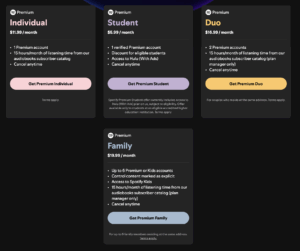
Spotify’s freemium model converts users to Premium through the promise of ad-free listening, unlimited skips, and offline playback. The free version offers the full music catalog but introduces mild friction (ads, shuffle-only playlists, and playback restrictions) that push heavy listeners toward upgrading. This model maximizes lifetime value by monetizing engagement: the more users listen, discover new artists, and build playlists, the more likely they are to subscribe. The calculated risk lies in balancing friction with accessibility; too many limitations could reduce daily use and weaken recommendation data, but too little might not create enough incentive to convert. Lastly, Spotify provides a few different options for Premium subscriptions, from regular individual to Student to Duo to Family, targeting particular user types with different price preferences (students) or using network effects to capture groups of users that may be incentivized for personal reasons to subscribe together for what to them is a lower price individually, but to Spotify, what is a higher net revenue.
Figma: Premium for Collaboration
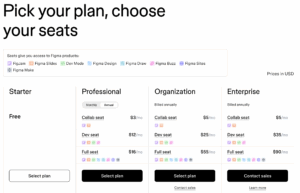
Figma, in contrast, anchors its freemium model around collaboration rather than individual experience. Solo designers can use nearly all features for free, but as teams expand, they hit natural upgrade triggers such as shared libraries and advanced permissions. This creates a self-reinforcing growth loop, where new collaborators join, organizations formalize workflows, and the product embeds itself in team processes. Figma’s approach minimizes friction upfront to drive viral adoption, converting individual users organically through network effects and team expansion.
New York Times: Premium for Perceived Value Increase, All Access
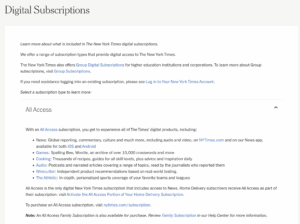
The New York Times differs from Spotify and Figma in that it monetizes through perceived content value rather than utility. Its paywall restricts access after a limited number of free articles, inviting users to subscribe for full access. What strengthens its conversion model is diversification: beyond news, the Times offers recipes, games, and more, broadening engagement and daily relevance. This multi-product ecosystem maximizes lifetime value by turning casual readers into habitual subscribers of not just the NYTimes as a news outlet, but as a pseudo-lifestyle brand.
Ultimately, Spotify optimizes for engagement, Figma for collaboration, and The New York Times for trust and habit, all carefully balancing free usage with just enough friction to convert commitment into recurring value.
