Assumption Selection
In our assumption identification process, we mapped out various assumptions categorized by desirability, viability, and feasibility onto a graph to visualize their importance and the evidence we have for them.

Our riskiest assumptions were that [1] young working professionals are willing to pay pre-made soup bags in bulk that they can conveniently heat up at home on their own schedule, rather than relying solely on ready-to-eat soup deliveries, [2] seasonal items can be priced slightly higher (limited-edition appeal) without hurting demand, and [3] customers will order more from us if we improve the technological infrastructure for online ordering and delivery. We discussed our assumptions during the in-lecture activity, as well as an additional meeting outside of class time, which allowed us to settle on these 3 riskiest assumptions. These assumptions also align with our proposed solutions, so finding these assumptions to be wrong would invalidate our solutions.
Test Cards
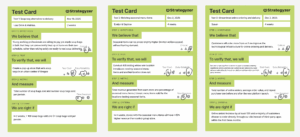
For Test 1 (Lour Drick & Mathias), this assumption is critical to test because we don’t know if young working professionals are willing to pay pre-made soup bags in bulk, rather than relying solely on ready-to-eat soup deliveries. While previous customer interviews suggest that younger customers enjoy making soup at home, these insights are insufficient to confirm the frequency or scale of this need. If this assumption is proved incorrect, our soup bag solution will only incur additional operational, ingredient, and packaging costs—ultimately reducing our profit margins.
For Test 2 (Daphne & Evelyn), this assumption is critical to test because we don’t know how desirable seasonal menu items are and whether they would make an impact on our overall sales. Currently, we have a rotating weekly menu of 3-5 soups paired with bread, but we have little insight into whether limited-time seasonal menu items would drive more sales. If this assumption is proved incorrect, our rotating seasonal menu items solution would have no net increase in overall sales, meaning it would only incur additional operational and ingredient costs, which will decrease our profit margin.
For Test 3 (Susan), this assumption is critical to test because we want to ensure that investing time and effort into the tech infrastructure will have a payoff. Currently, our technology infrastructure is fragile, and that can be clear to our customers. If our assumption is true, we can increase the number of people who order and eat Soup and Bread, and increase profit.